WMS for 3PL Warehouses
WMS for 3PL Warehouses What's more critical than how goods arrive, is to whom they’re sent?! A Warehouse Management System...


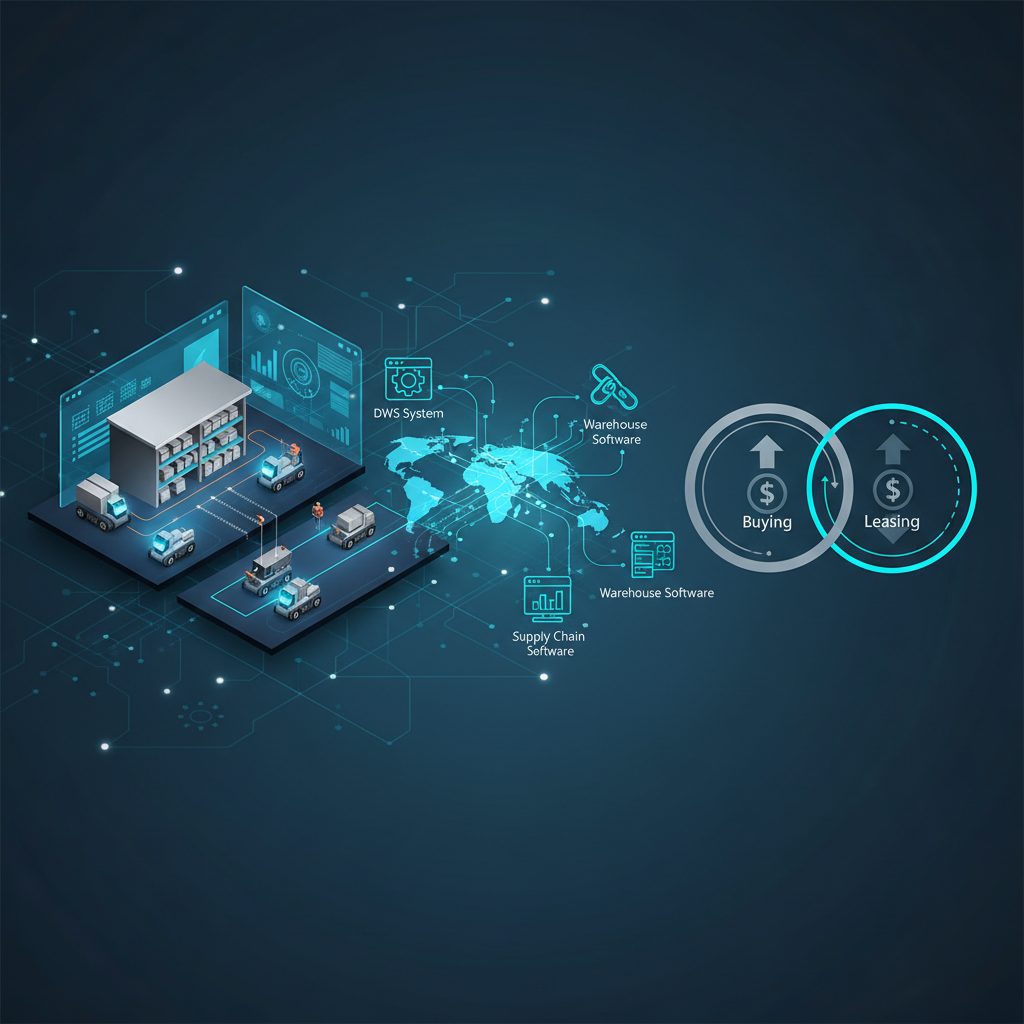
How do you measure the cost of supply chain software when the real price rarely shows up on an invoice? Are 1,000 licenses a bargain if your team only uses 5% of their features, and spend a fortune on training? These aren’t just rhetorical questions. They get to the heart of why some companies pay through the nose for software that barely improves their backlog, while others score huge gains in efficiency and bottom-line margins for relatively little cash. The good news is this: You’re in the driver’s seat. The less great news? You’re barrelling down the highway at 100 miles an hour with a used car salesman riding shotgun.
Source: Imagine one day having to operate without them. Work-arounds would be slow, manual, and surely rife with errors , if they’d be possible at all. But what does supply chain software cost, and is it worth it? It’s not so easy to pin down the price. I’m guessing that’s because every supply chain is so unique , featuring its own combination of shippers, commodities, lanes, customers, schedules, and so on. What’s more, the universe of SC software spans from simple warehouse tools to monstrously complex global platforms. If you must have numbers, obviously simple is cheaper than complex and small costs less than big. Said another way, it’s like buying a car. Supply chain software pricing, what you can find out there, is similar to how cars are priced.
The initial costs for a static DWS station with barcode scanning and weight capture typically range from $15,000 to $40,000. Dynamic in-line systems with 3D imaging may be $80,000 or more. –And, of course, certified legal-for-trade scales cost more. Multi-site deployments usually require a second significant multiplier. Cloud-hosted DWS software solutions are common and typically range from $200 to $800 per month per station, which often includes all updates and necessary data storage. Installed on-premise software licenses may charge the typical $5,000 to $15,000 one-time fee for the license, then require 18% to 22% of that cost annually for maintenance and support.
Alternatively, for $50,000 to $500,000, you can buy a collection of best-of-breed or boutique components to create a tailored solution that checks all your boxes. You get the right product for the job in every zone of the warehouse but work with multiple vendors, which means separate service agreements and less leverage in negotiations. Ultimately, you’re responsible if the WMS and TMS won’t play together in the sandbox, or machine learning in the WMS/APM combo doesn’t get the TMS/DSD modules all riled up. A best-of-breed build also favours products from big, stable vendors for ongoing peace of mind.
With modular stacks, you can select the very best-of-breed solution for each specific function. For instance, couple a cloud WMS from Manhattan or Blue Yonder with a best-of-breed transportation management system and a separate demand-planning application. Your overall annual software outlay might fall between $100,000 and $400,000, but you must also account for the middleware or integration platform as a service that connects all these apps. API upkeep, upgrades, and problem solving get divvied up among multiple vendors, which can make repairs and improvements a bit arduous. However, the adaptability, innovation, and speed advantages of best of breed solutions can outweigh this inconvenience.
But the real cost of visibility is the investment of time, budget, and attention in organizational change, business process reengineering, and stakeholder engagement. For all it’s sexy branding, zero-latency visibility requires some bedrock unglamorous trust: trust that your people, processes, and systems are doing their jobs; that your partners, suppliers, customers, and carriers are telling the truth; and that reality can and should deviate from plan.
I find supplier portals absolutely fascinating! Have you ever thought about how your Supply Chain Management system goes far beyond the physical borders of your business? Vendors actually enter your system to check orders, send advanced notices about shipments, and monitor their invoices. Then there’s the cost… it’s usually either by the number of people logging in from outside or by how many vendors you’re connecting this way. What other seemingly simple tools are hiding all this cool technology just under the surface?
The Consultant Factor: Factoring in Third-Party Integration and Change Management Expenses
Software licenses are about 20% of your total investment over the first five years of operating your warehouse management system. What about the other 80%? The biggest chunk is labor. Whether you’re paying consultants to configure and integrate, or your in-house IT team is doing the work, all of these people and the associated costs are working on services for your project. Staff time dedicated to things like requirements gathering, user acceptance testing, training or change management all count as services too , and usually require higher-paid employees than your warehouse associates.
Quantifying the Efficiency Dividends: Measuring ROI Through Reduced Lead Times and Inventory Holding Costs
But getting there often requires fixing underlying weaknesses. Business-process and organizational redesign are the top predictor of supply chain success, according to Accenture, but the devil is in the details. Take the billion-dollar company that invested $8 million in a new forecasting and demand-planning system only to find that the real problem lay in an unreliable, unsupported warehouse system with inadequate capacity. The fancy new software was irrelevant until the forgotten foundation was fixed. Fixing the broken basics may be far less glamorous than jumping on the latest industry buzz bandwagon, but it’s inattention to these fundamentals that causes nearly two-thirds of all supply chain mistakes.
Starting an AMR lease conversation is always exciting for providers. Simulation software-leg planners and obsessive number-crunchers-can model payloads, operation durations, docks, routes and more to fine-tune requirements, justify your current deployment versus manual or forklift operation and right-size your future solution. Are you a candidate for ownership or interested in exploring contract work or a robot as a service arrangement? How’s your cash position and appetite for technical debt? What are your competitors doing? No rush, but every month you delay the warehouse man ceases straining and seeking to justify employing your busiest arch-nemesis-tension storage! Let’s talk.
Investing in supply chain automation might be painful, but ignoring the inexorable market pressure to expand capacity, fill orders faster, and lower costs outweighs the discomfort of change. Most supply chain and logistics managers are clear that a better engineered solution than manual operations exists , problem is, they lack the time, budget and political capital to make a fully defensible business case to the board. Where do you go next?

WMS for 3PL Warehouses What's more critical than how goods arrive, is to whom they’re sent?! A Warehouse Management System...

How to Calculate ASRS ROI Warehouse automation is no longer a luxury of the Amazons of this world. In the...
Put to Light Systems for Warehouse Sorting The Consolidation Bottleneck: Managing Complex Order Breakdown To get the most out of...

To provide operational excellence, Armstrong Dematic leads the way towards innovative intralogistics and warehouse automation solutions. Our transformations are based on Industry 4.0 solutions.
Follow us on:


