Maximizing Efficiency and Success in FMCG Warehousing Operations
The FMCG sector is a driving force in the Indian market, driving a significant portion of the nation's GDP, generating...


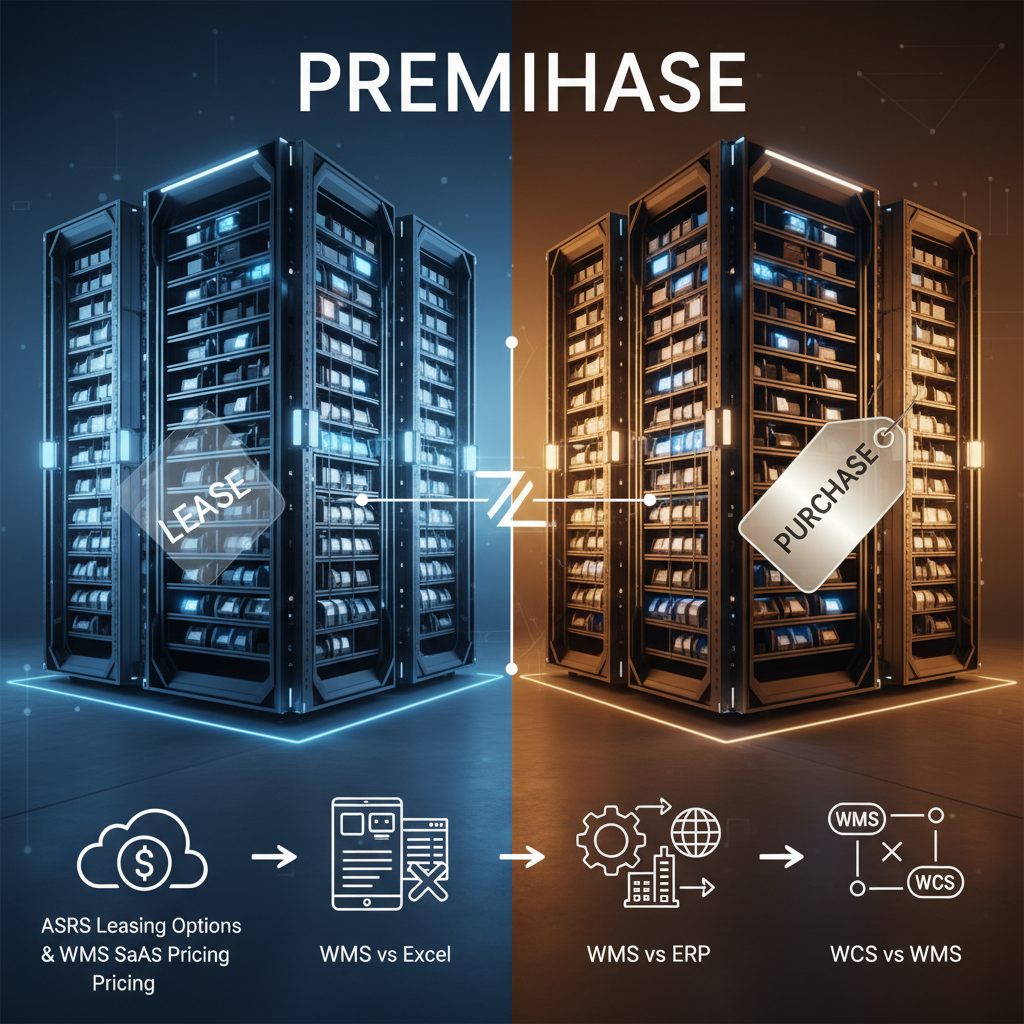
Warehouse automation is no longer a luxury reserved for e-commerce giants. As fulfillment velocity accelerates and labor costs climb, mid-market 3PLs and regional distributors are exploring ASRS Leasing Options alongside traditional capital purchases. The choice between leasing and buying an Automated Storage and Retrieval System (ASRS) hinges on more than monthly cash flow. It shapes your balance sheet, your agility in adopting next-generation robotics, and your ability to scale without betting the farm. This guide unpacks the financial, operational, and strategic trade-offs, weaving in how WMS SaaS Pricing, WMS vs Excel, WMS vs. ERP, and WCS vs. WMS decisions intersect with your automation financing strategy.
Investing in automatic storage and retrieval systems (ASRS), no matter how clear the long-term value, is a tough decision. Do you pay outright, lock in a five-year-old technology and commit a key capital resource? Or do you lease, commit to a monthly stream of payments that gradually turns a depreciating asset into a sunk cost? Your ROI calc likely determines the answer, factoring in tax considerations, interest rates and the weighted average cost of capital. But have you considered how financing your ASRS purchase, as an operating (rather than capital) lease, recalibrates the equation? It’s not just shifting dollars from CapEx to OpEx. It’s about how those CapEx dollars can work over time , and turn your machine into a moving target for ROI.
On the other hand, we could become less relevant to innovation if we didn’t understand how to develop a financing instrument that may be a better fit with the clients’ (or the insurance industry’s , we’ve launched a captive) economics. I would say we are users of the ASIC, we don’t see ourselves in the long-term leasing business so we talk with the OEM Fin teams to see if they can align with our strategy. So far, we appear to have some alignment… at least until the next developments in the entrepreneurial financing field. Estimating flexibility-supporting NPV and risks will always be for the brave and strategic.- Senior Vice President Corporate Assets & Insurance, Director of Leasing Co. and Manager of Captive Ins. Co.
Ownership also exacts three costs, starting with the highest upfront capital outlay. Sinking a million dollars or more into automation limits what’s left for other projects. Second is balance sheet drag. While leasing shows your ASRS as an operating expense, that sneaky lease evasion still occupies long-term liabilities, tempering your credit line. An outright purchase erases your cash but keeps both debt and equity clean. The final factor is investment risk. Technical progress may soon render your new system obsolete. Or you might outgrow it quicker than its 30-year life expectancy. To lessen these risks, scope your real needs, visit a reference site, invite multiple vendors to bid, and perhaps consult simulation software to model their proposals.
Modern ASRS stacks require a Warehouse Control System (WCS) to orchestrate shuttles, cranes, and conveyors in real time, plus a Warehouse Management System (WMS) to handle order logic, inventory allocation, and labor tasking. The WCS vs WMS distinction matters for licensing. WCS is often bundled with hardware purchase but charged separately in lease agreements, sometimes as a recurring SaaS fee. If you buy the ASRS outright, you typically own perpetual WCS licenses, paying only annual maintenance. Lease deals may embed WCS as a service, inflating monthly payments but simplifying budgets. Meanwhile, WMS SaaS Pricing runs $50 to $150 per user per month, or transaction-based models at ₹2 to ₹8 per order line. Decoupling WMS from ASRS financing gives you flexibility to switch providers, but it also adds another vendor relationship and integration risk.
How’s this for an image? Rather than dropping your kid off at law school, you just park a pallet on the campus every month for 20 years. That’s Automation-as-a-Service (AaaS) in a nutshell. The provider leases not only the robots but the whole Rube Goldberg apparatus: hardware, software, maintenance, and even operator training. Often, they’re responsible for the building too. You pay a per-transaction or per-pallet fee based on the number of SKUs handled, say ₹16,000 to receive, store, pick, and deliver a pallet from a 5,000-SKU warehouse. While born in the cloud era, these solutions are increasingly mainstream: the ₹2.4 crore Sorter you rented in 2037 just hit 20; expect three more decades of productive life. Providers like System Logistics, Swisslog, Knapp, and Dematic retain ownership, set minimum scope and terms, absorb obsolescence risk, and refresh aging components for free. The best also guarantee SKU count growth within a predetermined range, usually plus or minus 25%, freeing you from tediously renegotiating when you double your assortment from 5,000 to 50,000.items.
Warehouse automation hardware, like WMS software, is designed to empower workforce, performance, and operational improvements. Sensors, cameras, drives, motors, wheels, and PCs are commodities. The differentiator is software and system interoperability, the user interface, and data visibility. Failing to consider these over a 20-year system lifecycle when you evaluate the cheapest warehouse robot option means you’re likely seeding tomorrow’s unbearable technical debt. Warehouses are not factories, they’re dynamic environments. System demand spikes 50% and you want to scale. A crane’s upgrade path is constrained by those steel beams in your warehouse ceiling and the columns interfering with new SKU positions. Think you’ll go wireless? Rotate image B 180 degrees to see your crane exactly as you just built it. Didn’t design for spare throughput bandwidth and zero-delay downtime? Your peak 12AM, 5AM PMs must work overtime.
Leasing only what depreciates, technology, automation, even the building itself, maximizes financial and operational flexibility. Owning appreciating assets, like real estate, that appreciate over time preserves capital and creates an investment that can be sold or borrowed against. Variablizing the DC fulfills the same objective but with stronger cash-flow benefits and lower residual risk. It’s especially attractive for operations where technology upgrade cycles are measured in only a few years. It’s the best of all worlds: optimal use of technology, real estate, and capital.
Maintenance and Support Inclusion: How Lease Agreements Handle AMC and Software License Updates
Lease contracts typically bundle Annual Maintenance Contracts (AMC) and software updates into the monthly fee, eliminating surprise repair bills and version-upgrade costs. If a shuttle motor fails or the WCS needs a security patch, the lessor dispatches technicians and covers parts under the lease umbrella. This predictability appeals to finance teams allergic to unbudgeted CapEx. Purchased systems require separate AMC negotiations, often 10 to 15 percent of hardware value per year, and software maintenance at 18 to 22 percent of license fees annually. Over a seven-year horizon, bundled lease maintenance can cost less than à la carte AMC if the lessor leverages economies of scale across dozens of installations. The flip side: lease AMC is one-size-fits-all. If your team can handle tier-one troubleshooting in-house, you pay for support you do not need. Ownership lets you self-insure low-risk components and buy premium SLAs only for mission-critical subsystems.

The FMCG sector is a driving force in the Indian market, driving a significant portion of the nation's GDP, generating...
ASRS for Retail Distribution Centers Retail distribution hyper-charged by ASRS+lsiThe global retail industry is being revolutionized by Advanced Automated Stora
Warehouse Management System (WMS): Complete Guide A warehouse management system is really important for logistics. As the amount of inventory...

To provide operational excellence, Armstrong Dematic leads the way towards innovative intralogistics and warehouse automation solutions. Our transformations are based on Industry 4.0 solutions.
Follow us on:


