Robotic Palletizer Systems for End-of-Line Automation
Robotic Palletizer Systems for End-of-Line Automation A robotic palletizer is becoming a part of warehouses and production operations these days....


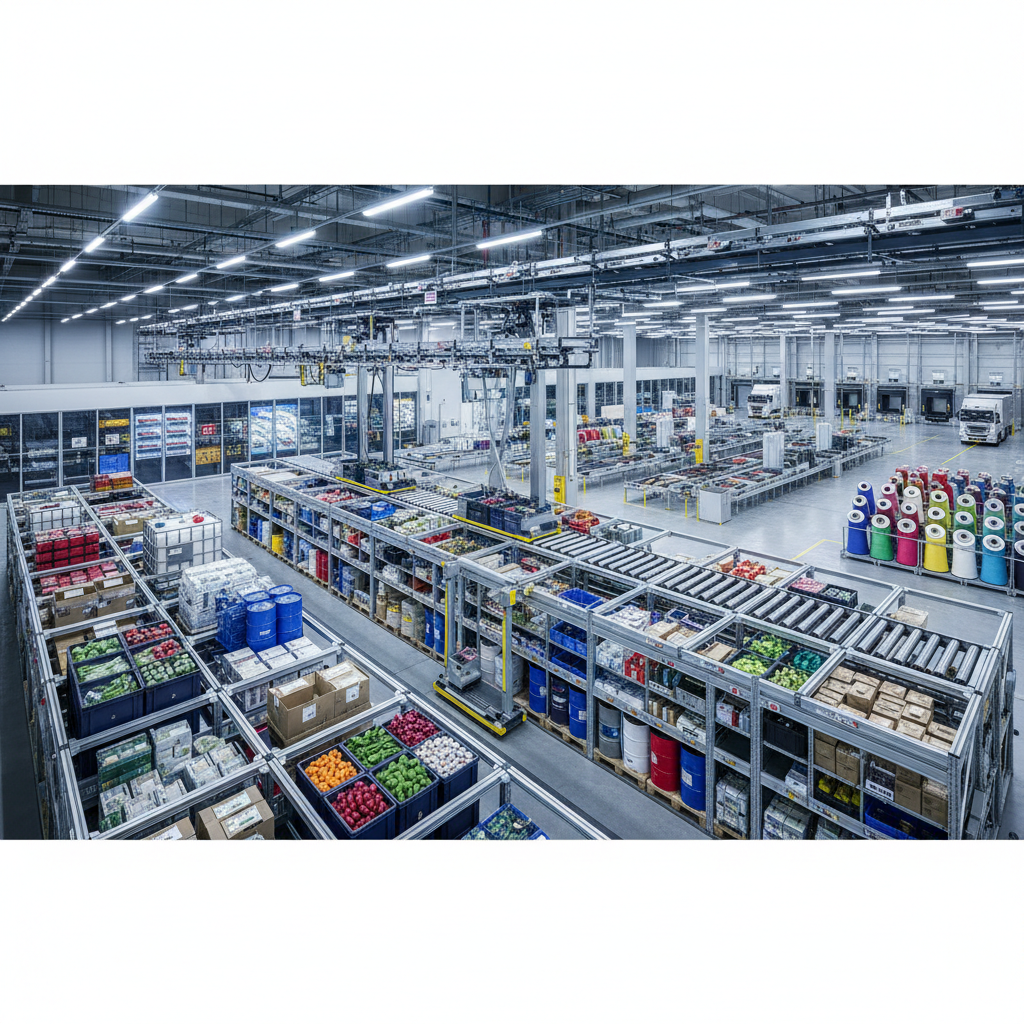
With ASRS solutions on your floor, employees are more productive and remain injury-free. This machinery lifts, moves, and stores raw materials, work-in-process, and finished goods with intricate precision. It lifts and rotates thousands of pounds of material effortlessly. It navigates a warehouse with robotic agility. Some of the systems double as a STV (storage and retrieval system) and an automatic truck loading system, adjusting loads quickly and accurately to fit the next mode of transport. This level of flexibility and efficiency, combined with the always-intelligent equipment’s ability to route itself and avoid collisions, simply isn’t possible using manual labor or conventional forklifts.
There are countless examples of industrial automation in the food industry. In fact, one of the earliest and most enduringly successful ASRS applications can be found in the cold, cavernous warehouses of food manufacturers and distributors around the world. Strategically positioned near production facilities and suppliers to minimize transportation costs, and near population centers to maximize consumer reach, food warehouse automation helps tame the monumental logistics challenges associated with refrigerated storage and distribution.
Clean and cold. Those two words can strike fear into the heart of the most hardened of warehouse operators. They’re an unwelcome necessity of almost every food-manufacturing business. But what if we could remove the majority of cleaning and almost all human contact with the sub-zero environments? Conventional pallet handling is rife with areas for dirt and bacteria to build up, while the surrounding area to a freezer ASRS is nothing but solid wall , sealed, easy to clean, and easy to control.
Picking and staging stock for outbound orders is labor- and time-intensive. For warehousing operations spread across extended campuses, clusters of segregated buildings, or numerous multi-story facilities (common in urban regions where land costs are prohibitively high), an ASRS solution can eliminate much of the travel time that adds to the cost of order fulfillment. Fewer lift truck movements through the facility mean less opportunity for accidents that damage inventory, equipment, or storage structures. Since an ASRS is particularly well-suited to high-density storage, there is less risk of interior damage from material handling equipment.
What all world-class installations have in common is flexibility. With the rapid growth of online purchases, operations may focus for a time on e-grocery fulfillment, then pivot to in-store replenishment as consumer preferences change, while minimizing downtime. A partially automated system might begin replacing manual picking in slow-moving areas, then expand as the network demonstrates improved throughput. Cross-trained associates can move among receiving, putaway, picking, packing, sorting, kitting, and value-added tasks. The system itself must also be able to expand with business growth. A two-shift day could ultimately transition to 24/7. Daily volume of 5,000 orders might grow to 10,000 or drop to 2,500. Since it’s hard to predict where the economy is heading, keeping as many options open for as long as possible is sensible.
Streamlining from Processing Plant to the Distribution Fleet
End-to-end automation is reshaping the cold chain too, as a growing number of operators and customers work to reduce energy and demand variability. Energy efficiency has always depended on cutting waste heat; with accumulation, fewer runs are needed as well. It’s a spectrum, notes Andersen’s Holste, from manual to semi-automated to fully automated with product buffering to fully automated with energy-saving accumulation. What’s the right level for a particular application? “It depends,” he quips.
Warehouse automation for retail distribution increases order accuracy and on-time delivery, improving service levels while simultaneously reducing shrinkage and the number of returned, expired, or out-of-stock items. ASRS for retail distribution streamlines the receiving and storing process of products. Automated storage and retrieval systems for retail distribution free up space for additional storage capacity, allowing you to increase the number of products kept on hand. Higher cube utilization in an automated retail warehouse minimizes the amount of storage space wasted on unproductive storage slots. Since employees don’t have to move around as much or go up and down ladders or stairs in an automated retail warehouse, there are also fewer accidents from slips and falls.
Semiconductor manufacturing must be one of the most stressful jobs in the world. Silicon wafers cost upwards of $5,000 and yet are only used for 90 days or so before they have to be replaced. The chance of losing half a million dollars per hour was enough to convince one military contractor to persist with manual handling in cleanrooms long after the rest of the factory had been automated. The tiniest speck of dust will ruin a chip the size of a postal stamp. No wonder workers look like they’re wearing spacesuits. It costs $30 million to design a chip, not one cent more to copy it, and not one cent less to make it. Silicon manufacturing tolerances are measured in microns and shrinking. Chip costs are kept in check only by high-volume manufacturing through ultra-high-tech production lines. Repeatable, efficient, and safe handling in the cleanroom is paramount.
Automation ensures cleanliness, precision, and efficiency where human intervention can put health at risk and batch integrity in jeopardy. Is this solution the panacea for the storage, handling, and security challenges of the chemical industry? It’s uniquely suited to the sector’s needs in todays environment , but it can’t perform miracles. Chemical storage automation selects and retrieves materials with pinpoint accuracy at any time, monitors environmental conditions, and ensures FIFO rotation. It also isolates workers from hazardous materials and limits access for authorized personnel only. Chemical storage automation is a solution with safeguards, not a substitute for them.
Textile warehouse automation overcomes the challenges of a vast number of SKUs, the rapid cycle of seasonal fashion, along with the sheer size and weight of roll and carton storage. By deploying a pallet racking and mini-load system, you contain both capital costs and running expenses. But, it wasn’t just about the equipment, we also devised both process and warehouse modifications, incorporating a pick/put-to-light system and sequencing buffers.
Labor costs are a glacier that never stops melting, and the clock is ticking on flat-rate rents. Within a few years, automation at some level will be the cost of doing business. It’ll be the table stakes that allow you to keep your margins and offer your customers faster delivery times. Any company with a 10- or 15-year view that’s planning capital and strategic investments in plants or DCs is thinking about automation now.”

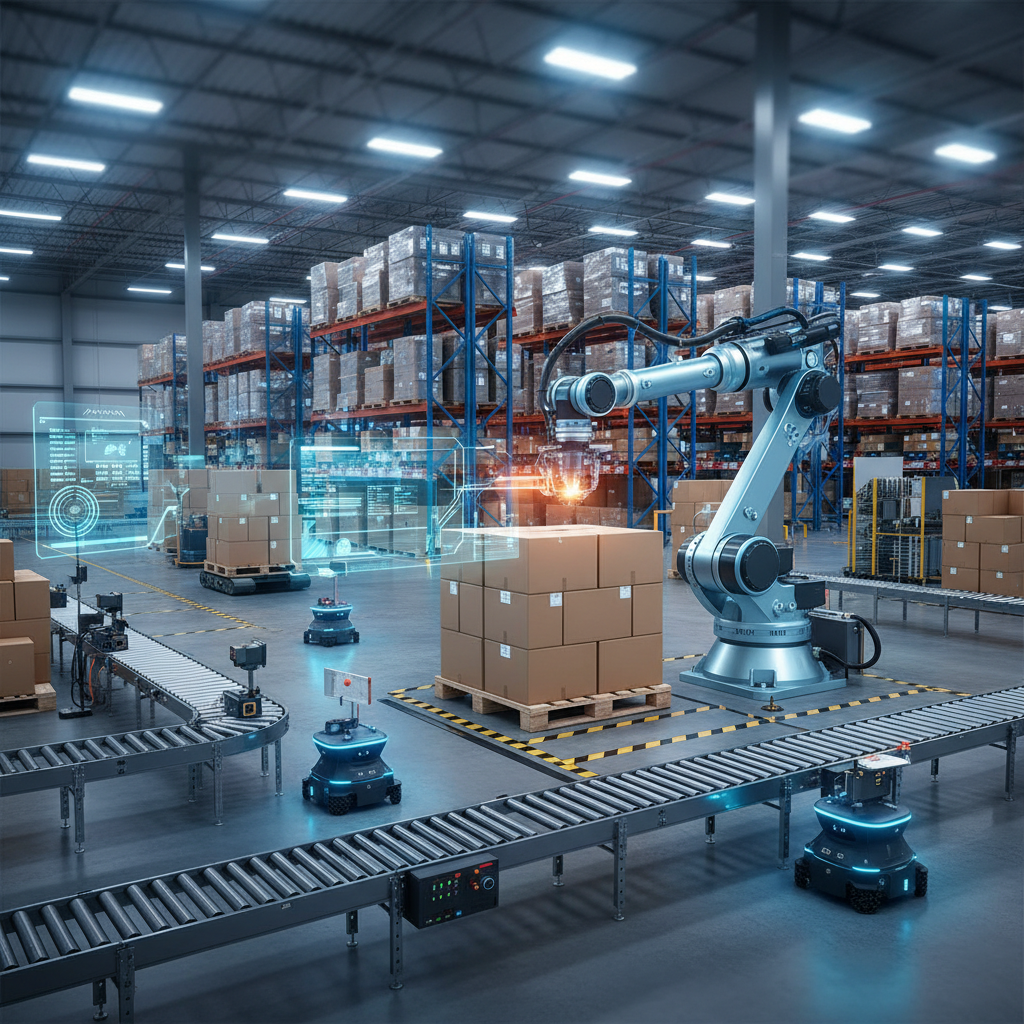
Robotic Palletizer Systems for End-of-Line Automation A robotic palletizer is becoming a part of warehouses and production operations these days....

WMS for Ecommerce Fulfillment Imagine a world where you walk into a warehouse and it almost feels like a store....
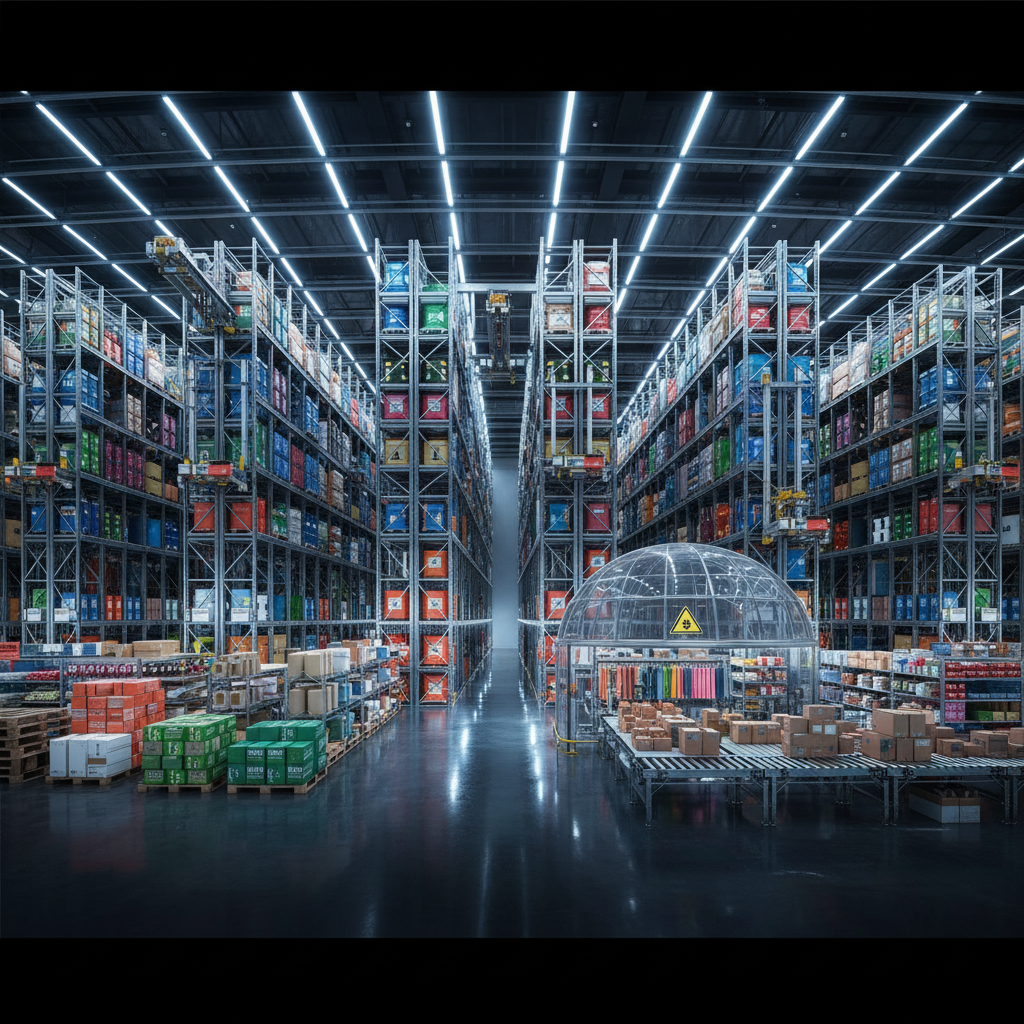
ASRS for Chemical Warehouses The chemical industry is marked by its rigorous standards and the stringent requirements imposed by regulatory...

To provide operational excellence, Armstrong Dematic leads the way towards innovative intralogistics and warehouse automation solutions. Our transformations are based on Industry 4.0 solutions.
Follow us on:


