Ecommerce Fulfillment Automation Solutions
Ecommerce Fulfillment Automation Solutions The retail world has changed forever. Todays customers expect flawless delivery. They don't see it as...


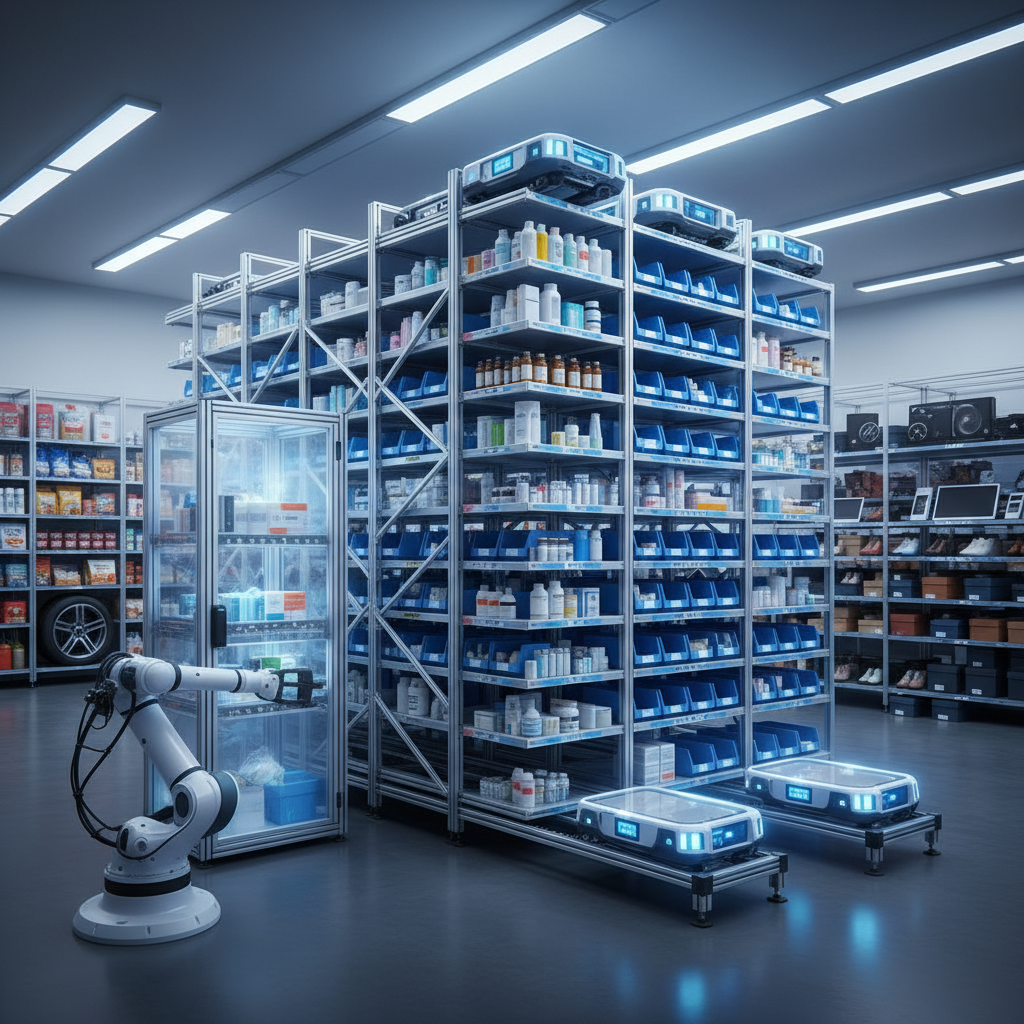
The world of pharmaceutical warehouse management is distinctly different from the world of manufacturing or retail. Warehousing in the pharma industry requires a unique strategy, backed by technology that can ensure precision, efficiency, safety, and compliance. When errors in picking, tracking, or data management are life-threatening, precision isn’t an option. This level of automation reduces potential risks associated with human intervention and ensures operational efficiency. Here’s how adopting ASRS in pharmaceutical warehousing is set to revolutionize the supply chain processes for the better.
Ever-changing regulations can make compliance feel like a moving target. How do you protect your brand and your customers in the face of mounting requirements and resource constraints? The only viable solution is an automated system. Automated systems provide immediate, accurate, and auditable records. Not just of products, but of every action taken by an operator or a machine. Vaccines at risk due to power failure in storage? Automated systems can alert you. Drug product on the line and the labeling machine is due for cleaning? Only an automated system can prevent product from being unlabeled because the operator forgot to complete a paper checklist.
Compared to traditional shelving and forklifts, ASRS for Pharma is a game-changer for storage and retrieval in pharmaceutical warehouses. 95% space utilization means there’s room for future growth without costly expansions, and up to 60% increased productivity (with virtually zero picking errors) ensures you’re getting the most out of your current workforce before you consider hiring and training additional employees. No matter what your product mix looks like, high-volume generics or low-volume, temperature-sensitive biologics, ASRS for Pharma has the solution.
Human error intermingles with inefficiencies, damaged goods, and obsolescence. Incorrect picking leads to shipping errors that jeopardize customer satisfaction and harm a brand’s image. Countless man-hours are wasted in duplicate putaway, replenishment, and picking activities. Plenty of opportunity exists to improve employee ergonomics, as well. Those small items do not belong on that high shelf. Moreover, to motivate manual pickers with all the right items pallets of the wrong ones must be kept on reserve.
Temperature excursions are another threat of which to be keenly aware. A large percentage of pharmaceutical products must be kept within a tight temperature range. With a manual system, there is no real-time monitoring or automated notification of temperature deviation. So, it’s quite possible that your team won’t become aware of a temperature issue until the product is already damaged. ASRS for Pharma offers climate control, continuous monitoring, and automated alerts to protect product integrity from temperature excursions. Armstrong DematicLtd for example, designs with redundant sensors and fail-safes in place to be sure that even a short-term power outage or equipment failure can’t put your inventory at risk.
ASRS technology delivers measurable improvements across every operational metric. Space utilization increases by up to 85% as systems exploit full ceiling height and eliminate wide aisles. Retrieval accuracy approaches 99.9%, virtually eliminating picking errors that plague manual operations. Labor costs drop significantly because a single operator can manage what once required a team. Speed improves too. Automated cranes and shuttles locate and retrieve products in seconds, not minutes.
You can’t manage what you don’t measure, so the saying goes. Automated storage and retrieval systems (ASRS) continuously capture performance metrics. From overall equipment effectiveness (OEE) to fill rates, load times, and inventory turnover, you get the data required to optimize the ASRS and associated processes. Energy consumption monitoring, cooler utilization tracking, and backup system performance analytics can all help identify areas to improve.
Cold storage is an enormous problem for pharmaceutical companies shipping vaccines, biologics, and other products that must stay refrigerated or frozen. Traditional warehouse freezers and coolers are horribly energy-intensive, since they cool entire rooms even when the shelves are mostly empty. Furthermore, they don’t always achieve steady temperatures, and many climate-controlled storage facilties require manual monitoring, increasing the possibility of error.
The energy savings are substantial. By reducing the volume of refrigerated space and minimizing door openings, ASRS can cut cooling costs by 30% or more. This matters especially in India, where electricity costs and reliability vary by region. Armstrong DematicLtd engineers systems with energy-efficient drives, insulated enclosures, and smart climate management that adjusts cooling dynamically based on occupancy and activity levels. The result is a cold chain that’s both more reliable and more economical.
Types of ASRS Best Suited for Pharmaceutical Operations
However, one ASRS technology gives pharmaceuticals a best-of-all-worlds answer. An automated solution that meets these stringent requirements is a unique hybrid design that combines the advantages of unit-load ASRS speed, throughput, flexible scalability, and energy efficiency with the storage density, ergonomics, precision, accuracy, safety, and security of a mini-load system. It also delivers significantly reduced facility and operational costs.
Systems with discrete, self-controlled carriers that run on a track or rail offer the flexibility of infinite expandability: simply lengthen the track. Mobile storage systems run based on the aisle numbers keyed in by the operator; the system is oblivious to the remaining aisles. Armstrong DematicLtd recommends mobile storage systems when goods-to-operator ratios are high and picking is for a large number of orders. Product discharge rates are normally lower than with any other technology, which means mobile storage systems are best used when the operators are the constraint in the system. There is considerable cost involved in interfacing the mobile storage with other existing systems. When evaluating the cost of mobile storage systems, it is critical to factor in this cost as well.
The Future of Pharma Logistics: Automation as a Standard
Peeking into the not-too-distant future, what might distribution center operations in the pharmaceutical industry look like? Nearly every stock-keeping unit stored, retrieved, and shipped by fully automated storage and retrieval systems, or ASRS? Driven by the imperative to reduce labor costs, enhance inventory tracking accuracy, maintain compliance with increasingly stringent regulatory requirements, and help offset constant pressure on drug prices to decrease, pharmaceutical logistics will be an early adopter of ASRS and other automation technologies. Just as they were when robotics took over so many production-line functions decades ago, the advantages are just too compelling: ASRS can handle products more consistently than humans can. It fits more of them into less space. It can function in sterile environments more reliably while leaving an audit trail. And it can trace every vial, tablet, or capsule from receipt to shipping more accurately than any manual process could.unique_id
India’s pharmaceutical sector, already a global leader in generics and vaccines, stands to benefit enormously from this transformation. As domestic demand grows and export markets expand, efficient logistics will separate winners from also-rans. Armstrong DematicLtd is committed to helping Indian pharma companies make this leap. We combine global best practices with local expertise, delivering ASRS solutions that work in India’s unique operating environment. From navigating regulatory requirements to managing installation in live facilities, we provide end-to-end support that ensures your automation investment delivers lasting value. The future of pharma logistics is automated, efficient, and compliant. The question is not whether to adopt ASRS, but how quickly you can implement it.

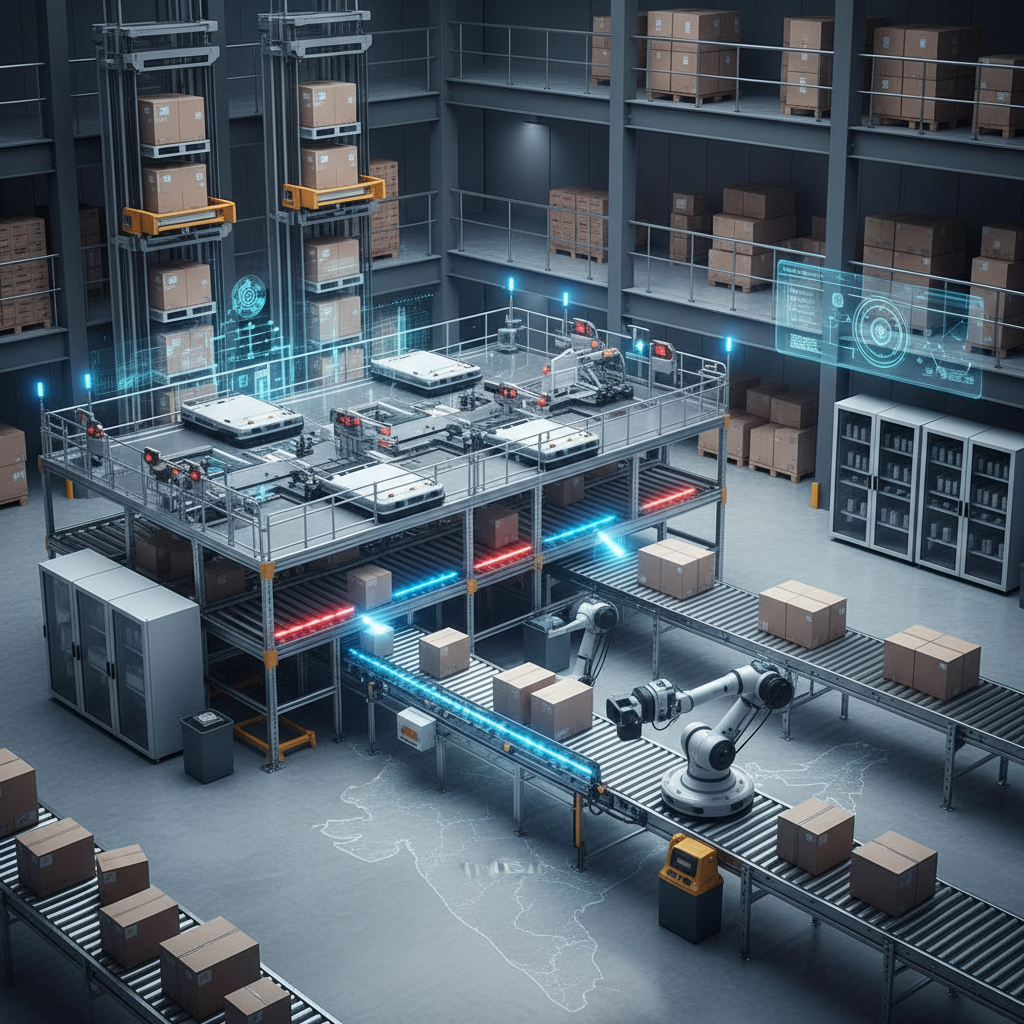
Ecommerce Fulfillment Automation Solutions The retail world has changed forever. Todays customers expect flawless delivery. They don't see it as...
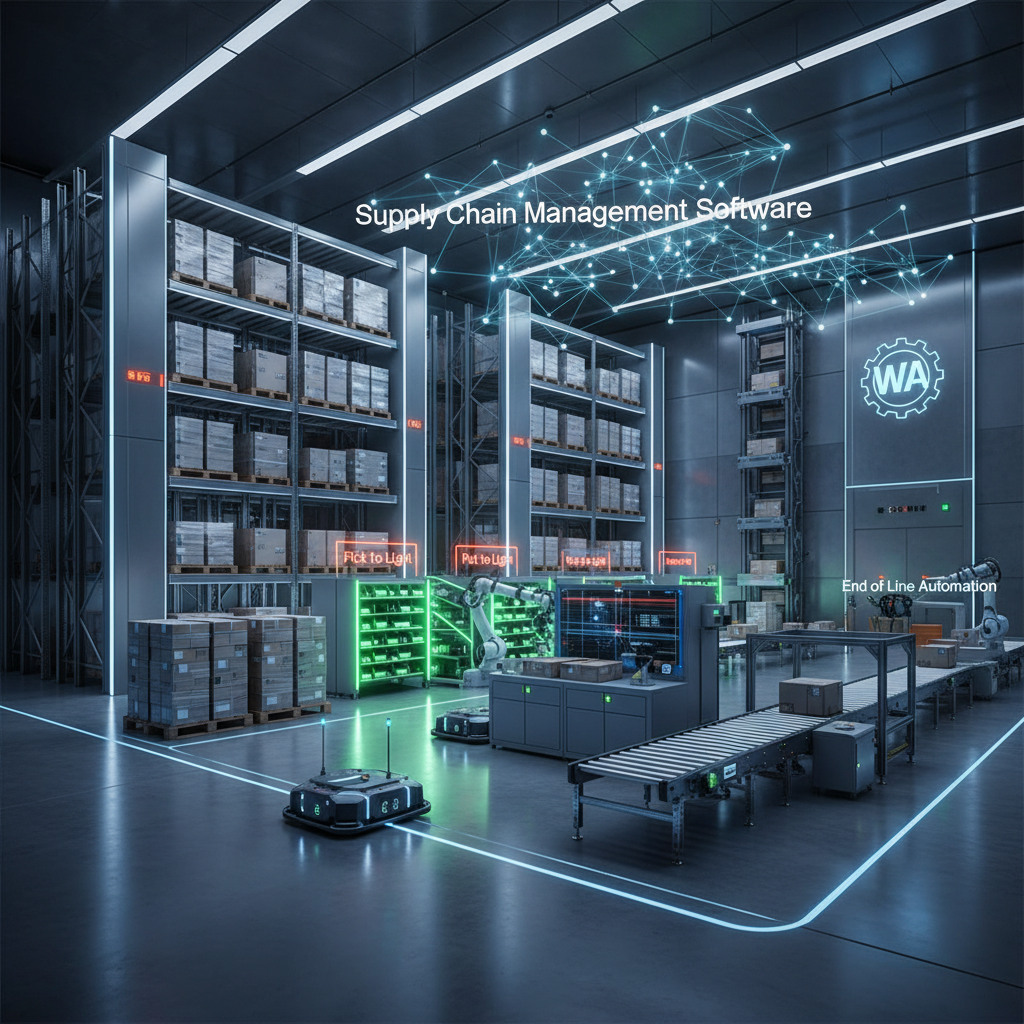
Smart Storage Systems for Modern Warehouses Moving Beyond Traditional Static Pallet Racks In todays world the old way of storing...

AMR ROI for Warehouse Operations What if I told you that most warehouse managers with AMRs see payback in 12...

To provide operational excellence, Armstrong Dematic leads the way towards innovative intralogistics and warehouse automation solutions. Our transformations are based on Industry 4.0 solutions.
Follow us on:


