End of Line Automation Solutions for Manufacturing
End of Line Automation Solutions for Manufacturing The Shipping Dock Bottleneck: Where Manufacturing Operations Get Held Up A manufacturing facility...


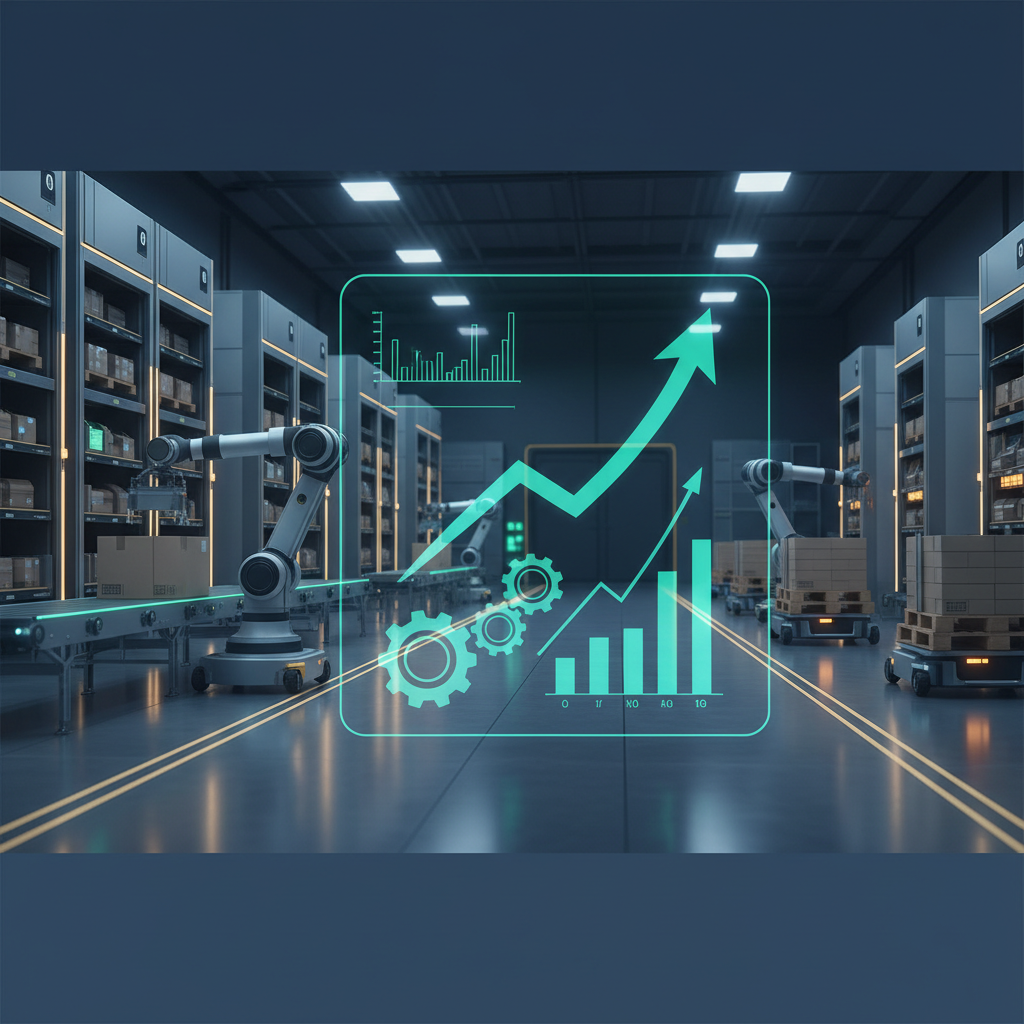
To start, let’s look at a simplified version of an AMR payback period calculation. The actual calculation would include more direct and indirect cost factors, but this should give you a good high-level estimate to work with. Next, we’ll outline the top 5 factors that in real-world scenarios influence AMR payback times, things that many buyers often don’t realize until they are well into the buying process. Having advance awareness of these factors could make a big difference in keeping your selection project on track.
The return on investment isn’t the same for every warehouse. It depends on lots of variables , existing processes, order profiles, product mix, even the size, shape and condition of your warehouse. That said, when it comes to pure capital cost of automation, when you have a significant volume of picks you could expect to spend in the $3 to $6 range per pick for manual approaches versus $1.50 to $3 for automated. Period. The rest isn’t just labor; it’s also all the other ways that fulfillment operations drain your finances.
AMR investment analysis should include total cost of ownership, not just upfront hardware expenses. Maintenance contracts, software licensing, integration with your warehouse management system, and training all factor into the true cost. Many operators overlook ongoing support fees or underestimate the time required to optimize routes and workflows. A complete AMR procurement strategy accounts for these variables upfront, ensuring your payback calculations reflect reality. Compare vendors on service level agreements, upgrade paths, and scalability options during your AMR vendor checklist review to avoid hidden costs that extend payback timelines.
Other variables that determine how fast your AMR investment will pay off include customer requirements, facility age, and the energy costs in your region. Do your customers need regular deliveries of small quantities? Older facilities with aging equipment and systems may not support the operational efficiency AMRs require. And if electricity is expensive where you operate, the economics might not add up.
Identify and quantify all costs that go into performing your current manual demand workflow and all costs that can be directly attributed to poor performance against that workflow. Then, identify and quantify any of those same costs associated with the use of your AMR system and manual systems. The difference between those costs will be your annual savings. Next, identify all of the costs you will incur to purchase and deploy your AMR system, and any ongoing operating costs of the AMR (electricity, software support, repair parts and maintenance labor, etc.). Finally, divide the cost of the AMR system by the annual savings to determine how many years you can expect to be saving money thanks to your robot.
This basic math is a good guide, but payback times frequently get better as time goes on and the technology is deployed at scale. You can use this in your warehouse automation business case to get everyone on board, but it’s the long-term, sustainable value where the real benefits are seen.
Fleet Size & Deployment Strategy: Do you need a proven business case? A pilot program, or plans for an aggressive rollout to capture returns as quickly as possible? The number of robots deployed and the rate that they get integrated into your operation will directly influence how fast you see a return on your investment. Opt for a conservative rollout and you may not achieve the expected savings until you implement at scale. On the other hand, with an aggressive rollout, the push to get a large number of robots out and integrated can place stress on an unprepared organization and delay the benefit realizations.
The flexibility of cobots frequently overshadows other technology benefits. Media tend to focus on advancements in motion control and ease of programming to highlight the potential of these robots to be applied across different tasks. This broader application potential generates substantial interest in cobots in the manufacturing sector. However, the economic benefits (reflected in ROI) of these additional applications may be less significant than those of a dedicated traditional robot deployment.
Real-World Payback Examples
I’m not sure anyone really knows how many robots there are already and how many more there will be in the future, but we often hear about the inevitable rise of the robots in warehouses. That’s because the business case for warehouse automation and the adoption of autonomous mobile robots (AMRs) is becoming stronger. Research from The Boston Consulting Group (BCG) suggests a robot-versus-worker tipping point where a significant number of mature countries will have an overall cost of ownership per AMR that’s in line with the average all-in labor cost per employee picking in a warehouse. Is 2025 a few short years away? And, given recent advances in robot head software, how does that tipping point look in practice? Large fulfillment centers might have 100,000 workershuman picking tchotchkes, birthday card, M&Msplaced on conveyor belts for packages to be readied for shipment. Picture 15 of those 100,000 workers replaced with AMRs on rubber wheels that navigate aisles, elevators, and other workers. AMRs extend their forks, lift and steer lead-acid batteries on and off the charging station. The lead-acid batteries sink into the cells within the heart of robots, infusing them with enough power to pick at a faster and much more efficient rate than humans. The lead acid battery is the heaviest, and must dangerous, thing associated with a robot. Worker injury rates in AMR warehouses have declined significantly. Let’s virtually unbox that large fulfillment center and AMR fleet and peek at the numbers under the packing peanuts to see one scenario of the autonomous road traveled and yet to travel. A mid-sized e-commerce fulfillment center deployed 15 AMRs to tend the store in 2025. Managers raised the robot hand carton after paying 450,000 for the robots and the software that orchestrates them as they tornado around the warehouse. The engineers, designers, integrators, and installers that transformed money into big pieces of hardware and software also charged the warehouse operators 10,000 a month more to keep the robots in working shape for do-it-yourself maintenance seven days a week, 52 weeks of the year. The AMRs go goods to person, moving orders, shoes, helmets, coasters, booklets, CDs, and stanza cards to AMRs that are traveling along with packages that whizz by. Within a large, treasure-chest deep in the fullness of the warehouse, an operator removes lead-acid batteries from charging units and then slides those in and out of the robots’ cells or the engines of their being. Sparks and mists of dreams… op.. op…optical sensing tran… transition effort minimized and complex battery managed. Thank you. For the AMRs, worker injuries haven’t fallen to zero, but the robot speed accelerated, and a dozen or so warehouse workers are no longer necessary to power up the robots for a work shift. That helped reduce annual labor cost in human operation by a quarter million dollars, leaving store managers with the net human operation savings of $240,000 after accounting for the annual 10 k a month to charge the lead-acid batteries and labor. The payback took 3.3 years. Meanwhile, the brainy, mathy folks in the warehouse office were optimizing routes and saw that they needed five fewer robots for the extra routes and some extra robot power. This brought the payback on the original robot wizardry down to 2.5 years and with the bigger force of 20 robots lowered the total payback including the $2.4 million robots, required software and integration to substantially under two years. By the end of month 18 (in other words last week), it is sometimes conclusively over.
A third-party logistics provider for the automotive industry combined the capabilities of AMRs (pallet transport) and an ASRS (pallet storage) to obtain economies of density and scale for both pallet storage and case picking. The combined benefits reduced the case for automating pallet storage by 78% and increased the ROI for automating case picking by 32%. The customer’s payback period for the ASRS was 3.2 years, and for the AMRs, it was 2.1 years. The success of this blended solution led to the business case benefit calculations for the adjacent cargo-ready-to-go case shuttle system.
Tips for Faster ROI
Look for flexible AMRs that can adapt to your operation, not the other way around. Out-of-the-box solutions let you launch sooner, simplify training and support, and easily reprogram routes to accommodate high season or special runs. Forklifts, carts, and other equipment need to coexist with AMRs today and tomorrow, so they must operate efficiently around people and vehicles, through narrow aisles, and in low-visibility environments. Easy-to-implement, intuitive safety designs demand minimal facility modifications and support productive human-robot collaboration.
Negotiate favorable financing and service terms during AMR procurement. Some vendors offer performance-based contracts or leasing options that align payments with realized savings, reducing upfront capital requirements and financial risk. Review your ASRS vendor checklist and AMR vendor checklist side by side if you’re considering multiple automation technologies. Bundling purchases or selecting vendors with broad portfolios can yield better terms and simplify integration, shortening payback periods across your entire automation investment. Track results religiously and share wins with stakeholders to build support for future automation projects and continuous improvement initiatives.
Conclusion
Knowing what’s involved in determining the return on your AMR investment can help you anticipate and overcome common obstacles to warehouse automation success. This guide covers critical aspects of calculating payback periods and details the key cost drivers and savings factors. Plus, you’ll see how to calculate five types of warehouse operational costs that can be reduced with AMRs. Use this information to map out the costs and benefits of autonomous mobile robot automation in your facility.

End of Line Automation Solutions for Manufacturing The Shipping Dock Bottleneck: Where Manufacturing Operations Get Held Up A manufacturing facility...
WCS vs WMS Explained Warehouse tech is an endless stream of acronyms. From WMS to WCS to ERP, the jumble...
Robotic Palletizer Systems for End-of-Line Automation A robotic palletizer is becoming a part of warehouses and production operations these days....

To provide operational excellence, Armstrong Dematic leads the way towards innovative intralogistics and warehouse automation solutions. Our transformations are based on Industry 4.0 solutions.
Follow us on:


