AMR Supplier Selection Guide
AMR Supplier Selection Guide India’s dynamic logistics industry demands WCS solutions that are easy to integrate, highly scalable, and capable...


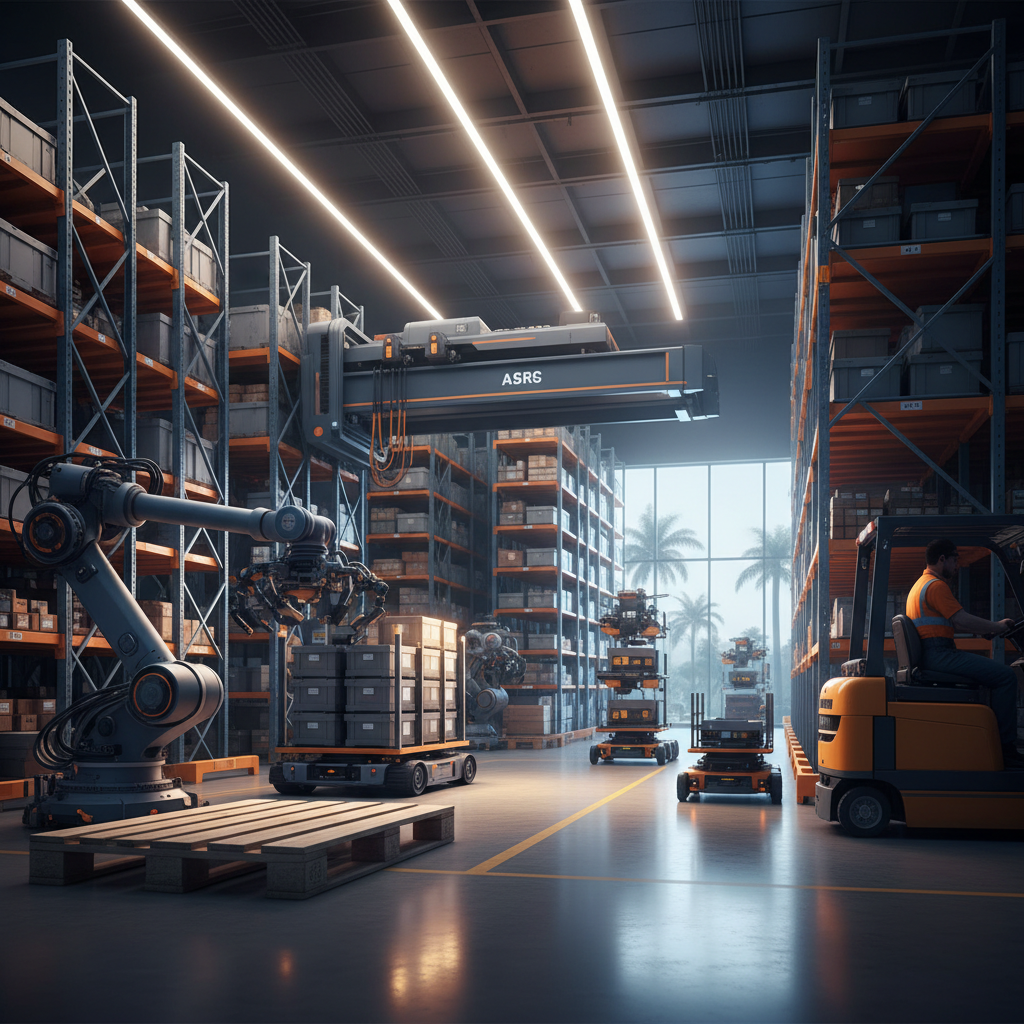
With several companies across the globe offering ASRS technology, you’re not short of options. Here’s a 12-point checklist to help you narrow them down to world-class vendors. 1. How did they handle their last failure? This is probably the most important question that you can ask your vendor. Things will go wrong. Shut will fail. Motors will burn out. Batteries will die and robots will hit obstructions. You want a vendor that has a process for rapid dispatch of spares and well-prained maintenance engineers ready to visit your site. 2. Do they offer interlocked and redundant subsystems? Conveyor jams are common. Shuttle failures are too. You want a vendor that offers interlocked and redundant subsystems. If one shuttle fails, the other can keep running until your maintenance worker crews to the freezer or you get a replacement on the next flight. 3. what are the rated MTBF and MTTR of their equipment? Mean Time Between Failures (MTBF) and Mean Time To Repair (MTTR)are basic indicators of how reliable your system is and how quickly you can realistically get it running again. More than uptime, these numbers tell you how many headaches, expedites and overtimes you can expect due to lost time on your system.
Which of these two categories of providers would be more suited for your project? If you’re using an ASRS for the very first time, in my opinion, the experience of a domestic integrator will be the best choice. They offer tailor-made solutions and are nimble enough to adjust to requests even during the project execution phase. They are focused on your satisfaction. However, a new technology for you also implies a slightly greater level of risk because there is no local reference for their projects.
Partnering with international companies which can bring tested technologies as well as R&D investment levels that no local vendor can match might be crucial for the demanding throughputs (if you are moving 1,000 pallets an hour, mistakes can be costly) or unusual shuttle types, such as those that operate in the ultra-freezers of the frozen-food industry. But how local are they? If you cannot sit down with your integrator’s principal over lunch, attend a board meeting, visit the production site, or warmly shake the hand of the owner, you are risking your capital budget.
ASRS solutions are big, and more expensive (which is not to say they all are). The value of these systems is a function of their storage density (almost always higher than a conventional warehouse), the direct labor costs being replaced, their speed of operation, energy efficiency, and the other automation with which they must interface. If the business case justifies an ASRS (or you’re being asked to “blue sky” whether one would or not), it’s not a decision to be taken lightly. They’re capital and maintenance intensive. It is arguably better to invest the money in one that approaches modularity in its design and is less proprietary. Most have moderately long lifecycles when properly maintained and used within their design parameters. Be circumspect and conservative in estimating future potential storage or SKU requirements. Keep in mind that they also limit flexibility and absolutely require redundancy in key components. As in: if “x” goes down you’re shut down until we can fix it, Walker says.
Ask for detailed and highly relevant case studies. An installation in a non-union U.S. distribution center that serves as a warehouse and crossdock for palletized, crated, and cartoned products isn’t that relevant if you’re running an automated frozen-food warehouse in Quebec. The devil is in the details, so push for specifics about similar installs handling the same products in comparable volumes under comparable conditions. Look for patterns, the same few case studies trotted out for multiple scenarios suggest a lack of depth.
The WMS is what plugs the WCS into your existing workflows. Its costs depend primarily on how many man-months of customization you need to mold it to your business processes. WMS customization is standard across all vendors, so shop for implementation partners who have both experience in integrating a WCS manufacturer’s system and a background in your industry or process use-case. Your WMS can be hosted on premises, in the cloud, or as a hybrid, since you don’t want a crashed server to bring your logistics to a standstill, the key decision here isn’t cost but reliability and failover support.
Just as critical, but often overlooked until it’s too late, are scheduled maintenance and emergency support services. What’s the integrator’s reputation in your industry for fielding 24/7 technical support calls and dispatching on-site assistance? Do they have their own in-house emergency parts inventory to accelerate repairs? Do they provide access to a professionally staffed service desk and offer software update support agreements on an a la carte basis? Most importantly, can they afford you zero preventable downtime within a service-level agreement? That’s the mark of a true partner because, with so many components working in lockstep, there are no easy answers in lights-out automation.
Not all lights-out suppliers are created equal, and not all ASRS subsystems are lights-out ready. If your organization lacks the in-house talent to provide tier-one technical support, look for a vendor with a global help desk that can troubleshoot remotely. Downtime is expensive. Every hour your ASRS sits idle, orders pile up, trucks wait, and customers grow impatient. The vendor’s ability to dispatch a technician and deliver a replacement motor or encoder within hours, not days, can mean the difference between a minor hiccup and a supply-chain catastrophe. Verify that the company maintains a spare-parts warehouse within your region. Ask for a list of critical components they stock and their average response time for emergency callouts. Some vendors offer tiered service-level agreements (SLAs) that guarantee four-hour on-site arrival for Tier 1 faults and next-business-day arrival for less critical issues.
Local manufacturing capability also counts in terms of how agile the system integrator can be in making design adjustments during the project to meet your evolving needs or to address site conditions discovered during construction. If the vendor fabricates steel structures, assembles drive units, and tests control panels in India, they can respond more quickly to tweak a part. That’s a huge benefit when you’re repurposing an existing building, and precise measurements are difficult because asbestos-once insulation adds inches where they shouldn’t be. On the flip side, a vendor who imports pre-assembled modules may provide a bit more schedule or budgetary predictability since the cost of field modifications is often much higher than the mod in their foreign factory.
Track Record and Case Studies: Essential Customer Reference Audits to Complete Before Signing a Vendor
The shiny forklifts whizzing around the warehouse are all well and good, but information is power. Any current warehouse employee will be happy to regale you with his experiences. If you can, visit on a Saturday or Sunday to watch how that vendor solution behaves at peak capacity. If that’s not possible, find out if the forklifts conveyors and sorters run while the workers are on break. The last thing any company needs is a bottleneck due to improperly engineered workflow dependencies, or cutting corners on necessary, albeit expensive, machinery. Remember, you’re in control. Not all brokers operate from the best of intentions, and the unwary end up with huge anchors dragging them into the abyss.
Read online reviews and feedback in industry chat rooms. Occasional bad write-up isn’t worrisome , but a pattern of struggles should give you pause. If the vendor has collaborated with others in your industry, your advantage could be compromised. They’re going to understand your workflow and weak points. They may also unintentionally put you in direct competition by working with their other clients. It’s fair to ask for a nondisclosure agreement on process information and plant layouts. It’s also reasonable to request proof of professional-liability insurance and performance bonding. A reputable integrator will be able to provide both.


AMR Supplier Selection Guide India’s dynamic logistics industry demands WCS solutions that are easy to integrate, highly scalable, and capable...

The Automatic Identification System (AIS) is a revolutionary tool that has vastly enhanced maritime communication and safety. It's a standard...

WMS for Pharmaceutical Warehouses Sure a WMS helps pick and ship the right product for the right order at the...

To provide operational excellence, Armstrong Dematic leads the way towards innovative intralogistics and warehouse automation solutions. Our transformations are based on Industry 4.0 solutions.
Follow us on:


