Intralogistics 2026: Four Forces Reshaping Modern Warehousing
The warehouse automation landscape is entering a pivotal phase. Across industries—from FMCG to pharmaceuticals, e-commerce to automotive—businesses are confronting the


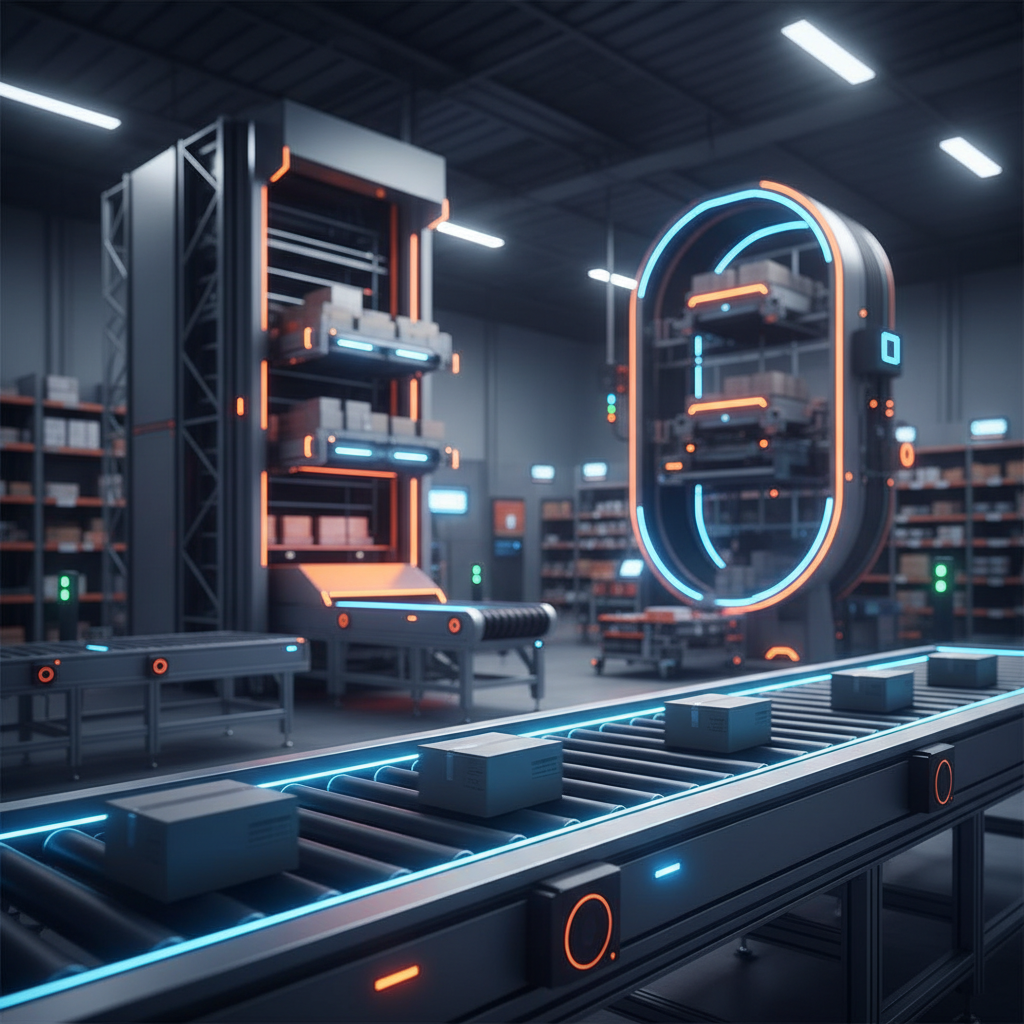
The advantages of automation in warehouses are clear, from cutting costs to improving efficiency. But with so many automation technologies available, which one is right for your organization? The cost suggested in a vendor proposal is not the only expense you need to consider; it’s just the beginning. There are additional costs related to installation, hardware modifications, software integration, and service and maintenance that you need to be aware of. This guide presents a detailed understanding of the costs of deploying and operating seven warehouse automation technologies.
A narrow belt sorter cost typically ranges from $150,000 to $600,000 for a mid-sized installation. The final figure depends on throughput requirements, the number of divert lanes, and the level of software intelligence you need. Narrow belt systems shine in high-speed e-commerce fulfillment, where parcels must flow smoothly to dozens of packing stations. Unlike traditional conveyors, these sorters use narrow belts that pivot or slide to redirect items, cutting footprint and boosting speed. When you add induction zones, barcode scanners, and warehouse management system hooks, costs climb quickly. Expect to budget an additional 15 to 25 percent for controls and software licensing.
If you focus on the continual enhancement of your customer experience, choose a sorter with durable design elements but don’t overspec. You’re paying for redundant capacity you won’t use. Conversely, don’t try to cut sorter equipment costs by making your operators find ways to adapt to an awkward design. They will find shortcuts, and it will affect throughput and lifespan. There might be economies to achieve in software options or warranty, but you want a parts warranty that feels comfortable and software updates that reliably address any issues found in the field. Partly, it’s also a matter of who you trust to be a good partner over the life of this demanding equipment.
There’s so much more to account for beyond the equipment invoice. Did you grasp that a typical sortation system may very well be double the conveyor cost after all components, engineering, commissioning, and training are halfway? The more complexity your system adds through modifications to the structure, upstream/downstream conveyor compatibility, or need for accessories like splice plates, corrective angled rollers, or item stops, the more time and money you add to the budget. Other sortation system cost considerations to plan for include: – Sorter height extensions (exclusive of sorter to floor supports to be provided by others) – Mechanical and electrical system integration to the sorters including read/write take-away interfaces, Electrical modifications and interfacing of new equipment or devices to existing system configurations, Line controls such as ;start, stop, enable, faults, etc.; interfaced to ECC or other system controls are all user supplied and not provided by the conveyor manufacturer, Main control disconnect supplies for single power drop to the cdlc, Interface with customer provided equipment, Modifications or concerns added to your scope including: * concrete cutting or coring requirements * rack, mezzanine, or room restrictions * support requirements other than the base structure * waterfalls to reverse flow or redirect cartons * boxing product * product flow switching * additional safety devices * controls and alarms * item take-away points * graphics or accumulations symbologies * special flow breaks * customer interfaces and data exchanges
The physical design of a narrow belt sorter directly impacts price. Belt width, material grade, and take-up tensioning systems all contribute to the bottom line. Standard polyurethane belts offer durability and low friction, but specialized coatings for temperature extremes or chemical resistance add 10 to 20 percent to material costs. Take-up frames, which maintain belt tension over time, must be robust enough to handle continuous operation. Skimping on frame quality leads to pre- mature wear and unplanned downtime. Choose stainless steel or heavy-duty aluminum for high-cycle environments, even if it raises the initial narrow belt sorter cost by a few thou- sand dollars.
If induction is about how parcels enter the sorter, discharge is about how they exit. This process is the domain of loop sorters, tilt tray, or crossbelt systems, handling tens of thousands of items per hour. Tricks include merging and diverting as multiple streams feed into a single exit spur. Back-pressure accumulation keeps items flowing as the exit labeler falls increasingly behind schedule, a strategy actually enabled by the installation of automated systems. You can defer a $2 million induction parcel matrix decision until after the sorter, because the small parcels that can be tracked to more than 50 millimeters when inducted require a different strategy based on discharge processing.
Site-specific challenges can increase costs exponentially. Are you working with low ceiling heights or narrow aisles? Is the floor particularly uneven? Are you sorting items with special care needs or that have safety considerations for consumers? You’re going to need engineering customization. Additional safety guarding, emergency stops, and light curtains will add $15,000 to $30,000, and you can’t skip those for compliance or your workers’ safety. Lifecycle costs cover energy, belt, and maintenance. A narrow belt sorter uses between 15 and 25 kilowatts when operating at capacity. Using an average US industrial electricity rate, expect to pay $10,000 to $20,000 each year. The belts themselves typically need to be replaced every 18 to 24 months at a cost of $5,000 to $10,000, depending on the length and type ordered. Often when you calculate OpEx for the first five years, you find that those costs will nearly double the CapEx.
Input-Output Fieldbus Slave Node Diagnostic Replacement Unit Costs
Modern sorters today depend on distributed I/O networks to collect sensor and actuator data systemwide. For each fieldbus slave node, which connects devices on the sorter to the central control unit, you’ll spend $300 to $800. Plan to invest $10k to $25k in the total I/O layer for a typical narrow belt sorter. Diagnostic tools and spare replacement units will total an additional $3k to $5k. While field devices are nearly bulletproof when properly maintained, if a device fails and you don’t have an immediate spare, the cost of idling a sorter can run as high as $20k per hour. Updates to control system software and firmware will also be required annually. Budget an additional 8% to 12% of your original controls purchase for support contracts.
Other automation technologies have unique costs associated with them, too. How much is a shuttle system? A basic shuttle system will generally cost $100,000 to $500,000 depending on the number of shuttles you need, the maximum rack height, and the payload capacity. Shuttle systems are perfect for dense storage and high-throughput picking, and some of the most common applications are in cold storage and pharmaceutical environments. The cost of a pallet shuttle can vary more than most systems; semi-automated units can sometimes be obtained for around $50,000, and fully autonomous systems can run well over $300,000.
Simpler and more cost-effective than many other automated technologies, the pick-to-light and put-to-light systems we’re discussing today are ideally suited for operations with a lot of SKUs but not a lot of daily throughput. Servers and spare parts distribution operations are common users, as are ecommerce fulfillment centers. Here’s a quick look at what each one does, as well as their general costs and benefits.
Deciding on the optimal blend of technologies to create the most effective automation system is something that every operations manager has had to do at some point. And it’s never easy. Each technology has its strengths, but the weaknesses , real or perceived , are often what drives decision-makers to stick with the devil they know rather than the solution that’s actually the best fit for their needs. That’s why it’s so important to pick the technology based on facts and the requirements of the application, as they are today and as you expect them to be tomorrow. What’s your devil-you-know right now? Is it the higher cost of a certain technology? The fear of unseen ramp-up costs that may be more expensive than you first realize? Or is it a worry that you might not get the results you need right out of the gate?

The warehouse automation landscape is entering a pivotal phase. Across industries—from FMCG to pharmaceuticals, e-commerce to automotive—businesses are confronting the
Intralogistics Automation Solutions for Warehouses The concept of automation in a warehouse was initially thought about as a way to...
Efficient supply chain management is the pillar of any successful business. It ensures timely delivery, decreases costs, and maintains customer...

To provide operational excellence, Armstrong Dematic leads the way towards innovative intralogistics and warehouse automation solutions. Our transformations are based on Industry 4.0 solutions.
Follow us on:


