Maximizing Floor Space: Exploring the Benefits of Mini Load AS/RS Storage Systems
When it comes to storing products in warehouses, we often need help with the dilemma of compromising floor space. But...


Ever-Shorter Delivery Windows for Just-in-Time Manufacturing Factories are under endless pressure to cut costs and reduce inventory. Just-in-Time manufacturing has kept costs low by scheduling production precisely when raw materials and parts are due. This depends completely on suppliers delivering their wares exactly when and where they’re needed , no earlier, and certainly no later. JIT eliminates the manufacturer’s need to store excess inventory, but transfers that cost and risk to the supplier. And that means you. Uncompromising EDI & Sequencing Compliance Because your parts plant-side arrival time is so tightly squeezed, the WMS must flawlessly integrate with the factory’s Enterprise Resource Planning system. Every sequenced part must arrive at the factory at the exact sequence it will be used during production. One part issued out of sequence can halt the process. Your customers also expect the WMS solution to integrate seamlessly with Electronic Data Interchange systems to provide real-time shipment and receipt information.
Intensive Product Data Management Your warehouse operators must be scanning 1000s of parts a day. Each product in your warehouse could have a variety of attributes , weight, dimensions, barcodes, packaging requirements , some of which may change from one sequence to the next. The WMS must be able to manage these attributes in real time so you can continually make best use of your space and human resources. Mission-Critical Network Uptime Should your warehouse management system ever fail, it’s a fair bet the factory’s going to grind to a halt within minutes. So any WMS worth considering should be on-premise, in the cloud or hybrid for maximum robustness. Adaptive Process Refinement Supply chain practices and warehouse processes are continually evolving. An effective Automotive Warehouse Management System should foster that. Bug fixes, regular updates to stay in line with your factory’s application software, and ongoing support should all come as standard. End-to-End Returns Management With pressure to shorten product life-cycles and the number of models increasing year-on-year, vast numbers of parts are returned as outdated or redundant. You must be confident these can be returned back into your warehouse efficiently and automatically. If your current WMS solution isn’t meeting all of the above criteria then, probably, neither is your warehouse.
Our semi-automated batch-picking systems reduce travel time and improve picker productivity by up to 90 percent. Or consider an automated order-picking system that keeps your fastest-moving stock right at pick face height, slashing travel time and increasing accurate picks. Returns processing can be a costly bottleneck, but our automated returns station inspects, re-bins, and returns product to inventory quickly and accurately. Finally, we develop end-to-end solutions with our own proprietary WMS, so every link in the chain works together seamlessly, all backed by 24/7 support.
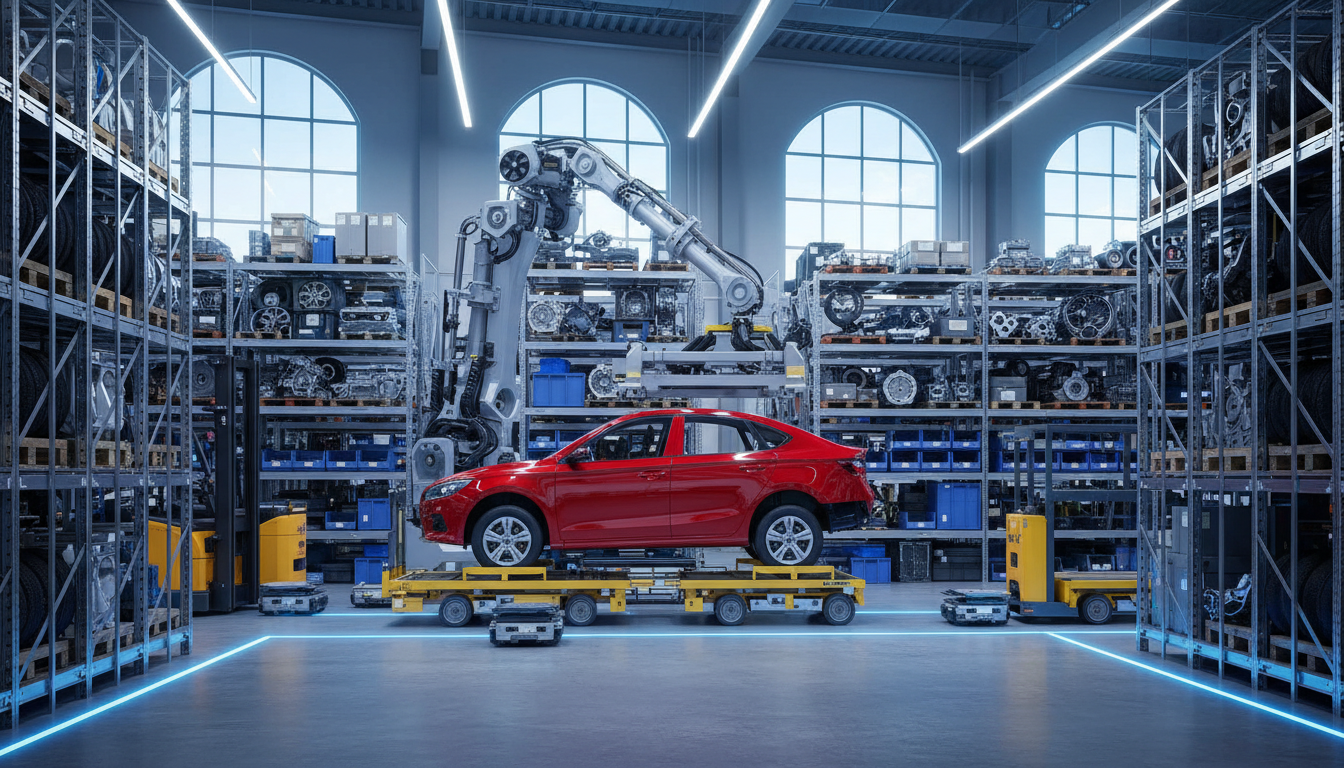
The parts your production line needs are as diverse as the vehicles themselves. From complex sensors to heavy engine blocks, your WMS directs put-away to the right zone within inches, ensuring inventory remains organized and accessible even in high-density configurations. This precision continues during picking, with Armstrong Dematic systems providing easy access to deep-lane storage and ensuring operators are guided to the correct location every time. We integrate virtually every technology you can think of including shuttle systems, advanced robotics, and self-driving vehicles for fully automated or hybrid operations.
But beyond the granular preferences of items in motion, modern WMS solutions integrate to higher-level host systems to improve yard management, labor orchestration, and transportation planning. They ensure better load optimization , something WMS does in its sleep , by providing advance notice of exactly which SKU/PN unit will be departing on which truck and when. Plus, for operations with yard management modules, a WMS for Automotive can offer real-time visibility into the status of incoming and outgoing trucks, reducing the chance of congestion and streamlining the flow of goods.
What is more, warranty returns must be invisible to your customer. When a driver pulls in with a defective alternator, your service department provides a new unit without pause while the old one returns through your internal system by special part number and by the unit’s serial number, while maintaining the chain of custody and the warranty record for the dealer. Failing to manage this process properly can result in auditing nightmares, chargebacks, and lost profit.
JIT and JIS manufacturing philosophies demand that parts arrive at the assembly line exactly when needed, in the exact sequence required. A single out-of-order component can disrupt an entire shift. Your WMS must synchronize picking, packing, and shipping with live production schedules, often updated every few minutes. Armstrong Dematic systems use real-time API connections to pull schedule changes from MES and ERP platforms, automatically adjusting pick lists and wave plans. Pickers receive updated instructions on handheld devices, ensuring they always work on the highest-priority tasks. This dynamic responsiveness keeps your warehouse in lockstep with the production floor.
It’s easy to oversimplify by saying that pick-to-sequence and pick-to-light systems sort and display picks in the correct order. That’s true but only high in the sky. To keep the floor moving, system software must exchange real-time messaging with WMS or host systems, and that’s where the rubber meets the road. Pickers won’t wait patiently while a slow WMS catches up, so every second saved in wave release and batch planning is one more tick in the win column for your operation. Our JIS systems are built to power through high-speed, high volume scans and picks, rescanning and repicking only when necessary.
Would anyone be surprised to learn that each minute of production downtime costs an automotive manufacturer an estimated $22,000? Probably not. And would they know that unsold units piling up in even the most remote warehouse contribute to that and countless other operational losses daily? Probably. What might catch even a few overlooking warehouse inventory management is that failure might be easily preventable with a WMS simplification leading to predictive analytics and, ultimately, automation. It’s surprisingly possible to virtually eliminate part and product plant floor stock-outs and unsold finished good overages. A single, sophisticated alarm can do it all.
Emergency orders are already stressful enough; you shouldn’t be worrying about inventory accuracy and delivery status on top of that. If a customer is forced to shut down part of their plant because you sent the wrong product, or they miss their deadline because the carrier you selected never arrived, that mistake is going to cost you big. Receiving a red alert for each rush order in your WMS, plus additional alerts each time WMS and carrier status change, will keep you on top of those crucial shipments.
Directed Putaway and Picking for Heavy vs. Fast-Moving Parts
Car parts come in all shapes, sizes and speeds. Some parts like engine blocks are extremely heavy and move at a snail’s pace. Other parts like filters and gaskets are mere ounces and fly off the shelves. Your WMS needs to direct each part to the correct storage zone and equipment. Armstrong Dematic systems use rule-based logic to assign heavy parts to floor locations near the docks. Parts are stored closer to the destination, which results in less travel and fewer lifts. Fast movers are forwarded to pick zones with high-density shelving while slow movers are stored in bulk to make room. This intelligent slotting solution reduces picker travel by up to 30 percent.
Another great feature of this product is that we direct the picking even further. So instead of a piece of paper telling a worker what to pick, the WMS sends precise step-by-step instructions either to a mobile device or a headset using voice technology. The WMS calculates the most efficient route through the warehouse. It will also consolidate all of the orders that include a pick of a product in one area or zone and isolate those orders so that they can be picked in one movement. Then it will confirm the pick/transaction by asking the worker to scan a barcode. This not only eliminates returns due to incorrect shipments but also captures the data for updating inventory.
Barcode and RFID Verification at Every Stage
Our Automotive Sequencing Suite interfaces with OEM scheduling systems to smooth inbound JIT/JIS part streams, adapt parts sequencing in real time to production schedule changes, and schedule optimized carrier departure times based on OEM dock availability and order consolidation. Our global sequencing engine provides standard interfaces to all carmakers and tier 1 suppliers, utilizing full truckload, milkrun, and consolidated cargo carrier movements to reduce freight costs and CO2 emissions.

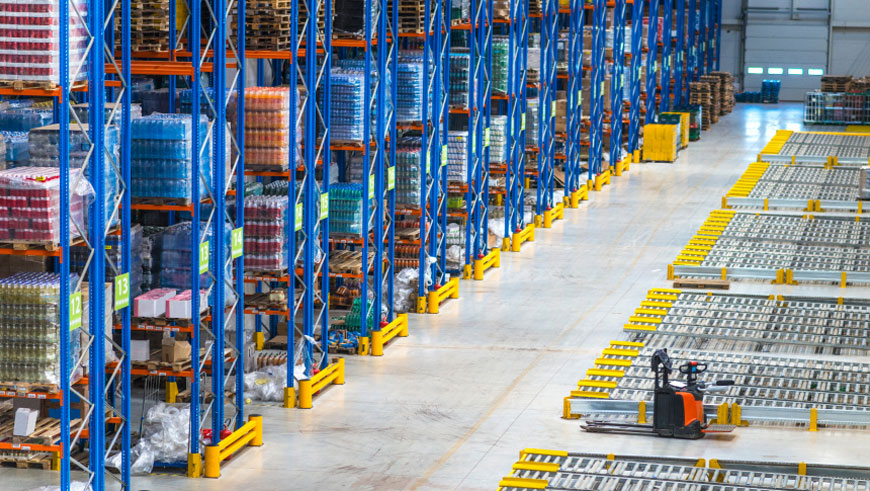
When it comes to storing products in warehouses, we often need help with the dilemma of compromising floor space. But...

Technology is changing rapidly in this fast-growing world. What could be the best technology in the past decade could be
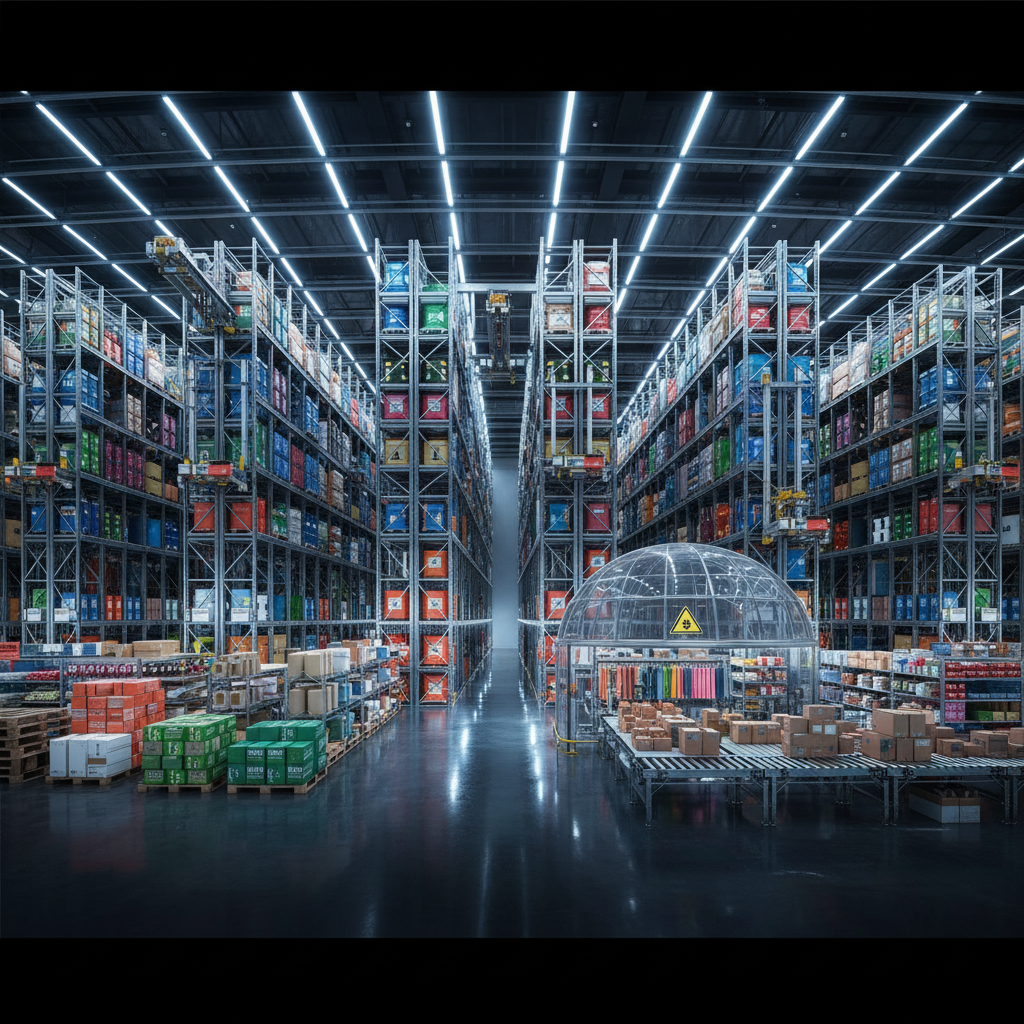
ASRS for Chemical Warehouses The chemical industry is marked by its rigorous standards and the stringent requirements imposed by regulatory...

To provide operational excellence, Armstrong Dematic leads the way towards innovative intralogistics and warehouse automation solutions. Our transformations are based on Industry 4.0 solutions.
Follow us on:


