Warehouse Automation Payback Period Explained
Warehouse Automation Payback Period Explained When we think of the term payback period, it's about how soon the benefits from...


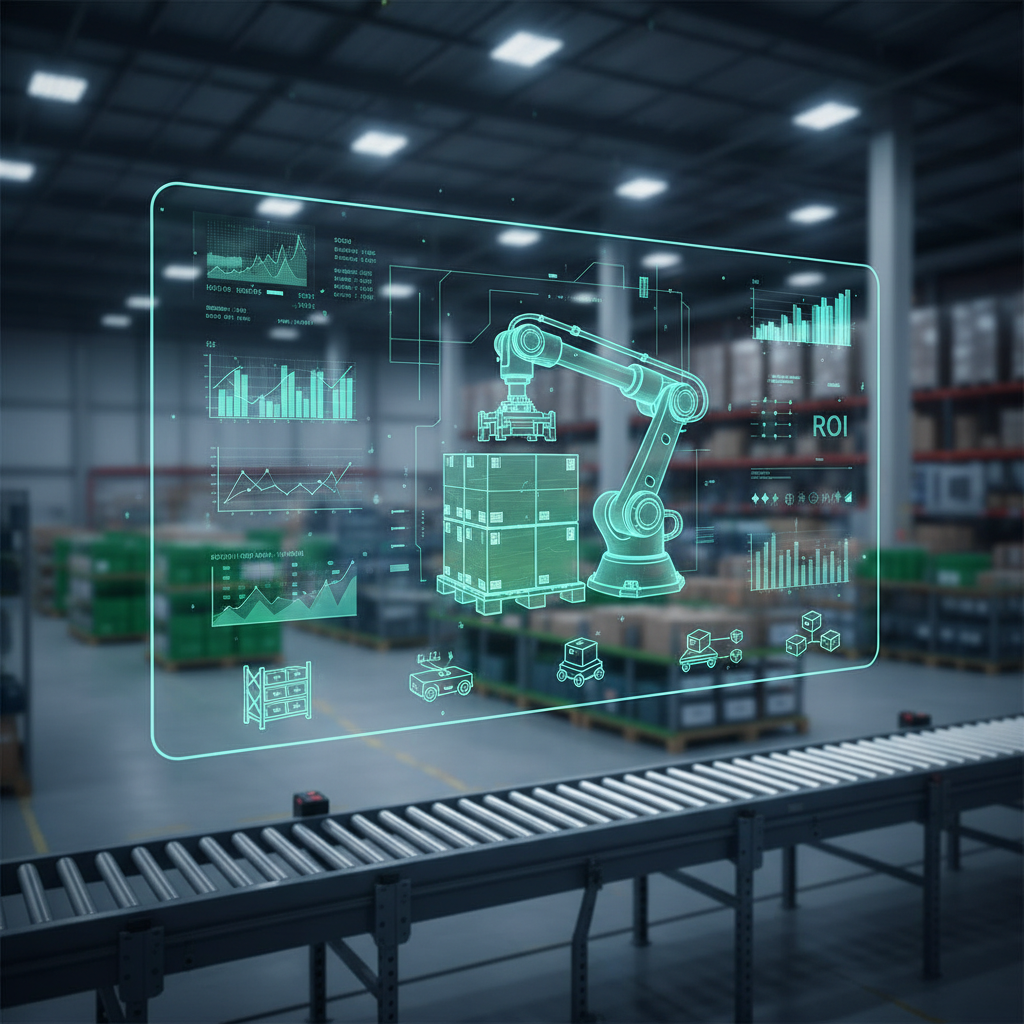
End-of-line palletizing has long been the bottleneck that slows production, drives up labor costs, and exposes workers to injury risk. Manual stacking demands repetitive heavy lifting, often across double or triple shifts, while inconsistent throughput creates downstream delays. Robotic palletizers promise to eliminate these pain points, but the upfront capital investment can seem daunting. That is where a structured Palletizer ROI calculator becomes essential. By quantifying hidden costs, comparing system architectures, and projecting payback timelines, operations leaders can make confident automation decisions grounded in hard numbers rather than gut instinct.
Yet why should it surprise us when entrepreneurs and supply chain managers find it hard to calculate how much time and money are being absorbed by this everyday task? There’s no clocking-on system for when one of your staff starts stacking products on a pallet. It invariably happens over the course of a shift, obscuring the beginning of the process and often the end as well. It’s notoriously difficult to identify and isolate the number of man-hours being chewed up by palletizing amidst the general hustle and bustle.
Warehouse workers pay for every heavy case or unwieldy item they handle, with each lift putting them at risk of injury , and sending minor shocks up a body not designed for such repetitive strain. It’s a grind that demands massive compensation to attract and keep staff in today’s job market. Yet the true price of manual lifting goes far beyond payroll. Repetitive lifting can lead to numerous musculoskeletal injuries. Twisting while lifting , a virtual necessity with many cases , is particularly harmful. These injuries are the root cause of many workers’ compensation claims and lost-time incidents, while insurance premiums are driven relentlessly upward by catastrophic back or shoulder injuries resulting from heavy, repetitive lifting.
Articulated robot palletizers may be more adaptable, but gantry systems are faster and easier to program. Which type is driving the current surge in robotic palletizing installations for end-of-line packaging operations? It’s actually a bit of both, depending on the application. In anything but the highest-speed, single-SKU distribution center or consumer products line, end users tend to specify an articulated robot for its small footprint and ability to handle a wide variety of products. Smaller companies lean that way as well, because of the initial cost advantage. For faster lines, bulk palletizing or shrink-wrapped trays, it’s all about the gantry’s speed and simpler programming, especially when dealing with reinforced corrugate cases. Large end-of-line packaging operations, most of which have gantry systems in place, will stick to what they know. For systems integrators, a projected growth rate of 10 to 15% annually in robotic palletizing (ARC Advisory Group, 2012) means that if they aren’t already in the game, they should be looking at the prerequisites.
The real eye-popper, however, is the long-term relationship with maintenance and support. It’s not even close: articulated arms are like the visa infinite card in this regard , they never leave home without it. They’re in the zone, regularly scheduled to drive over for an oil change, and incidentally taking care of any wear-and-tear adjustments that might be needed. So you can count on a long and prosperous cohabitation with your friendly, peppy, “where-do-you-want-this-case-today” robotic arm.
“Virtually all systems suffer from end-of-arm tooling drift, including vacuum loss. The act of picking up a different-sized product and setting it down again, thousands of times a day, slowly knocks the arm out of optimal alignment,” says Eric Meyers, Technical Director at JMP Solutions. The challenge is that resetting tools with test weights , a common practice on most packaging lines , takes the robot off the line, often causing a backup. “Over the course of a 24/7 week, I wouldn’t be surprised if you lost a half-hour a day,” Meyers says.
A truly accurate palletizing automation ROI projection also incorporates the decommissioning costs of labor deployments and the fact ROI profitability lengthens as robotic lifespans continue to extend. Mass production demand further fuels the relentless march of robot evolution, pushing the costs of robots lower and lower while improving their performance, flexibility, and ease of maintenance. New generation robots are considerably lighter, their footprint smaller, the need for expensive add-ons is reduced, programming is simpler, and fewer mechanics are required for installation and maintenance. Robots are even able to adjust to their own mechanical wear for longer operating lives. So, for each robotic bay on your production floor, those designed for 24/7/365 performance are typically accruing ROI longer and faster than those designed for 9-to-5.
Human operators slow down as shifts progress, take mandated breaks, and call in sick. A robotic palletizer runs at the same cycle time whether it is hour one or hour twenty-three. If your manual crew stacks 500 cases per hour on average, a well-tuned robot can sustain 600 to 800 cases per hour without fatigue. Over a three-shift operation, that delta compounds into thousands of additional cases per week, unlocking capacity that would otherwise require hiring a second line or paying weekend overtime.
How do you translate the increase in productivity achieved through autonomous mobile robots (AMRs), robotic palletizing, or automated guided vehicles (AGVs) into financial terms that make sense to management? One way is to look at it as gained capacity that would otherwise have required additional spending on manual labor and that, when fully utilized, could instead generate additional income. This whitepaper covers how such gains can be quantified for storage solutions, palletizing, and vehicles, along with examples of the results companies have achieved.
Worker Compensation Reductions: Mitigating Heavy-Lifting Injury Liabilities and Staff Fatigue Expenses
Plus, heavy lifting isn’t the only source of harm. Twisting, turning, bending, and reaching during manual palletizing can lead to sprains, strains, and other musculoskeletal disorders. “Statistics show, anecdotally and empirically, that the operations with the most lifts are the ones with the most damage,” says Carole Nuuvnen, Aftersort. “So, operations that automate the most lifts are the ones that are going to reduce the most injuries.” That’s where robotic palletizing comes in.
In addition to claims, do you ever consider the cost of fatigue-related errors? It’s easy to overlook mistakes that employees make because they’re tired. Errors like misreading labels and selecting the wrong products… or failing to follow proper rotation rules and stacking mixed SKUs on the same pallet. Then there’s leaving gaps that cause load shifts in transit. Manual errors require your administrative team to rework loads and may subject you to unjustified retail chargebacks from customers that require perfect pallet configuration.
Determining the Payback Intercept: A Step-by-Step Practical Math Example for End-of-Line Production Robotics
What are the benefits of considering the palletizer’s total cost of ownership rather than solely the purchase price comparison to the manual method and an alternative gantry-based unit? With the palletizer in use, you’ll reduce labor to 0.5-1 operators per shift, cutting annual costs by $62,000. Minimizing physical strains and effort as an added benefit (though you can’t put a price on worker safety), your injury/quality/turnover impact will decrease by enough to yield $4,000 in savings. All combined, the newly generated total of $66,000 offsets almost half of the annual palletizer savings.

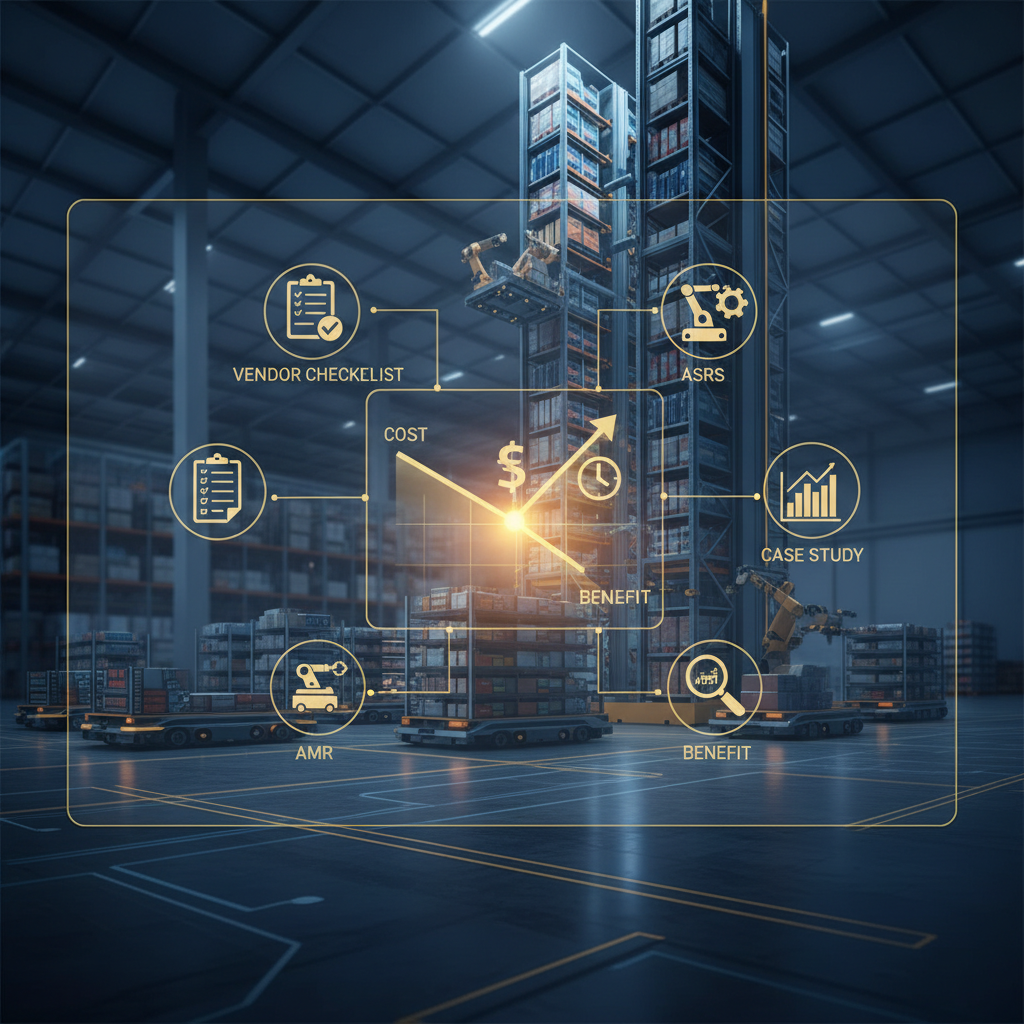
Warehouse Automation Payback Period Explained When we think of the term payback period, it's about how soon the benefits from...

DWS System Cost Guide How much does a warehouse dimensioning, weighing, or scanning system cost? The answer is “it depends."...
WMS for Electronics Distribution An electronics warehouse is a unique mix of urgent dispatches, valuable cargo, and relentless tech. A...

To provide operational excellence, Armstrong Dematic leads the way towards innovative intralogistics and warehouse automation solutions. Our transformations are based on Industry 4.0 solutions.
Follow us on:


