SaaS WMS Pricing Explained
SaaS WMS Pricing Explained Warehouse software pricing can be confusing. A cloud-based WMS comes with licensing, hosting, and ongoing maintenances...



The correct selection of an Autonomous Mobile Robot (AMR) vendor is key to the success of your warehouse automation project. With new suppliers entering the market and technology advancing with each passing month, decision-makers are faced with making a difficult choice. By using an AMR Vendor Checklist, you can objectively assess the capabilities provided by each vendor and guarantee appropriate returns on your investment. This guide will take you through the most important criteria to consider from Navigation Technology to Payback Period Analysis, to help you construct a Warehouse Automation RFP that will protect your budget while scaling with your business.
How do you ensure you choose the right autonomous mobile robot vendor to become a transformative part of your supply chain? To find the perfect match, let’s take a close look at the six-step, fail-safe process we use at Vecna Robotics. Our engineers have partnered with hundreds of the world’s largest and most advanced warehouse operations to automate their material handling. This process ensures they pinpoint your needs, understand your system, and bid accurately.
An AMR Vendor Checklist is not a nice-to-have luxury; it’s a necessity. The wrong choice can set you back months or years in your AMR implementation with cost overruns and missed targets. Your entire investment in robotics , not just the money, but time, resources, opportunity costs, and lost revenue if you don’t hit your go-live window , is on the line. If your automation project is critical to your business, run away from any provider without checking off the boxes on here.
Well, where to start… The technical foundation works; of course, it’s your expectations that determine the level of success. Safety features should always be a given… you’re not going to put employees in harm’s way, are you? Fleet Management Software should be versatile, logical, intuitive, and dynamic. If you have to spend thousands of dollars each year just to maintain the systems integrations you’ve built, that’s a failure of the Integration attribute. Imagine how empowering it could be if your AMR fleet expanded to 20, 50, 100 mobile robots… and beyond. Don’t forget: Before you do any of that, you’ll need to connect with several providers to compare the Warehouse Automation payback period. Make sure you understand the Warehouse Automation Payback Period so you can compare total cost of ownership across vendors. How’s that for a solid start?
I’m not exactly sure but I think the most current AMRs leverage LiDAR, vision cameras, or a fusion of both to navigate. LiDAR-based systems are highly effective in stable, structured environments but may struggle to detect reflective surfaces or transparent obstacles. Vision-based navigation performs well in changing layouts and can identify pallets, racks, and people. Hybrid approaches combine the advantages of both sensor types. It is recommended to ask vendors for specific details regarding sensor range, update rates, and localization accuracy. You can also ask for a live demonstration under warehouse-like conditions with narrow aisles, mixed lighting, and high traffic. A solid navigation stack will ensure minimal collisions, reduce downtime, and quicken deployment times.
But which path is the right one? There are many criteria for classifying AMRs, such as drive type, navigation technology, or load-handling mechanism. However, fleet management software (FMS) is one of the most telling, because while hardware aggregators can and do compete on how well their systems optimize route planning or manage charge levels, it’s the fleet management software that dictates it. It’s that more nimble layer of technology that interprets what’s happening out on the floor, on the roads, or in the aisles, and orchestrates constant change, whether that’s pausing to wait for a slow-moving human, adjusting to avoid a spill, or redistributing robots due to a rush job that just came down the line.
Scalability
What does it really mean for a system to be ‘scalable’? Well, I like to think of it as a rubber band. You know, it can stretch to handle more robots, more skus, more orders, and contract right back down as needed. When you’re looking for a new system, remember to ask yourself, “How will this fit my operation when I grow or have fewer orders?” And also ask your vendor if you can quickly and easily deploy 20 additional units next quarter without reconfiguring your existing fleet.
Safety Features
We’ll also look at whether your potential partners are stable enough to support you throughout the robot’s productive life. Do they have a proven install base? Are they financially stable? Do they have a well-funded R&D team to keep up with the rapid pace of innovation in this space? And, finally, do they provide training so that your staff is ready to operate and work with this new technology?
Integration with Existing Systems
Do you write endless control logic for every possible system state? A good software architecture shields your robots from low-level complexity. Focus your team on mission-critical logic using high levels of abstraction. This elevates maintenance and error recovery, reduces battery consumption, and extends vehicle lifetime. However, unless you’re a software house, your focus isn’t software; it’s your warehouse. You rely on the robot vendor’s software, so evaluate its architecture to eliminate performance bottlenecks and ensure future maintainability.
Final Checklist Before Purchase
Before signing a contract, validate vendor financial stability, customer references, and post-sale support. Request case studies that match your industry and throughput requirements. A Warehouse Automation Case Study from a similar operation offers proof of performance and realistic timelines. Ask for detailed cost breakdowns, including hardware, software licenses, installation, training, and annual maintenance. Calculate the AMR Payback Period using your own labor rates, throughput targets, and operational hours. Compare at least three vendors side by side using a weighted scoring matrix that reflects your strategic priorities. Finally, negotiate service-level agreements that cover uptime guarantees, response times, and spare-parts availability. A thorough AMR Vendor Checklist transforms a risky technology bet into a strategic investment that delivers measurable returns year after year.


SaaS WMS Pricing Explained Warehouse software pricing can be confusing. A cloud-based WMS comes with licensing, hosting, and ongoing maintenances...
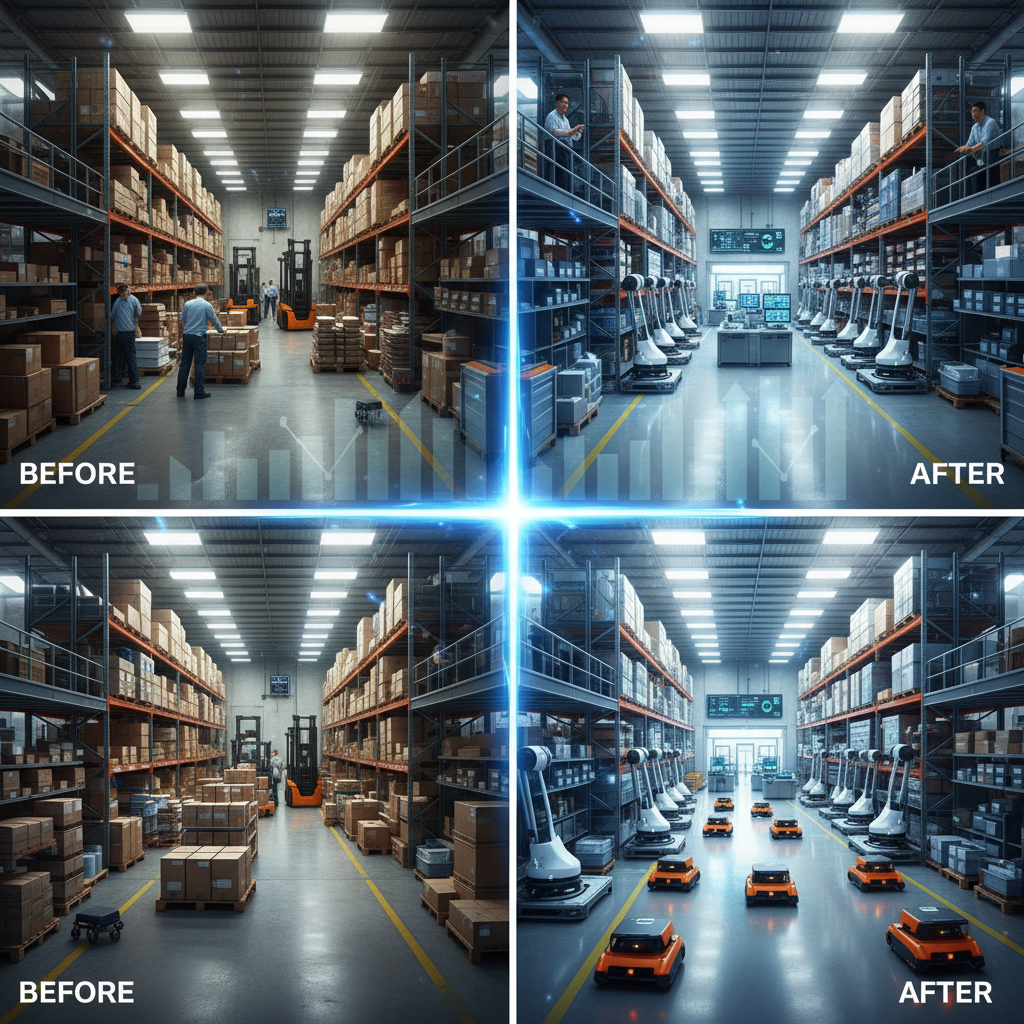
ASRS Case Study: Before and After Results When the cost of labor began to rise, and the inefficiencies became too...

WCS Implementation Cost Breakdown Warehouse automation is no longer a luxury reserved for global giants. It's become the lifeline for...

To provide operational excellence, Armstrong Dematic leads the way towards innovative intralogistics and warehouse automation solutions. Our transformations are based on Industry 4.0 solutions.
Follow us on:


