ASRS Case Study: Before and After Results
ASRS Case Study: Before and After Results When the cost of labor began to rise, and the inefficiencies became too...



You’ll find plenty of estimates for warehouse control system (WCS) implementation cost and shuttle system pricing. However, if you’re not experienced in evaluating, negotiating, and managing these projects, some danger lies ahead. Deploying automation without sufficient knowledge may expose you to unnecessarily high costs, untenable risks, and unacceptable delays. And in the worst cases, operational disruptions can halt your facility’s productivity. If you let any of these costs scare you away from implementing the automation you need, you’re allowing your competitors to possess the power of a more efficient, highly productive system.
The secret to containing TCO and reducing operating costs long term is choosing the right warehouse control system deployment model. And not just for your business today. The one that grows with you. That doesn’t become a roadblock to scale when you add locations or new technologies. TCO impacts on your timeline and budget start to shrink when Layered software architecture easily handles rate, volume, or operational changes. Growth, competition, and regulation frequently generate these adjustments. A system compatible with WCS SaaS and WCS on-premise buys you the flexibility to scale intelligently. The first needs just an internet connection. Cloud-based software updates, hosting, and backups are handled by the provider. With the second, you license the software outright and run it on your own servers. That elevates your IT team to caretakers as well as users. They maintain and update the software themselves, no outside expertise required, adjust server capacity… and back up your data.
Why should the route planning your AGV follows matter to your TCO? The best partner will carefully assess your needs and the physical terrain of your facility to determine the optimal fleet mix and a balanced route plan that minimizes wear-and-tear. An ill-fitted AMR can cause accelerated gridline fading, requiring more frequent (and costly) floor repairs, or the need for more battery swaps when AGVs have to navigate long distances between tasks. Stagnant robots require more frequent battery changes that can shorten battery life, or shed capacity to reach the next charge point, creating temporary AGV dead zones that stall your productivity. Ask vendors to map out prospective routes during your evaluation phase to better estimate the OpEx.
Warehouse robotics estimates for goods-to-person systems such as autonomous mobile robots (AMRs) and gantry robots can range from the hundreds of thousands into the tens of millions of dollars, depending on the number of robots, the level of automation required, and whether additional conveyor and racking systems are needed. For example, $800,000, $3,000,000 is a reasonable estimate for a large AMR deployment, including installation and software. Essentially, very little is required with gantry robots, but prices can be higher than $250,000 per robot. AMRs typically have a lower price point (compared to gantry robots) because they rely heavily on software and sensors, which reduces the capital cost of added mechanical, electrical, and technical components. AMR systems also do not require the added cost of conveyor and racking equipment, which can be a significant advantage during the purchasing process. Software investments can be even more difficult to estimate and implement, since they often include very high levels of both software and features, as in the case of an ERP or WES. In addition, ROI can be more conceptual and harder to quantify than with hardware. While there are some exceptions, such as the aforementioned mini-load ASRS or the pallet shuttle, software represents the smallest component of the up-front costs. Installation costs are generally proportional to the cost of the hardware. A significant part of many robotics projects is the additional infrastructure upgrade cost required to enable the technology itself (e.g., structural modifications for a shuttle lift or mini-load ASRS). Other costs that can be more difficult to estimate and implement include ongoing costs, which begin with staff retraining and then increase with maintenance, parts, and specialized support contracts.
But the number one mistake companies make when budgeting for DC automation and technology costs isn’t due to ignorance or laziness, it’s because they rely on anecdotal information. Every biddable spec involves trade-offs and cost implications that the average Joe can’t back into without expert guidance. It’s your consultant’s job to coach you on what corners you can’t cut and sell your stakeholders on non-optional features. They ensure you know the opportunities AND the consequences.
I’m not sure anyone really knows how fast technology is advancing today or the opportunities it will create next year. Given that uncertainty, how do you make financially sound decisions about investing in autonomous mobile robots (AMRs), laboratory automation, ASRS, shuttle systems, or other automated solutions for your manufacturing or distribution operations? And just as important, how do you ensure you can keep that equipment running after you’ve made that investment?
Labor costs also shift rather than disappear. As robots take over manual picking and putaway tasks, you need technicians to monitor and service the systems. And, of course, exception management is as human as it gets. In ever more autonomous warehouses, fewer workers are doing more complex, rewarding tasks, tasks that require a broader skill set and better training. Those training programs for your existing workforce cost $2,000 to $5,000 per employee, depending on the complexity of the system. Hiring a few automation engineers to manage the robots adds $70,000 to $100,000 annually per role in India’s major logistics hubs, for instance.
Hey, no matter how well planned, surprises happen. And robot-like wiz that you are, my bet is that hidden costs robot in your warehouse automation projects get chalked up to one or more of the big three: scope, integration, and compliance. Scope: That new, fancy WCS isn’t talking to your old, dumb ERP like you thought it would. What do you mean it’s not on the integration map? Well, mapping a custom middleware app all the way to the tune of $100k wasn’t in the quote. See you didn’t even feel it. Upfront ASRS deployment estimate shot because the floor of your 35-year-old warehouse isn’t strong enough for high-bay racking? Oops. Join the club. We’re pouring concrete to the tune of seven figures. Oh, you’re using a shuttle system? Well, those are going to need another couple of safety barriers or light curtains to accommodate the new occupational health standards introduced in 2025.
Here’s another pearl of wisdom from those of us who have learned the hard way: don’t automatically rule out hiring warehouse automation consultants. I’m not suggesting you pay outsiders to run the tender process or act as project managers. But engaging a consultant to help write and Croup RFQs, for example, can quickly repay you the cost of their fee by avoiding glaring omissions or supplier misinterpretation of your requirements. They also help you reliably compare quotes between AMR suppliers in India and further afield. They can even come up with lateral solutions you never thought of, since they’ve seen many more systems than you have. And, finally, consultants can coach your team on software and hardware selection.
Conclusion
It makes sense to hire a warehouse automation consultant when the total budget of your project exceeds $500,000. By then the consultant amortizes the investment you make in your own understanding , the grunt work of defining requirements, researching technologies, and networking with peers. A consultant can introduce cost and pricing information that’s not openly available. It makes sense when you’re coordinating multiple technologies as well: besides WCS, ASRS, and AMRs, for example, it’s our job to know which shuttle vendors to include in the bid process. It makes sense when your organization lacks prior experience with automation because consultants know the steps and schedule knowledge transfer to your team members along the way. The last reason to consider hiring a warehouse automation consultant is if you don’t trust your own math on the payback, likely ROI, and operating impact. We can help benchmark implementation costs, share details on developing an RFP, and facilitate good supplier communications, experience our clients saving 10 to 25 percent of total cost without cutting equipment or functionality.

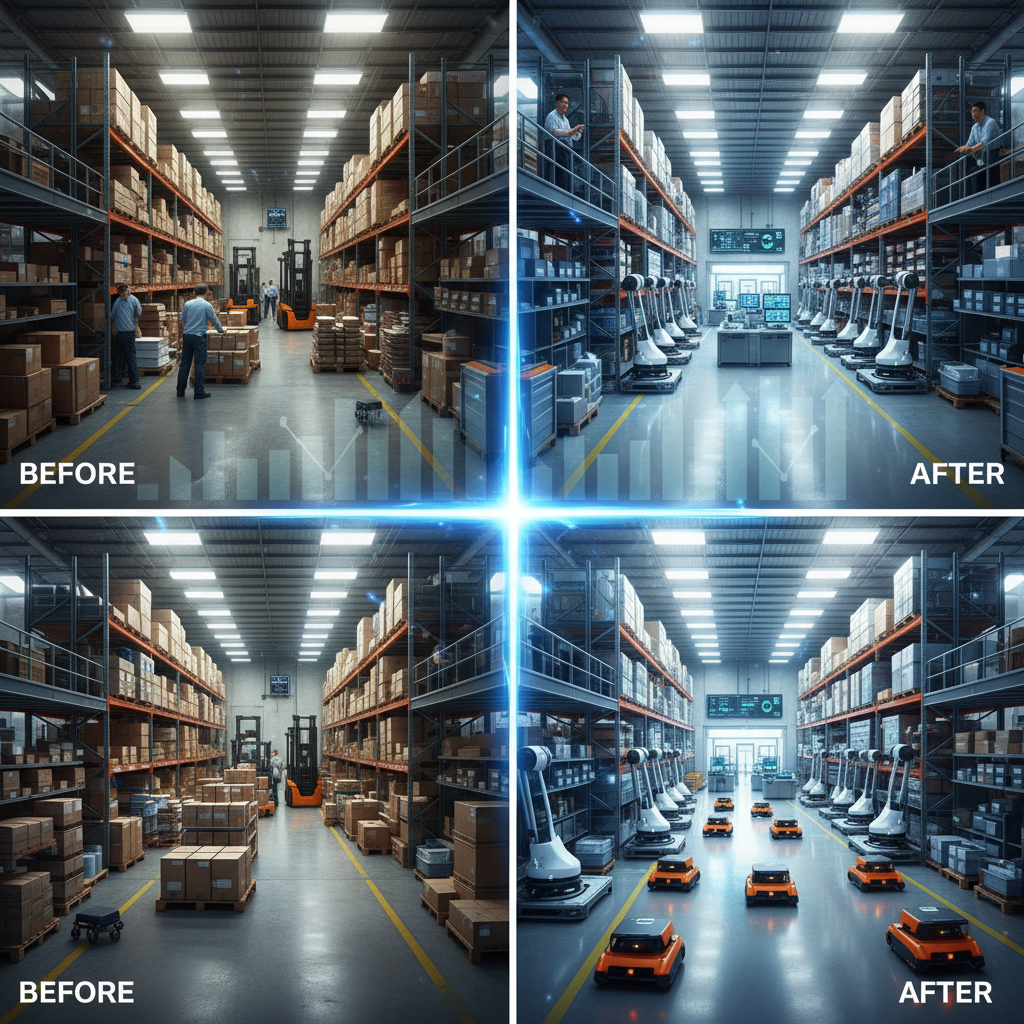
ASRS Case Study: Before and After Results When the cost of labor began to rise, and the inefficiencies became too...

In today’s fast-paced supply chain environment, speed, accuracy, and scalability are no longer advantages—they’re essential. With rising order volumes and
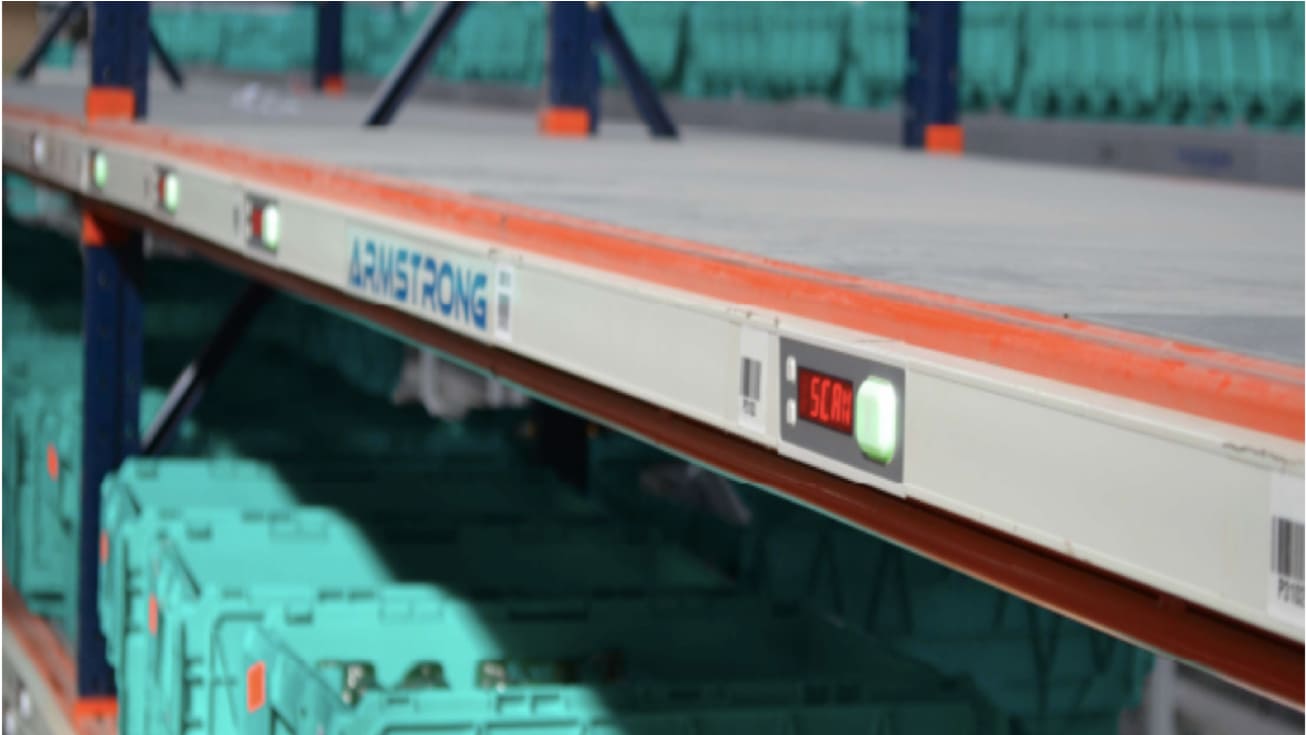
The demands of omni-channel distribution center and order fulfillment are driving the adoption of more advanced put-to-light hardware and software....

To provide operational excellence, Armstrong Dematic leads the way towards innovative intralogistics and warehouse automation solutions. Our transformations are based on Industry 4.0 solutions.
Follow us on:


