AMR Payback Period Guide
AMR Payback Period Guide To start, let’s look at a simplified version of an AMR payback period calculation. The actual...


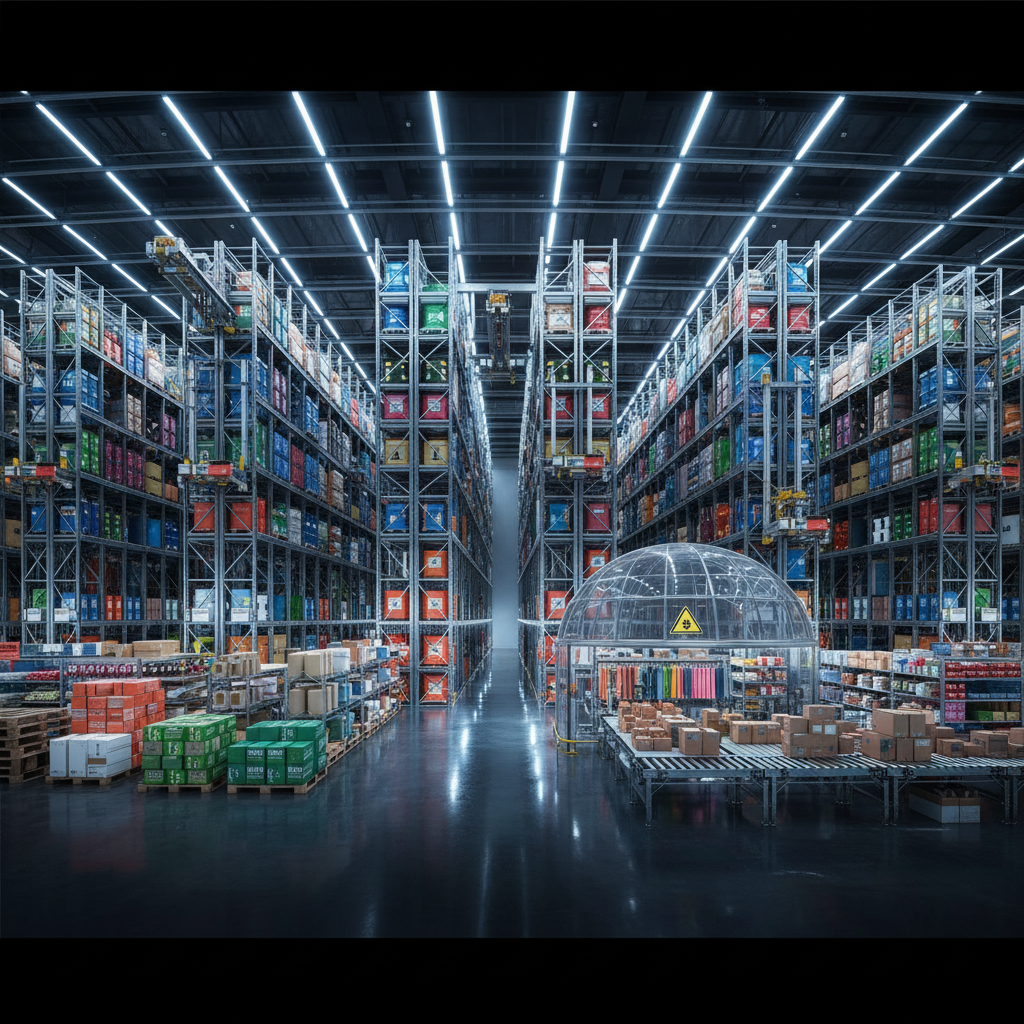
The chemical industry is marked by its rigorous standards and the stringent requirements imposed by regulatory bodies. Additionally, chemical products are often highly toxic and flammable while frequently being stored over long periods of time. All these factors demand a level of precision and control that traditional storage and retrieval systems just can’t provide. Automated storage systems have been specifically designed to meet these challenges. They offer ultra-precise storage and retrieval that facilitates maximum space utilization in the warehouse. By simultaneously providing an impermeable barrier between manned operations and hazardous materials and protecting goods from the environment and contamination, ASRS ensures employee safety is treated with the utmost importance.
Storing hazardous chemicals in large, open warehouses creates unnecessary risk. Accidents can happen during the handling process or from leaks in adjacent containers. If two substances are incompatible, storing them too close together could have disastrous consequences. Many chemical companies have used at least some level of automated storage for years, but modern systems incorporate the latest tech to provide even greater protection against these types of incidents. Vacuum shuttles and hoists seamlessly handle the movement of containers while minimizing the potential for human error. Most importantly, racks are equipped with fire protection and leak containment systems that can quickly detect and isolate incidents.
With the appropriate design and sufficient scale, automation can contribute substantially to quality, productivity, and safety in the chemical production and logistics environment. Key requirements in this respect are the intensive preparation for system implementation, a comprehensive and conclusive risk assessment prior to any realization phase, extended test and training cycles in close cooperation with the future users, and a clear-cut installation and maintenance partnership with the provider of the automation system. The cases covered illustrate these goods practices and show that, when handled appropriately, automation does fit the specific demands and conditions in the chemical industry.
What if tomorrow, we didn’t have to send workers into harm’s way amid the daily risks and discomforts of chemical storage? What if we could automate the movement and management of hazardous materials , eliminating human contact with dangerous substances while saving time, money, and lives in the process? This isn’t a utopian fantasy; it’s a fast-approaching reality. The technology to run chemical warehouses autonomously is already here; the remaining hurdles are regulatory, financial, and social, not technological.
Beyond the physical dangers associated with movements of heavy materials, advanced automation helps reduce risk by avoiding high lifts and ladder work. Robots carry out the tasks that are dangerous or difficult for humans to perform. Think of lead-acid battery handling: With ASRS, a heavy, hazardous material such as lead is received, stored, and retrieved all without human effort or exposure. If it’s necessary to store lead-acid batteries in a cool, dry environment, this can happen without electric lift trucks driving throughout the warehouse. Having less equipment in operation makes the facility inherently safer.
Worker safety is a critical concern in chemical warehouses, and ensuring the safety and well-being of employees goes beyond checking that they’re wearing hard hats and following safety protocol. Workers are a company’s greatest asset, and it’s in a company’s best interest to keep them safe, healthy, and comfortable. Many chemicals become more volatile when heated or cooled to certain temperatures, some in ways we can predict and others in ways we can’t. An ASRS optimizes cube and stores products according to their specific temperature requirements, but it also can help control the temperature overall. By automating the warehouse to run with less human intervention, the building itself can be kept cooler in the dock areas where chemicals are brought into and out of the warehouse. ASRS can even store hazardous chemicals in fire-rated structures by automatically storing them in containers that the system knows leaked. Fire suppression systems can be linked directly with the ASRS’s inventory control computer. This ensures that only the containers holding leaking chemicals are flushed with an inert gas, slicing shrinkage by millions of dollars over the life of a system.
The importance of inventory accuracy cannot be overstated when it comes to storing hazardous chemicals and other substances. Factor in the increased popularity of just-in-time manufacturing requiring more frequent, smaller deliveries and the need for traceability in the event of product recalls, and the accuracy required for optimal ASRS performance is daunting. ASRS platforms can automatically record materials as they’re put into storage, provide alerts when a requested material is actually a substitute of a similar but not identical product, eliminate the possibility of operators accidentally selecting an incorrect material, and document material usage for future reference or to reduce waste.
Chemical storage ASRS systems also often store far fewer SKUs than standard room-temperature installations. In environments where being conservative with automation specifications isn’t an option, this makes using generic designs a lost cause. Chemical ASRS designs dial in the exact level of automation necessary for the amount of inventory being managed, with an eye toward future capacity investment. Other areas where chemical storage requirements influence design include fire suppression and specific rack configurations meant to prevent spillage. These once again help keep personnel safe from the hazardous material. 3D simulation is also crucial in the design of a chemical ASRS. It lets rack suppliers and integrators provide users with a realistic rendering of what the final system will look like once installed.
What’s more, our ASRS interface modules are built as black boxes, tested and proven to work with any warehouse management system. We understand that your system may need to integrate with existing equipment or your preferred IT system in the future. Our system designers and engineers follow simple plug-and-play philosophies, using standard protocols and modules to ensure easy integration with whatever you have on-site now, or might want to upgrade to in the future.
Safe, Automated, and Compliant Operations: The Smart Chemical Warehouse
Imagine walking through a warehouse that can think for itself. The lights turn on as you enter each section. The equipment hums with barely a whisper, optimized for energy efficiency but ready to shift into high gear the moment you need it. The floor seems to vibrate with the subtle movements of autonomous vehicles that deliver materials directly to your workstation. This isn’t a vision of the future; it’s the next stage in the evolution of chemical storage and handling. Chemical warehouses have been incorporating automation and digitalization for years, but the pace of that integration has accelerated lately. Real-time inventory tracking, automated picking systems, and interconnectivity with transportation logistics providers have become the norm. However, chemical manufacturers that store and handle their own products also need the strategic agility to keep up with changing market demands while maintaining the highest safety and regulatory standards. Incremental improvements in application technology and equipment automation have been available for decades. However, real digitalization encompasses much more than just adding sensors to equipment. It’s a holistic approach in which data is collected using digitized codes for storage and retrieval and then optimized with advanced analytics and machine learning to integrate the storage process into a collaborative and controlled cycle. This shift from reactive to predictive thinking is made possible by modern computing power combined with artificial intelligence and machine learning algorithms. This extended reality of chemical warehousing provides real-time data that feeds algorithms and provides feedback for ongoing process optimization. While this may sound futuristic, it’s available now and is quickly becoming required to stay abreast of the competition.
Reporting in the event of an incident is just as important. Often, reporting legal requirements rely on thresholds that, if exceeded, mandate submission of specific forms or notifications. Notifications and reports frequently have strict deadlines. For instance, to support response planning and warning nearby populations or endangered habitats, timely reporting is required over a specified threshold in many countries. Regulators must be informed promptly if any accidents occur. Noncompliance fines can be quite hefty, and follow-up inspections can lead to more severe consequences if required reports were not sent. The spiral effect might even result in your plant being shut down as a danger to the surrounding community.


AMR Payback Period Guide To start, let’s look at a simplified version of an AMR payback period calculation. The actual...

The rapid growth of e-commerce has revolutionized consumer shopping habits, placing an increased emphasis on efficient and expedited order fulfillment....

Technology is changing rapidly in this fast-growing world. What could be the best technology in the past decade could be

To provide operational excellence, Armstrong Dematic leads the way towards innovative intralogistics and warehouse automation solutions. Our transformations are based on Industry 4.0 solutions.
Follow us on:


