ASRS for Electronics Warehousing
ASRS for Electronics Warehousing I would bet there's an electric or electronic device within arm's length of you right now....


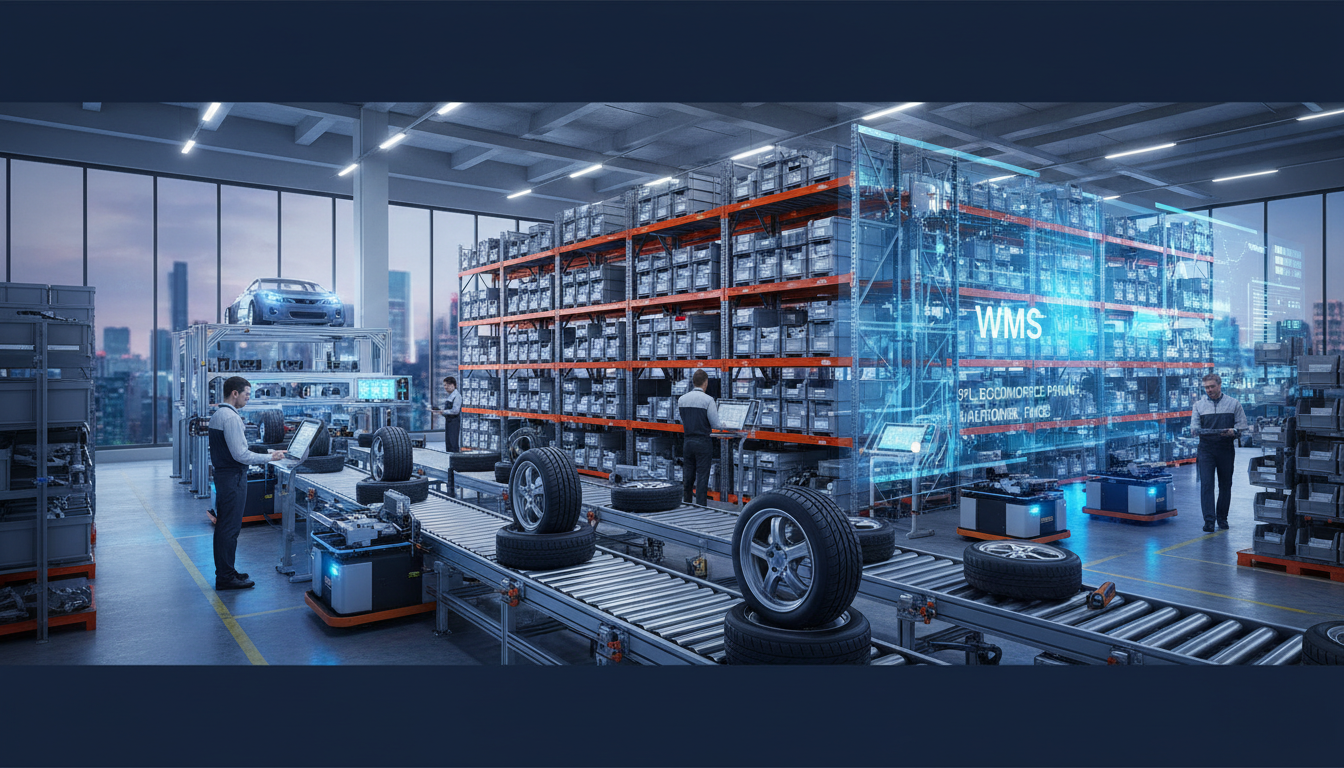
Times are tough for automotive buyers. With global procurement environments more competitive than the F1, customer demands are high, and there’s zero margin for error. Delays, inaccuracies, or uncertainty in an order will see loyal clients speed off to competitors without a backward glance. To make sure this doesn’t happen, your warehouse , whether it’s working with car parts, raw materials or spares, needs to be ready for anything. And that means dumping your outdated, stock WMS in favor of a solution built from scratch for the automotive industry.
You’re under enormous pressure to hold down costs and you cannot afford inefficiency. Whether your operation is simple or complex, an effective warehouse management system (WMS) for Automotive ensures that parts and materials flow optimally, reduces the need for excess inventory to fulfill orders on time, and can even lessen the risk of stock outs on high-demand items. Automotive manufacturers must leverage an effective WMS solution to increase accuracy, improve inventory management, enhance space utilization in your facility, and boost efficiencies throughout your operation.
How do you achieve 99.8% accuracy in the automotive supply chain? Industry leadership in automotive supply chain management is not accidental. At Armstrong, we know that robust, specialized automotive warehouse logistics systems are the engines that drive efficiency and accuracy.
Every warehouse is different and every industry has unique aspects we understand. The automotive sector has specific needs given the different shapes and sizes of its products. Regular warehouse systems or manual publication of productions aren’t enough to keep an efficient and accurate warehouse in any automotive company. With a WMS system designed for the automotive industry, you can gain several advantages and solve many of the common storage issues previously faced.
Car parts and accessories are not one-size-fits-all, so why would you manage them that way? The best 3PL Warehouses or FMCG Warehouse Software let you create item master records with weight, size, dimensions, and unit of measure. It helps you generate more accurate picks, reduce damage, and eliminate overcharging or undercharging. A good WMS for 3PL Warehouses or FMCG Warehouse Software also ensures that parts with limited shelf life are not forgotten on a back shelf. Cores and hazardous materials are also stored in specific handling units separate from their “good” products.
Managing irregularly-shaped parts or delicate, heavy components takes different tools and approaches than drum or bag handling. You need to store bumpers, windows, engines, and tires so they’re easy to find and retrieve in pristine condition. A Warehouse Management System for the Automotive Industry features an advanced slotting function that accounts for item size, shape, weight, and how frequently the part moves. Then it takes automation to constantly reshuffle your pick patterns and storage layout for optimized material flow.
Heavy Material Handling Equipment Integration
Efficient handling is an essential part of any modern automotive warehouse, where parts come in all shapes and sizes. From small components to large engines, the range of items moving in, through, and out demands flexible and intelligent handling to prevent damage. If your warehouse isn’t working at full capacity or struggling because of existing WMS limitations, armstrong IWT’s WMS for Automotive gives you the boost you need.
Selecting a Future-Proof Automotive WMS
Selecting a WMS for Automotive is not a decision you make every day. It’s a long-term investment, and the goal is to find a WMS that will grow with your business for the next ten to fifteen years. This is obviously not an easy task, especially with the growing shift to electric vehicles and a high number of new automotive components coming to market. A good WMS should also help you comply with many regulations, day-in-day-out. So how do you make the right decision for your automotive warehouse?
ERP and Supply Chain Ecosystem Connectivity
Seven years from now, you won’t recognize your warehouse. Instead of being lit by harsh fluorescent lights, the production floor is bathed in a warm organic glow. A soft thrum of activity fills the air as robotic workers glide noiselessly between the aisles. Shelves are half the height and twice as deep , only accessible to machines that can lift the heaviest loads with ease. You supervised the last unloading six months ago, and it’s the same story for your competitors. There’s no need for 3am scrambles through inventory records to fill an urgent order. Every shipment is perfect and on time.
The correct WMS can do wonders for your Automotive warehouse. It helps turn your storage facilities from just another cost center into a powerful competitive advantage. The right Warehouse Management Software provides you with real-time visibility, intelligence, and efficiency needed to minimize costs, maximize profits, and deliver a remarkable service experience to your customers. This automotive WMS selection guide from the armstrongltd experts, provides you with everything you need to choose a software package that will keep you a step ahead of change, and the competition.


ASRS for Electronics Warehousing I would bet there's an electric or electronic device within arm's length of you right now....

Efficient supply chain management is the pillar of any successful business. It ensures timely delivery, decreases costs, and maintains customer...

Narrow Belt Sorter Cost Guide The advantages of automation in warehouses are clear, from cutting costs to improving efficiency. But...

To provide operational excellence, Armstrong Dematic leads the way towards innovative intralogistics and warehouse automation solutions. Our transformations are based on Industry 4.0 solutions.
Follow us on:


