Why Stretch Wrapping Automation is Ideal for Your Business
In the grand scheme of things, packaging might seem like a minuscule part of the operations. However, your goods need...


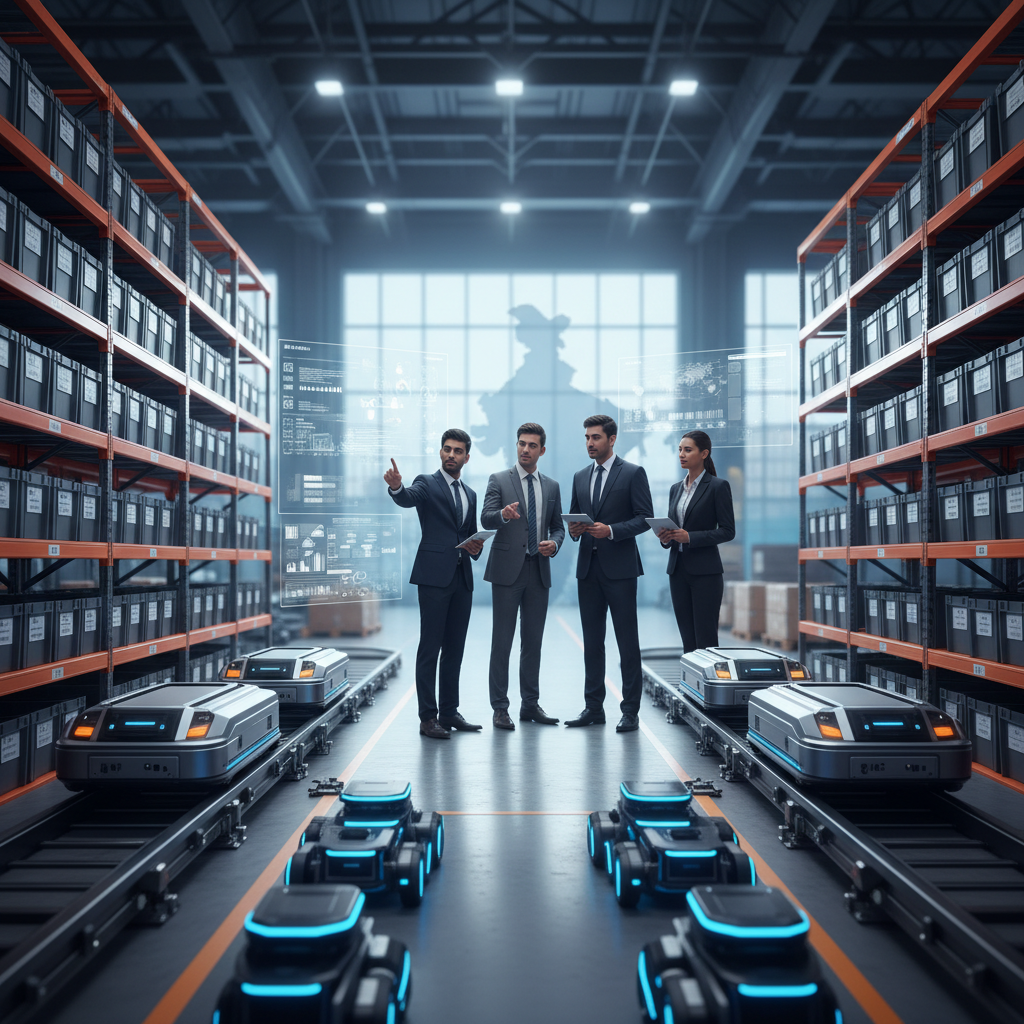
Upgrade your warehouse in 2026 and you won’t just pay more for real estate and labor , find room in your budget for a hefty slice of automation. It’s a growing trend across India as growing e-commerce, 3PL, and distribution players look to modernize existing infrastructure without building from scratch. Smaller footprint, 24/7 fulfillment, Human-Robot Collaboration, efficient transport networks, and ergonomics advantages make Automated Storage and Retrieval Systems (ASRS) an attractive proposition. But, as with any next-generation technology, the initial outlay can be overwhelming. You’ll only reach a confident decision if you carefully consider all aspects of warehouse automation in India: not just the cost of the system itself, but also the combined total cost of ownership. Those who don’t do the math, risk missing out on hidden advantages too.
ASRS implementation costs can be tempered with a staged approach or by adopting less expensive technologies like AGVs and AMRs to phase in automation. In fact, acquiring better inventory management and control through the adoption of any of these systems becomes an appealing component of any ramped-at implementation case. With better control, you might never need to upgrade to a full-blown ASRS. Taken a step further, a WES can network a disjointed collection of AGVs, AMRs, sortation, or piece-picking equipment into the equivalent of an ASRS. That kind of system builds on whatever you have rather than tearing it out or isolating everything else. It’s the optimal solution for any facility that has been adding technologies over multiple years.
ASRS vendors frame costs in terms of the cubic volume stored. Shuttles, cranes, racking, and steel overhead are expensive but scalable because additional bays can be added as needed. It’s also easy to expand capacity by moving from a single deep-lane to a dual deep-lane SKU configuration, for instance. Still, no one wants an idle aisle, and even multi-shuttle systems have physical limits. You’re technically restricted to 1,000 storage retrieval cycles per hour unless you design for twice that at build. And there’s no turning back from a paperless warehouse. Once you bite the digitization bullet, you’re in for barcoding, RF terminals, and real-time data exchange; these costs are real but many logistics professionals marvel that they previously survived with the old system. Coordinating inbound-outbound shipping with ASRS and WMS, and making sure plant information systems interface seamlessly, present their own set of configuration challenges that can push costs up.
For tool cribs, Garvey’s vertical lift module (VLM) is a compact, rapid, goods-to-operator system costing around ₹60 to ₹80 lakh per aisle. Mini-load cranes for unit-load storage are similar in design, labor savings and storage density to miniload systems, but their longer load-handling cycle time makes them suited to tool cribs, spare parts distribution and lower-throughput manufacturing supply chains. For a new paper reel storage buffer in Europe, Daifuku will combine optimized stacker crane geometry and new cable driven technology. What type of AS/RS makes sense for your operation or a client’s? Make it a micro, mini, unit-load or shuttle based system and you can be sure you’ll find it flexible and efficient for a range of needs.
Choosing the wrong technology burns capital and frustrates operators. A warehouse automation consultant will map your SKU velocity, order profiles, and growth projections to match system type with business needs. For example, pharmaceutical distributors handling thousands of slow-moving SKUs often favor shuttle systems because they scale horizontally without adding crane infrastructure. E-commerce fulfillment centers with high peak-to-average ratios prefer modular solutions that can expand during festival seasons. The pallet shuttle price premium (typically 10 to 15 percent over fixed cranes) pays back quickly when you need flexible capacity or plan to relocate equipment within five years.
Structural loads from high-bay racking can reach 1.5 tonnes per square meter, far beyond the 500 kg design load of most industrial slabs. A civil engineer must verify bearing capacity, check for differential settlement, and specify grouting or micropile reinforcement where needed. Budget ₹200 to ₹400 per square meter for slab strengthening if your building predates modern codes. Fire suppression also demands attention because ASRS aisles create narrow, tall spaces that standard sprinkler systems struggle to protect. ESFR (Early Suppression Fast Response) or in-rack sprinkler networks add ₹150 to ₹250 per square meter but satisfy insurance underwriters and local fire authorities.
Imagine the WCS as an air traffic controller. It directs ASRS cranes and vehicles on the warehouse floor with maximum efficiency. If goods-to-person workstations are backed up because a retriever crane is busy, it re-routes items from a free shuttle. The WES is the systems manager. It tells the WCS how many orders to batch together for a pick wave and when to dispatch it based on forecasts of other waves and the current workload. Of course, no system can predict an unexpected urgent customer order. But AI and machine learning promise to get better at it.
Cloud-hosted or SaaS (Software as a Service) models also speed deployment and can scale processing as order volumes grow. Just be aware that ongoing subscription fees will probably be paid as long as you use the system. In-house expertise requirements range from minimal for cloud offerings to high for articulating systems, so factor that into your total cost of ownership.
Conclusion
The ASRS implementation cost, shuttle system pricing, and WCS deployment expenses combine to present a complex puzzle, but breaking them down into hardware, civil, and software buckets make these figures easier to stomach. Indian warehouses in 2026 face a competitive supplier landscape, with international and domestic mobile robot manufacturers ready to fulfill the order. Not all your warehouse automation supplier’s costs will be on the offer sheet, however. Engaging a warehouse automation consultant early in your feasibility study helps to ensure you are sizing both the footprint of your chosen system and the warehouse you plan to operate it in correctly. Unexpected modification costs and dangerous deadlocks usually arise from ill-advised layouts and can be costlier in both money and time.


In the grand scheme of things, packaging might seem like a minuscule part of the operations. However, your goods need...
WMS for Food and Beverage Warehouses Today, high-performing WMS goes far beyond basic inventory tracking. In addition to managing all...
The warehouse business is a key contributor to the expanding need for robotics. As new technological developments are made, the

To provide operational excellence, Armstrong Dematic leads the way towards innovative intralogistics and warehouse automation solutions. Our transformations are based on Industry 4.0 solutions.
Follow us on:


