Armstrong Dematic Telescopic Conveyors: A reliable Automation Solution for a better future
Technology is changing rapidly in this fast-growing world. What could be the best technology in the past decade could be



Warehouse automation is no longer a luxury of the Amazons of this world. In the U.S. supply chain industry, mid-market distributors and 3PLs are buying AS/RS technology at three times the rate of the Fortune 1000. Yet most senior executives, operations managers, and IT leaders confront the same stumbling block: Where are the numbers? More specifically, how do you model the financial return of an automated storage and retrieval system (AS/RS) when the greatest benefits , increased productivity, reduced operational costs, and inhibited headcount growth , are also the most difficult to frame in a business case. A rigorous AS/RS ROI calculator solves this puzzle. It calculates the most common key performance indicators (KPIs) of any AS/RS project. Most important, a grueling by-the-numbers investigation separates the real prospects from the pie-in-sky proposals.
Not that number wrangling is easy. The initial investment components aren’t hard to determine, of course. Labour costs, rack, shuttle, crane and conveyor hardware, WCS/WMS software, control systems, software, and middleware, the list goes on, but the sum doesn’t lie, at least as of the purchasing date. After that, everything gets a lot hazier. Estimating labor and space expenses years in advance demands a crystal ball, but most existing operations can make a reasonable guess. Dividing those figures into the hardware and software wound is another straightforward task. But this is where the simple math ends. Identifying and calculating economic factors might be the main jobs.
How suitable is AS/RS for your new warehouse or DC? To put a fine point on it: it’s not an easy question, nor a one-size-fits-all answer. In theory, anyone who palletizes and stores goods is a candidate for an Automated Storage and Retrieval System (AS/RS). In practice, success often depends on whether you have the physical room to build up (AS/RS cranes, after all, need vertical cube) and budget for a system that is as capital-intense as they come. But let’s not get ahead of ourselves. There’s a lot due diligence before you reach that point.
Building the business case for automated storage & retrieval systems (AS/RS) involves gathering more than quotes for steel and concrete. Efficiently turning idle space into capacity is a timeless value in distribution logistics, but big spends, long implementations, and real impacts on warehouse infrastructure require a lot of consideration. Let’s identify key high- and low-level topics to investigate further, including product handling limitations, benefits of automation above and beyond space usage, and the interesting paradox of how shorter access times often require less operator labor.
Integration and commissioning is another area that often runs over budget or deadline. Retrofit projects must maintain the current operation while installing and testing the new system in the same physical space. No wonder four in five facilities know they need a better solution, but the current operation is “good enough” for the interim. It’s not uncommon for more than three months of the current year’s budget to be frozen in the hold of one tired, outdated, inefficient WMS.
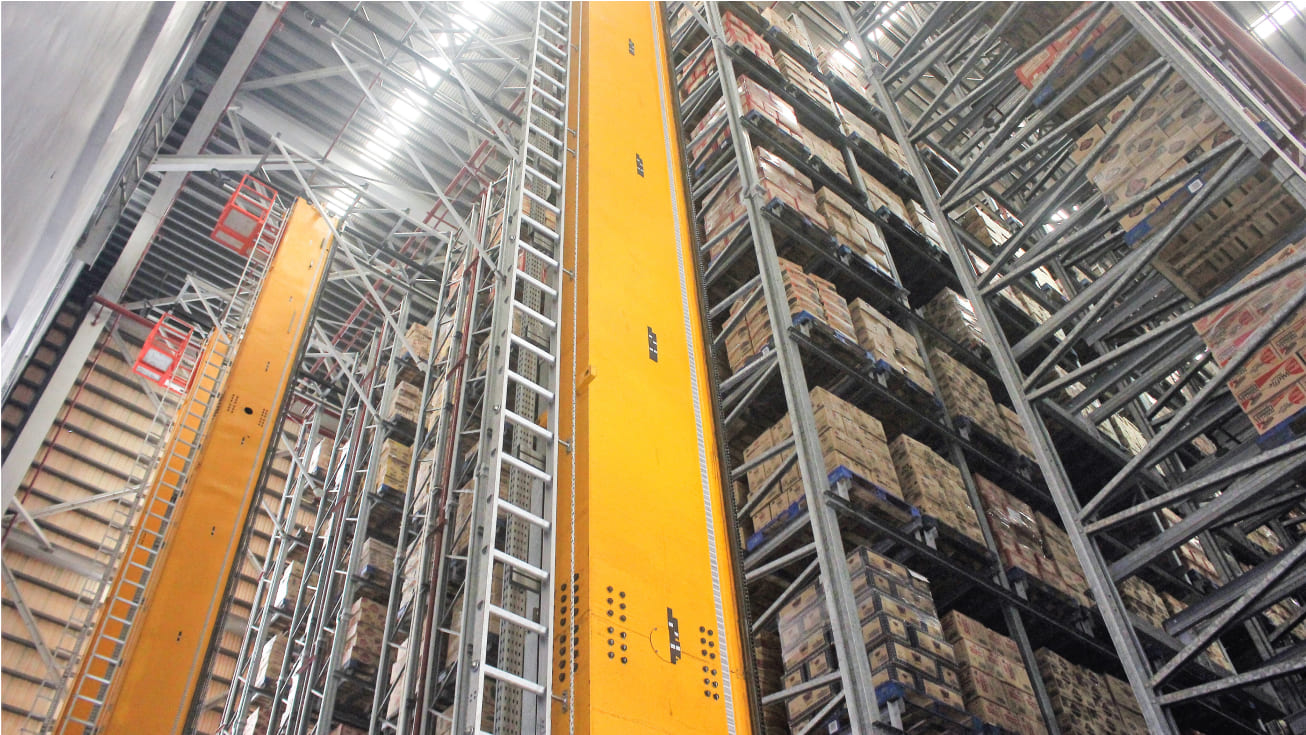
AS/RS systems stack inventory 40 to 80 feet high, compressing horizontal square footage by 50 to 70 percent compared to traditional selective racking. This density translates into real dollars. If industrial real estate in your market costs $8 per square foot annually (a 2026 national average for Class A warehouse space), and your AS/RS frees 30,000 square feet, you’ve just created $240,000 in annual savings. In high-cost metros like Southern California or Northern New Jersey, where rates push $15 per square foot, the same footprint reduction yields $450,000 per year. For greenfield projects, vertical storage can eliminate the need to lease or purchase additional acreage, deferring millions in land acquisition and construction costs.
Let’s be clear; investing in automated storage and retrieval systems (AS/RS) to shrink your building is primarily focused on slashing occupancy costs. Period. But it’s natural to wonder if the operational ripples of that decision widen considerably. The answer is yes, they do. How much will that 30 percent reduction in storage space you achieve with a mini-load AS/RS translate to when applied to your entire warehouse footprint?
How many lift truck drivers are on your payroll, and what are you paying per hour? What about lumpers or stock clerks? AS/RS can make a significant dent there, too. Other savings include less overtime, since the machines can keep working round the clock, and donning and doffing time for freezer garb and fast-pick gloves. Slotting software, which optimizes storage for fast movers, can reduce the number of replenishments lift truck drivers need to make, increasing the machines’ productive utilization.
Losing good employees and the cost to find replacements are significant drain holes on warehouse profitability. One might reasonably conclude that cutting the size of your staff in half is no way to retain more employees. Except, counterintuitively maybe, that is isn’t the precise reasoning whistling for your attention. Heavily automated distribution centers average 60 to 70 users per shift. It’s not hard to do the math on how many heads will need to roll. What is rarely missed, however, is that those kept on the payroll are typically more capable and versatile than the workers let go. The ones who must remain when you finalize requirements for automated material handling equipment (MHE) are rarely the order pickers and forklift drivers who leave.
Soft Value Adjustments: Factoring in Reduced SKU Damage, Eradicated Mispicks, and Shrinkage
Robots are wonderful at repetitive, structured tasks , ideally suited to the exhausting labor of a tightly choreographed dance. Take a cheese warehouse: The forklift enters with a pallet of Swiss. A robot arm grabs the pallet and deftly slides it into position on a shelf, just inches from its neighbors and an eighth of an inch from the shelves above and below. That kind of precision is difficult for humans , repeatedly bending and twisting, sometimes lifting and stretching , but it’s mind-numbingly easy for a robot. The forklift exits with a pallet of cheddar and the robot shuffles the remaining pallets to the left filling the new gap. The forklift driver returns with an empty pallet, finds the second robot and the cycled Swiss pallet, and they repeat the operation in reverse. A well-engineered automated system deftly handles every aspect of that dance better than the most skilled human; smart automatons perform that kind of tango in thousands of other warehouses worldwide every working day.


Technology is changing rapidly in this fast-growing world. What could be the best technology in the past decade could be

It is very uncommon and irritable to imagine if you have ordered some package in bulk and it comes improperly
In the present day, the corporate realm is characterized by its rapid pace, prompting enterprises, regardless of their size, to...

To provide operational excellence, Armstrong Dematic leads the way towards innovative intralogistics and warehouse automation solutions. Our transformations are based on Industry 4.0 solutions.
Follow us on:


