ASRS India: Complete Guide to Automated Storage and Retrieval Systems
ASRS India is a guide to automated storage and retrieval systems. Automated storage is changing the way warehouses work in


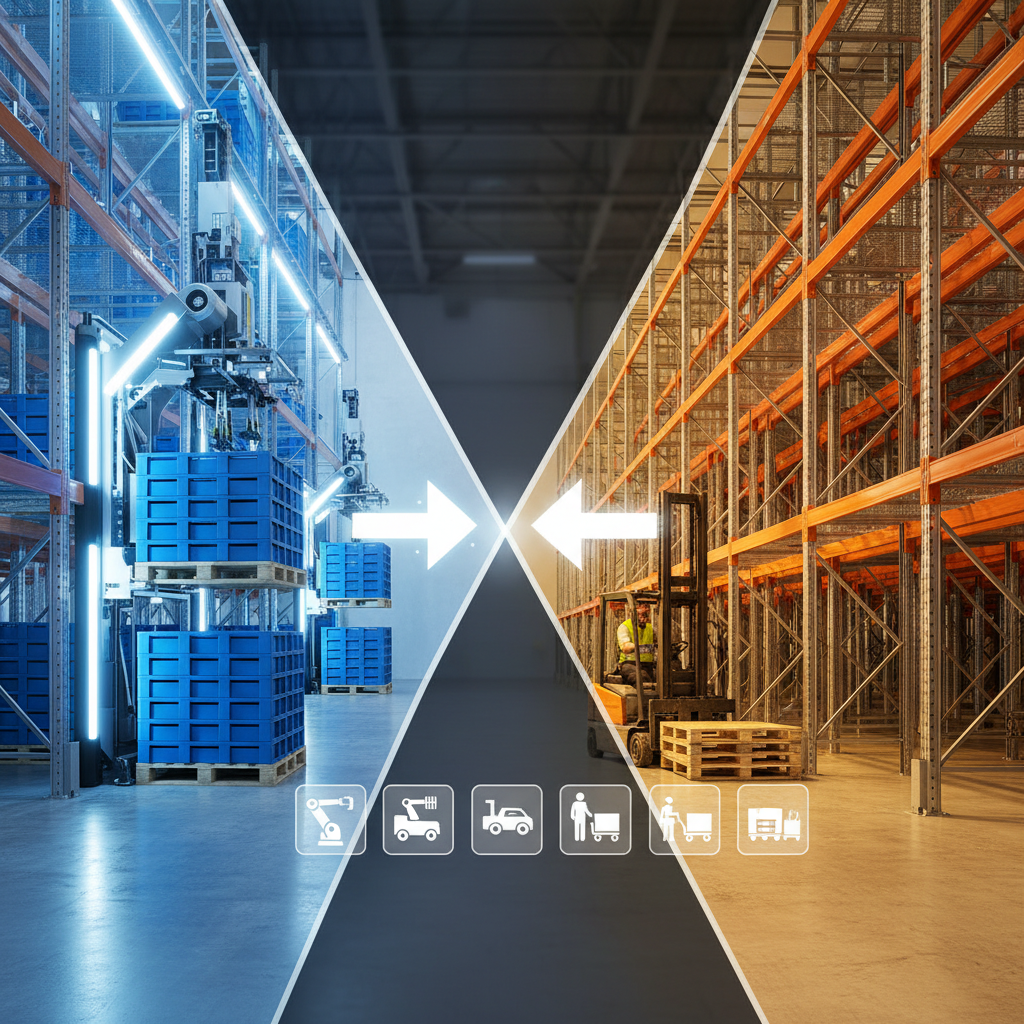
Do you keep it classic with trusty racks, or leap into the future with ASRS? These promise speed, efficiency gains, and with today’s technology, more flexibility than ever. But it’s a substantial upfront investment, and it’s not always clear what the return will be or how long it takes to get there. It isn’t just whether faster throughput or a smaller space footprint is achievable. Those are both usually true, but does it make fiscal sense for your operation? And if they do, how long does it take to break even? The answers will depend on the unique details of every warehouse and its operational demands.
Traditional selective racking, however, doesn’t offer those benefits. It spreads inventory across wide aisles. Forklifts need sufficient space to turn and lift, so you sacrifice floor space for accessibility. Most conventional setups reach 20 to 30 feet high, because beyond that forklifts become unstable, and the higher a person drives the greater their risk of falling. ASRS units can climb 100 feet or more, storing pallets in dense grids with narrow aisles.
One square foot in Tokyo might cost as much as ten square feet in Texas, but neither WMS nor automated storage and retrieval systems care about land prices. Autonomous decisions do require room to maneuver. Their use diminishes operator dependence, thereby reducing worker anxiety and ideally making warehouses safer. Maybe a good WMS eventually eliminates inventory errors as well. One typo, and you lose time hunting for an item. A multiline-order picker can obtain parts faster than you can enter them.
But total cost of ownership often tells a different story. Over its 20-25 year life cycle, you could easily spend as much on replacement parts, paint, and site damage repairs as you spent on the original steel. Then there are labor, utility, insurance, and inventory costs to consider. Warehouse space usually rented for $4 to $7 per square foot annually might cost another $20 per occupied cubic foot if you factor in productivity lost to damage and repair, space inefficiencies, and overstock. Steel also has a high transportation carbon footprint.
True, ASRS will retrieve pallets faster, and with greater accuracy than pushback racking, floor stacking, dual-rail systems, or any other method. However, rather than improving storage density, ASRS sacrifices space in the name of efficiency and safety. Dual-mast cranes, load-handling devices, and transfer stations introduce complex mechanisms and additional points of potential failure, leaving large air gaps to one side and above carried loads. People need room to maneuver around loads, which further increases the “K-factor.” Plus, anything within a crane’s reach is at risk of damage. Creature comfort isn’t high on their list of active priorities.
Forklift drivers move about 20 to 30 pallets an hour , a top performing driver amid minimal warehouse vehicle traffic. Automated Storage and Retrieval System (ASRS) cranes are designed to handle 40 to 100 cycles an hour, operating at maximum efficiency around the clock. The true time savings become evident when you calculate all the hours in a week, including shift changes and breaks. A crane can replace three or four forklift drivers. A single crane. Think about that.
Hands-free wearable computers provide the next leap. Smart glasses free pickers from another six percent of otherwise unproductive walking, a seemingly small gain. TopVision cameras and barcode scanners guide them through picks for another 20% gain. All these new technologies prove their worth with existing data, warranting investment. To paraphrase Schumacher again, any product innovatively deployed in a warehouse is cheaper than one that isn’t. For now, the picking competition is over. Wanelo will share the spoils. Will your ship come in?
Did you know that in 2025 and 2026, prime warehouse space near ports or metropolitan areas commanded annual rents of $10 to $20 per square foot? A 200,000-square-foot building was $2 million to $4 million per year, or more if you didn’t swif.tly unload, sort, and reload stock and need far more space. Warehouse space near ports or metro areas costs $10 to $20 per square foot annually. A 200,000-square-foot building runs $2 million to $4 million in rent each year. ASRS systems shrink that footprint by 50% to 70%, storing the same pallet count in half the space. The savings pay for the automation investment within five to seven years in high-cost markets.
Vertical stacking also delays the need for a second facility. When a company’s growing at 15% per year, they typically have the space exhausted within three years, and to do that with a traditional racking would force them to go lease or build a completely new warehouse, duplicate overhead, split your inventory. The ASRS kind of buys you some time, allows you to grow within your four walls; it keeps kind of your supply chain nimble, keeps you from investing too much capital in the bricks and mortar.
Inventory Accuracy Slabs: Eliminating Human Error, Mispicks, and SKU Damage Through Automation
Manual operations have mispicks and location errors, approx 1% to 3% inaccuracy that eats into profit through returns, rework, and upset customers. ASRS knows the exact location of every pallet through either barcode scanners or RFID tags, and errors seldom arise (typical accuracy rates are 99.9%). How much would one additional inventory turn be worth to your operation? The cost to deploy WCS includes the tracking layer. WMS can streamline operations for both systems. Damage rates normally fall as well. Pallets are not shoved into place by a forklift, instead a crane or shuttle does the work, smoothly moving pallets into place.
The Final Verdict: When to Choose Traditional Selective Racks vs. Moving to Full ASRS Automation
Standard racking or ASRS? Well, do you typically 500 or more pallets each day? If yes, you will probably experience a fast enough return on investment to justify automated storage and retrieval systems (ASRS). ASRS provide high-density storage to save floor space, reduce labor costs, and improve inventory accuracy. The trade-off for the considerable capital investment is a cleaner, safer, more controlled environment that minimizes product damage and theft while ensuring inventory rotates efficiently. If you don’t process 500 pallets per day, the decision is less clear-cut, depending on what you currently pay for labor, the type of SKU you store, the value of your land, and how soon you expect to outgrow your current facility. A warehouse control system (WCS) coordinates ASRS transactions with the rest of your warehouse operation. It’s a significant implementation cost separate from the shelves and shuttles themselves. A complete goods-to-person palletizing robot can also be a major expense.


ASRS India is a guide to automated storage and retrieval systems. Automated storage is changing the way warehouses work in

WMS vs ERP: Which Do You Need? Many companies are tempted to stick with their already-owned ERP when it comes...
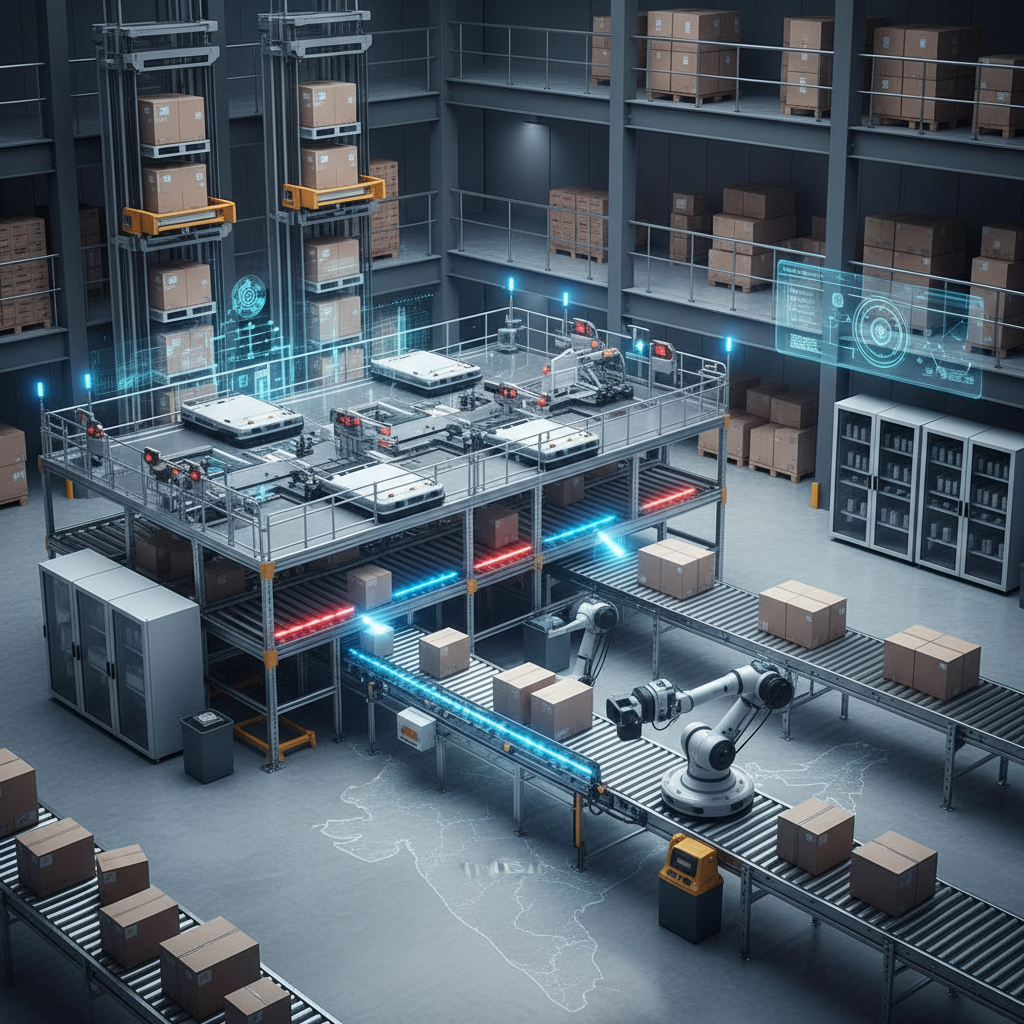
Ecommerce Fulfillment Automation Solutions The retail world has changed forever. Todays customers expect flawless delivery. They don't see it as...

To provide operational excellence, Armstrong Dematic leads the way towards innovative intralogistics and warehouse automation solutions. Our transformations are based on Industry 4.0 solutions.
Follow us on:


