Put-to-Light Cost Breakdown
Put-to-Light Cost Breakdown I'm not sure anyone really knows how much fitness trackers, health monitors, and telemedicine are going to...


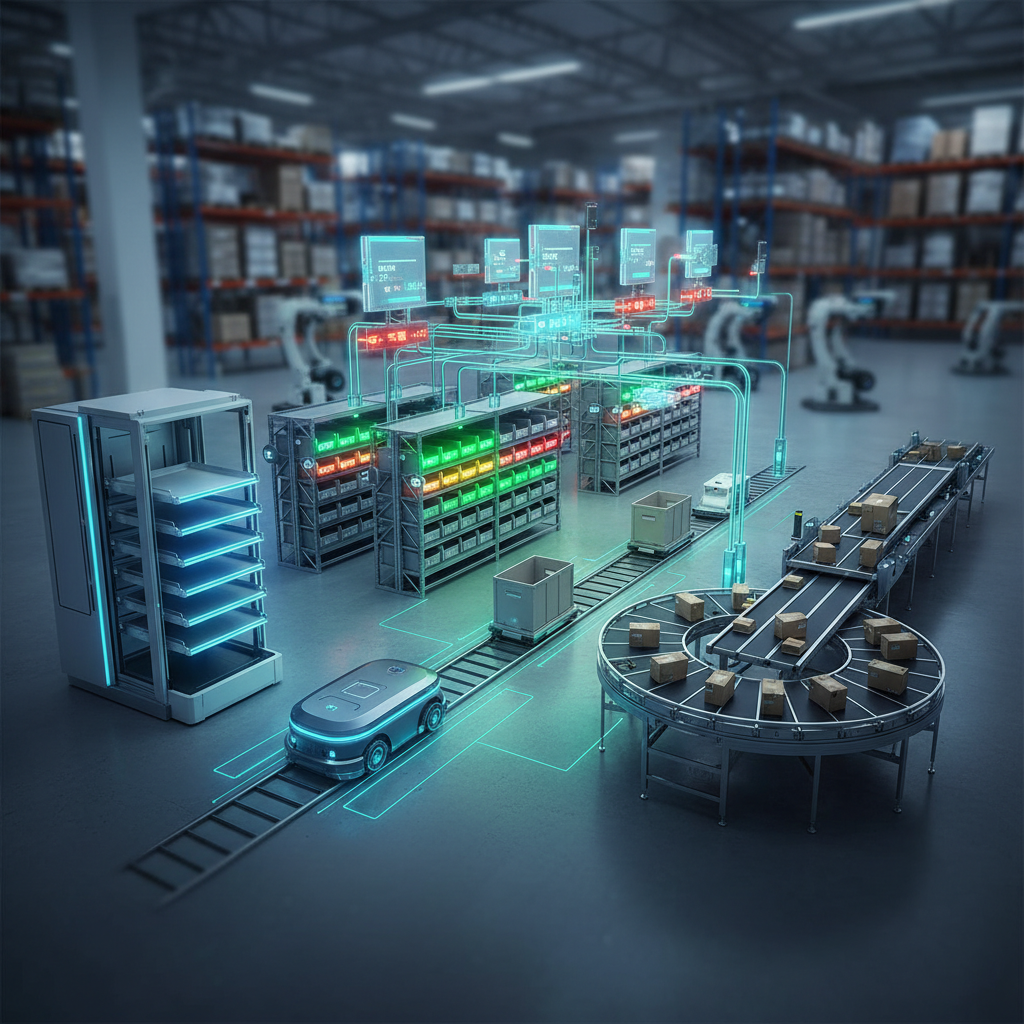
Warehouse automation isn’t just an option for retail giants and e-commerce moguls anymore. As automation technology has improved, the costs have come down too. Now, many mid-sized distributors and third-party logistics providers are among those investing heavily in faster, more accurate picking and fulfillment systems. With an eye toward 2026, these are some of the most popular pick, pack, and ship technologies optimizing fulfillment operations today: 1. Pick-to-Light Displays: An affordable, semi-automatic order fulfillment method using light-directed picking modules to improve productivity and accuracy. (This article will largely focus on the implementation, cost, and throughput of semi-automated pick-to-light systems.) 2. Shuttle Systems: Semi-automated mini-load cranes and shuttles that deliver goods-to-person for quick and efficient single- or multi-line item delivery. 3. Vertical Lift Modules: Automated tall and narrow modular shelving systems that operate on an inserter/extractor system to deliver items to the pick window. 4. Sortation Conveyors: Wide, long conveyor belts designed to automate and speed up the order fulfillment and shipping process by sorting products based on weight or destination.
The expense of the pick-to-light displays themselves can be estimated roughly at $450 to $600 each installed for wired units and $600 to $750 for wireless versions. Additional factors that determine the total cost are installation and commissioning fees plus expenses for electrical work, project management, software integration, interface hardware, and accessories like light towers, indicators or RFID tag readers. Maintenance can also put a long-term load on your budget, typically 15 to 20 percent of the system’s purchase cost annually.
The rest of the budget covers basic labor, power, and maintenance. Most companies should plan to spend $4 to $10 per active product SKU per year, or about 1% of the inventory valuation. Fewer total devices are needed or rack space used compared to pick-to-light, so less storage hardware expense offsets return system hardware cost. Nodes also draw only 2 to 4 watts during normal operation, limiting utility expenses. Don’t forget to put money aside for LED replacement and sparing as well, if not covered by an extended warranty. Bearing in mind the total cost of ownership will usually steer the usage decision.
The most reliable wireless mesh networks are still several times more expensive when factoring in the necessary switches, routers, and Ethernet drops than traditional 900 MHz wireless systems. However, the gap is narrowing as the cost of all electronic devices continues to decrease. Pick-to-light installation budgets are used to determine the most appropriate network and display technology, but top-level equipment prices are rarely the deciding factor. Instead, needs are often driven by the existing infrastructure within the facility and how quickly a system can be installed and integrated.
Building costs are often the least significant in self-supporting structures up to 60 feet in height, as rack, VLM, and shuttle systems should not touch or load the building. Savings can be realized by not lighting, heating, cooling, or sprinkler-protecting unnecessary facility volume. Highest building costs are usually for very narrow aisle structures, in which building height is necessary to offset equipment under-aisle swing. Conventional rack, VLM, and shuttle structures can all be built out of lighter, insulated, acoustical, and fire-rated conventional materials and ceiling enclosures, which keep installation, operations, and maintenance costs down. It is important to consider that VLM and shuttle equipment and controls are inherently less fire suppression-burdensome than for-reach truck batteries in narrow aisle applications. For all AS/RS technologies, for heights over 60 feet, it will be necessary to attach or locate the structure on the building, which can be quite costly. VLMs share the building envelope with AS/RS cranes and hoists in a three-dimensional cube of space that can actually reduce building cost. Rack structures have least cost advantages for heights less than 30 feet because they must be spaced for reach truck masts and drain retraction between aisles. VLM and shuttle systems gain cost and space efficiency advantages from software provided and required to operate the equipment. For VLMs, users commonly report reducing floor space up to 70 percent and labor up to 80 percent. Even though construction and insulation costs are relatively low, floor space is always the predominant installed cost component, requiring comparison to total cost of proactive storage retrieval, handling, and transportation per line item. Minimum payback is usually sought in three years. Total cost to purchase and install should be analyzed.
Middleware or a Warehouse Control System translates order data from your ERP or WWS into real-time display commands on every pick-to-light implementation. Stant-alone software licenses are $10k-$40k+15% , 20% annual support/maintenance/perpetual-use right. Cloud: $500 , $2,000/month/active pick stations + transactions. Add $20k , $100k+ consulting fees for API/database mapping/UAT. Existing WWS/WMS support native PTL protocols?
It probably doesn’t come as a big surprise that I’m taking issue with the humans on this one. But who’s right? Let’s take a closer look at both sides of the argument. From the robot’s point of view, everything in space is always moving. Planets, stars, and even galaxies are always on the go, and nothing stays in the same place for long. So they think it must be pretty challenging to figure out how to get anywhere using landmarks that are always in motion. But on Earth, we don’t have the same view. For example, the sun, the moon, and the stars look like they’re in the same place every day (even though we know better). If we didn’t have GPS to help us travel, we could use the constellations or the rising and setting of the sun to make our way.
Gateway Controller Firmware Hot-Patch Deployment System Testing Fees
Vendors typically release firmware patches quarterly to close security gaps and fix bugs. New feature releases occur every six months to a year. The upgrade process involves copying patches to the master server, testing them in the lab, and then pushing the patches to the production network one at a time. A single vendor aggregate controller pushed patches to three display nodes plus errand firmware to 11 telco management controllers during a recent update window. The increased failover capability produced online updates with no network impact. The lab test could not exactly replicate the telco operations devices, but the whole process went with just minor problems.
Sortation systems price is influenced by factors including speed, number of destinations, and whether the system sorts to a conveyor, chute, or automated guided vehicle (AGV). Although sortation system pricing is highly variable, small systems using belt conveyors that deliver cartons directly to packers can range from $125,000 to $200,000. Sliding shoe or Bombay sorter systems are relatively expensive, with prices from $700,000 to $1 million per unit. These systems are used when high speeds are required, gently handling items is paramount, and positive sortation (meaning each destination label is read multiple times to ensure the correct item goes to the correct destination) is necessary. Lower automated sortation price options for gently handling items are pushers and overhead shoe sorters.
Deciding what mix of pick-to-light, shuttle systems, VLMs, and sortation conveyors to install starts with your order profile, the number of SKUs you carry, and the floor space you have available. Pick-to-light and put-to-light installations make the most financial sense in high-frequency zones with 100 to 1,000 SKUs, and the payback is quickly eroded if you don’t have enough daily or weekly order volume to keep the zone busy. The cube’s the thing with VLMs. If you are challenged by parts storage space, like having to expand your facility, because you inventory a lot of slow-moving parts, a VLM is probably the way to go. Shutttle systems and sortation conveyors both can handle high throughput, and sortation conveyors particularly excel when you have outbound parcel processing and/or are consolidating multiple piece-picking orders.

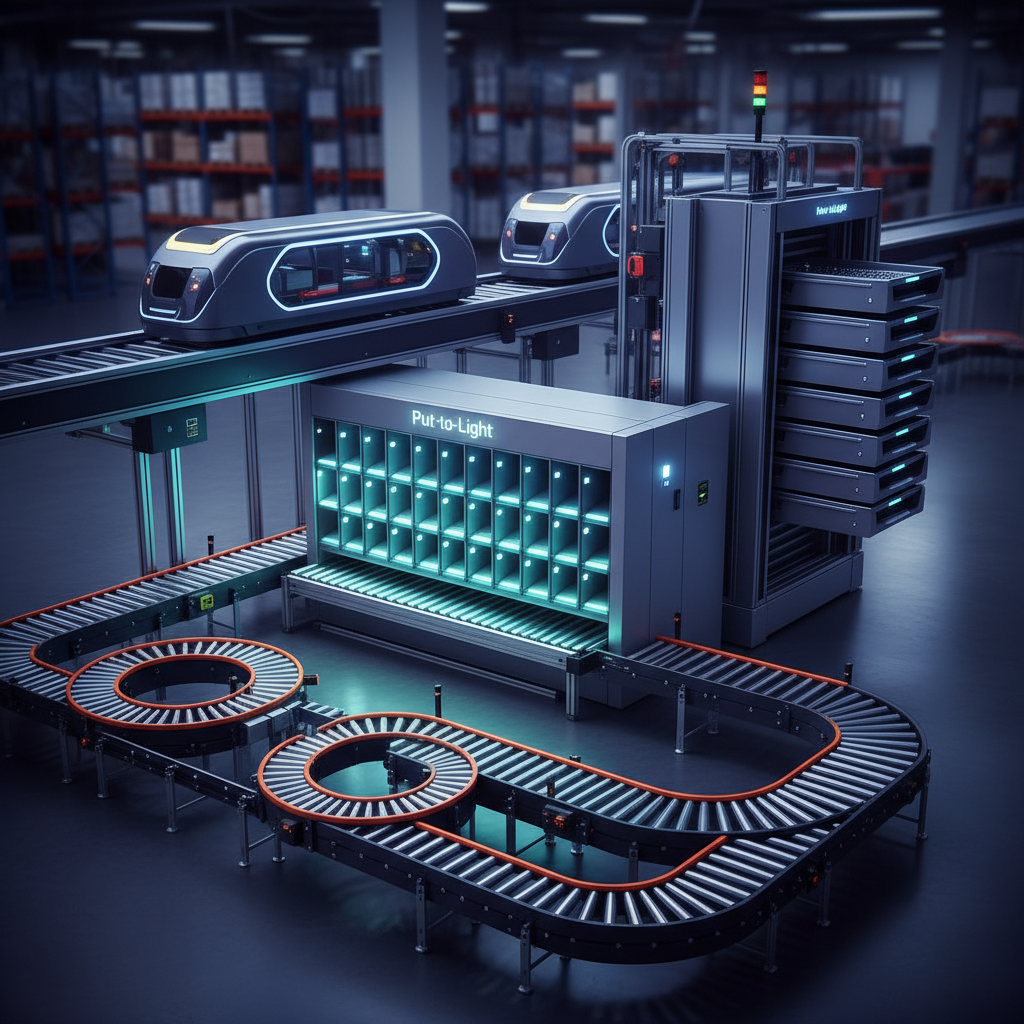
Put-to-Light Cost Breakdown I'm not sure anyone really knows how much fitness trackers, health monitors, and telemedicine are going to...
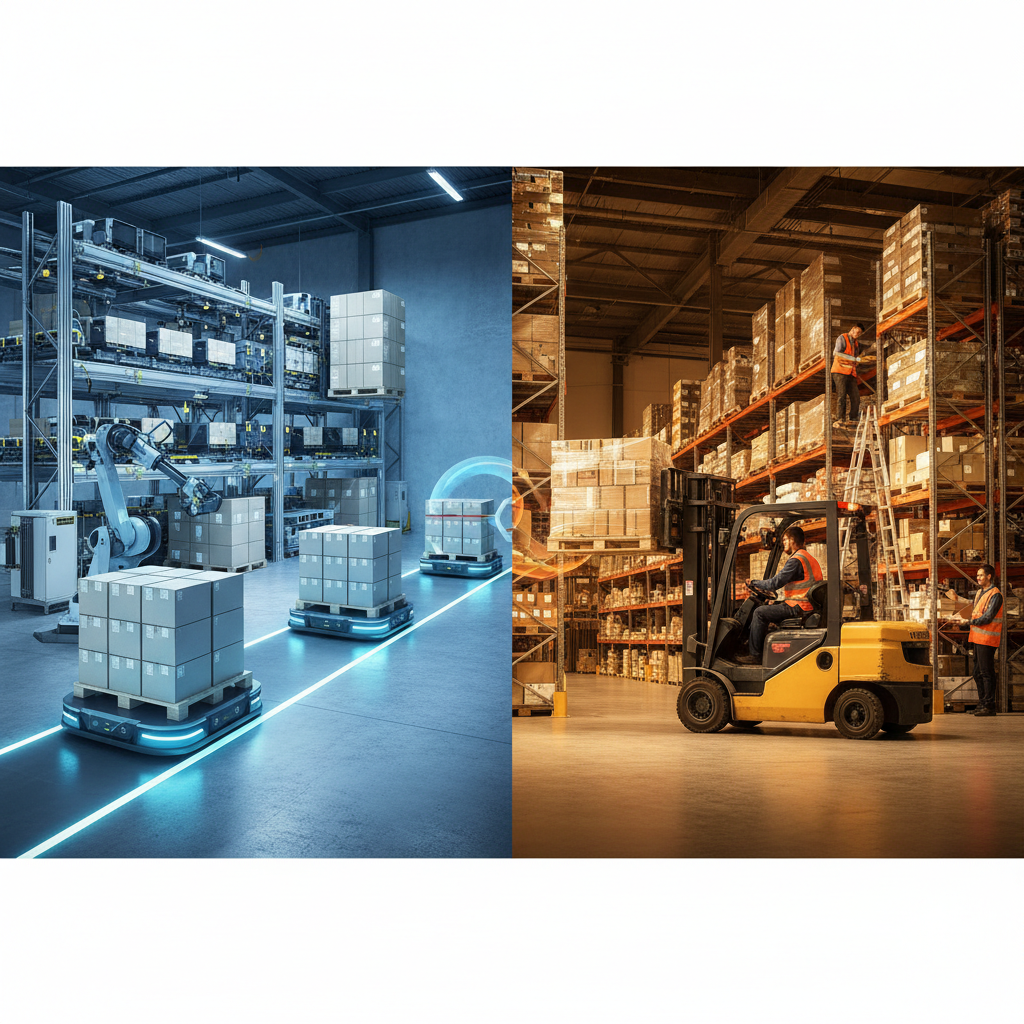
AGV vs Forklift Comparison It's not an easy choice, do you invest WCS (warehouse control software) implementation cost for AGVs,...
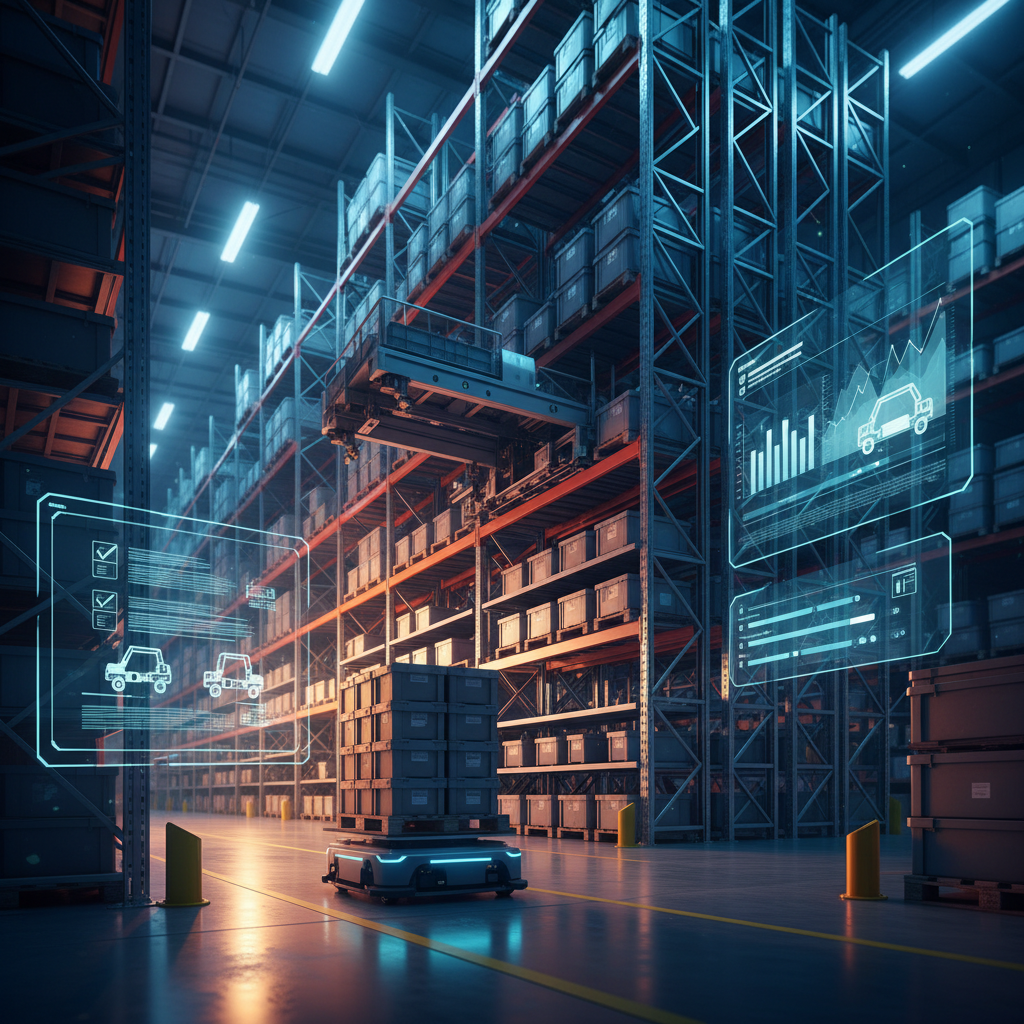
Warehouse Automation RFP Guide Deciding to automate your warehouse is a significant first step toward industry-leading efficiency. But who should...

To provide operational excellence, Armstrong Dematic leads the way towards innovative intralogistics and warehouse automation solutions. Our transformations are based on Industry 4.0 solutions.
Follow us on:


