All you need to know about Armstrong Dematic’s Supply Chain Management Software
“The supply chain stuff is really tricky.” – Elon Musk, CEO of Tesla and SpaceX. As the demand increases, so


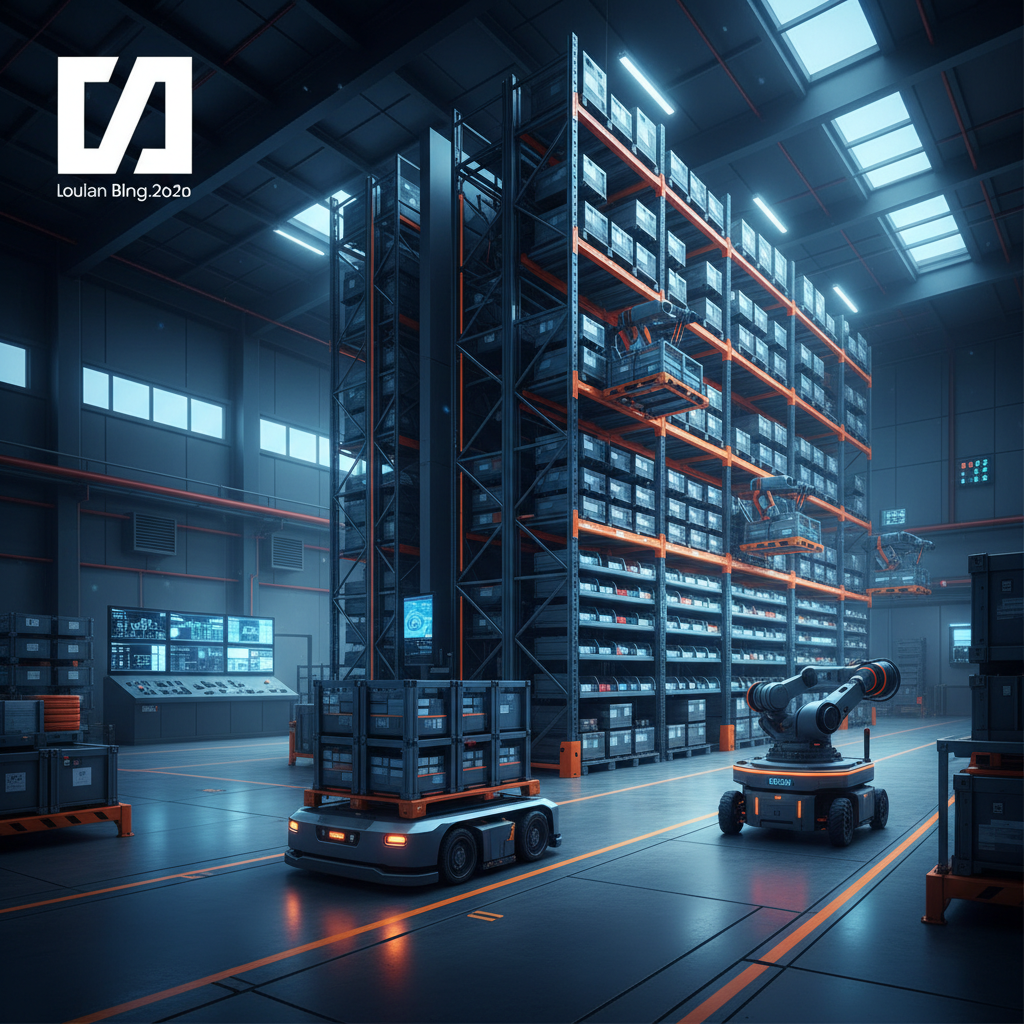
The costs behind warehouse automation are more than just robots. Handles projections accounted for energy monitoring systems, shipping software, and warehouse assets. With projected constraints in the manual supply chain and the ever-increasing warehouse capacity to serve a growing population, machines will need to be smarter and more efficient at moving products. To calculate the total economic impact of implementing a Honeywell robotic solution, including labor cost savings and increased productivity, reduced maintenance and obsolescence costs, improved ergonomics, and lower energy usage costs, you need to consider the following: Number of facilities you are interested in automating. The scale of the facility/warehouse. Required throughput and storage capacity Warm warehouse storage and inflation rate. Site layout and constraints.
Mezzanine floors are one potential way to nearly double storage facilities without incurring land or tax costs, but the structure must be able to handle heavy goods to avoid mid-course reinforcement. This is just as true for automated storage and retrieval systems (AS/RS) which can locate and deliver cartons to pickers without human intervention. They’re seen in India at some e-commerce and other multinational firms with 1 crore rupee inventories, where their manufacturers typically have to deliver to dispatch within 24 hours.
AGVs are location-agnostic, they simply follow the path. AMRs also know where they are on a high-definition map of the facility; if a person steps in front of an AMR or a box falls off a pallet in the middle of a lane, the AMR can navigate around it to find another route to its destination. That flexibility probably packs more potential than anyone is currently fully exploiting, but maybe the biggest long-term savings are the ones we don’t even know we’re making yet.
Then there’s Autonomous Mobile Robotics. AMRs are the darling of today’s automation market and show the most promise for immediate advancements in Indian supply chains. They offer payback periods of two to three years and singular flexibility: an order picker at 10 a.m. becomes a put-wall delivery truck at noon. Prices range from 15 lakh to 35 lakh rupees per vehicle depending on load weight, application, and facility modifications, with software often included in the price. Prices will likely reduce in coming years as more vendors enter the Indian market.
The cost of warehouse automation will depend on the technology you choose. Sorting systems might range from a few hundred thousand to 2.5 crore rupees or more for advanced robotics. Autonomous Mobile Robots (AMRs) fall around 25 to 100 lakh rupees each. An average installed shuttle system price is probably 5 crore rupees. Mobile robots are 50 lakh or more. Conveyors, sorters, and picking systems could range higher based on how much customization is required. We already know that software’s 25 to 30 percent of the total invoice. Installation, rigging, and engineering generally total about as much as the equipment itself. A few rules of thumb: Figure the system will cost 10 percent of the equipment price per year to maintain, and budget to repurchase the system after seven years.
At the heart of every Automated Guided Vehicle (AGV) or Autonomous Mobile Robot (AMR) project is one simple objective: plug it in and go! Except, it’s not simple at all. Especially if you’ve ever tried to connect a new printer to your laptop, or Bluetooth your phone to your car stereo, you know that connecting two pieces of hardware isn’t always as plug and play as you’d hope. Warehouse robots are no different. The software and systems that run your new robotics fleet often speak a different language than your robots themselves, and it’s going to cost you time and money to get everyone talking.
If the majority of your stock is slow-moving inventory, the stored value makes the ASRS price spread easier to justify since you won’t need to store as many high-value goods elsewhere. Conversely, if you handle much large machinery or stock odd shapes, an ASRS may not be cost-efficient even if your clear height and floor space would otherwise support one. For such products, the carrying capacity of the machines is difficult to utilize when the items are unusually shaped, and both the machines and the required retrieval stations become cost-prohibitive.
Floor loading capacity matters too. AMRs and AGVs exert point loads that older concrete slabs may not support, requiring slab reinforcement or epoxy overlays costing 200 to 400 rupees per square foot. Column spacing and aisle widths constrain equipment choices; narrow aisles suit very-narrow-aisle (VNA) forklifts or ASRS cranes, while wider layouts favor AGVs. Always conduct a structural survey before finalizing equipment specifications to avoid costly rework.
Based on current projections, including the declining price of automation and the increase in labor costs (4% to 5% annually), as well as the savings operators noted in hiring temps during demand surges during the Covid-19 crisis, automation will continue to be significantly cheaper than manual operations. This assumes that you’ll need no more than six people to manage an entire fleet of robotic systems at full operation within a few years. That should always be your ultimate goal: investing in a system that runs with minimal human intervention. So let’s discount the up-front investment, as it’s equivalent for both manual and automated systems assuming a certain level of throughput. What truly counts are the ongoing operational costs. How do the total monthly costs for a fleet of AMRs compare with the manual total labor requirements for the equivalent amount of work? A fleet of 10 AMR robots delivering the same weekly picking throughout a medium-size, low-SKU Internet fulfillment DC as the previous example “costs” just two to three people to operate (one or two maintenance techs and one or possibly two operators). The operator(s) can probably handle other duties; as we shall see, this makes the analysis even more attractive for automation.
I’m not sure anyone really knows how many Indian rupees a warehouse robot costs to purchase, run, and maintain each year, but I can probably come close. Ranging between 70,000 and 1 lakh per month, an AGV or AMR or unit-load ASRS crane incurs 20% to 25% of its purchase price in annual maintenance. For AGVs and AMRs, I further estimate another 15% for an annual replacement battery, and you’ll want a fully fueled maintenance vehicle on call 24/7. None of this includes operator training, traveling expenses, or lunch breaks. The maintenance cost for shuttles is the highest at about 30% of their annualized purchase price, whereas miniload ASRS and robot boxes enjoy the lowest annual maintenance costs at only 15%.
Phased Upgrades: How Growing E-Commerce and 3PL Brands Can Automate on a Budget
Not every warehouse needs full automation on day one. You can spread capital expenditure over multiple fiscal years while proving ROI at each stage with a phased rollout. Start with a Warehouse Management System to digitize inventory and order flows first; warehouse software cost for a cloud WMS averages 2 to 3 lakh rupees annually for a mid-sized operation. Then, when you’re confident the system is performing as promised, add AGVs or AMRs in a pilot zone, typically 20 to 30 percent of your floor space. Finally, once again, monitor productivity gains, error rates, and equipment uptime for six months before expanding.
Once you’ve analyzed your needs and addressed your immediate opportunities with successful mobile robotics, the next logical step is to “Look Up.” It’s the vertical order picking, storage, and staging automation that offers the biggest step change in productivity and floor-space savings. If you do so in a phased way, each new system can be commissioned, optimized and its operator interface fully integrated before moving on to the next. This minimizes operational disruption and neatly breaks down the learning curve. You also gradually get all the IT tools you’ll need for reporting, customer billing, and data-backed process improvements. Most operators report substantial returns on Mini-loads and VLMs within two to three years of deployment.
The Cost of Downtime: Factoring AMC (Annual Maintenance Contracts) into Your Projections
Tell me what happens when a company is using everything from mobile robots to automated storage and retrieval systems and a motorized conveyor? Scheduled maintenance on the entire system becomes increasingly critical and infinitely complicated, as does emergency support. Preventive maintenance keeps a system running and protects its value, it’s the best way to avoid downtime, while predictive maintenance estimates when equipment will fail so that preemptive action can be taken. What if the replacement part has a six- to eight-week lead time? Do you stock it at your facility, tie up capital, and limit storage space or do you pay a premium for rapid shipment?

“The supply chain stuff is really tricky.” – Elon Musk, CEO of Tesla and SpaceX. As the demand increases, so
If you’re unsure whether you’ve reached that tipping point, here are five clear signs your warehouse needs automation now and
How Much Does a Robotic Palletizer Cost? Automation has become a high-priority part of business for almost all material handling...

To provide operational excellence, Armstrong Dematic leads the way towards innovative intralogistics and warehouse automation solutions. Our transformations are based on Industry 4.0 solutions.
Follow us on:


