Accelerating Delivery Speed: The Hidden Power of Micro Fulfillment Centers
Have you ever wondered how online retailers manage to deliver your orders so quickly? The answer lies in micro fulfillment...



Warehouse automation is no longer a luxury reserved for global giants. It’s become the lifeline for logistics operations across India and beyond. Yet one question still keeps supply chain leaders awake at night: what will a Warehouse Control System (WCS) actually cost to deploy? The answer isn’t a single number. It’s a mosaic of software licenses, hardware investments, integration hours, and ongoing support. Understanding these cost drivers helps you budget smarter and avoid sticker shock when the invoices arrive. This guide unpacks the real expenses behind WCS implementation, touches on AMR suppliers in India, and explores the price tags attached to ASRS and shuttle systems.
Beyond the obvious costs of the software itself, you’ll need reliable network connectivity throughout your facility, plus data servers to host the application. Ideally, those servers also run your warehouse control system to speed communication and provide redundancy. Every RCS and higher-level system in your facility communicates with the WCS in real time, sometimes sending and receiving orders every few milliseconds. It’s always wise to have a backup server ready to take over if the primary fails. Low-voltage Ethernet costs less but requires cabling every 300 feet. Fiber connections support longer distances and handle electromagnetic interference better, but they cost more upfront. The age of your facility can also make a big difference in your total infrastructure price. Older buildings may require expensive retrofits to run cabling or create space for mounting. If your facility’s layout is changing (or may be reconfigured in the future), expect these costs to resurface when you expand or adapt the system. Work with your IT and facilities teams to identify opportunities early, and ask your system integrator to suggest solutions that other clients have used to save money.
A US-based AMR vendor with experience in global deployments probably understands how to work effectively with an Indian vendor to address all aspects of integration upfront, making an AMR workcell truly plug-and-play. Don’t assume all vendors have the necessary experience, no matter how many buzzwords are in their brochure. Ask for contact info for three WCS references, the older the better, to check on integration hiccups and SLAs. You should also check if the AMR vendor publishes a list of integration partners on their website, or forces you to source through only them. A high degree of integration experience with standards-based equipment and SCADA-like flows will lower barriers to scaling up AMR into additional workcells, or with other equipment, at additional facilities.
The cost of integrating a WCS can often equal or eclipse the investment you’ve made in the software itself. Let’s continue with the $100,000 WCS for a warehouse with 75 control points and 30 devices. Assume the WCS vendor’s professional services rates are relatively low, again, about $150 per hour. Here’s the aggressive scenario through the customer’s eyes. The next number crunch is not a bill of goods, but given too many struggling automated operations, maybe it should be. A lean assessment blueprint for integrating the WCS can look like this: , Project management (100 hours) , User requirements development (50 hours) , Solution system design (50 hours) , Testing plan (50 hours) , Custom HMI design and construction (20 hours) , Control loop set point mapping (20 hours) , Legacy WMS interface development (100 hours) , Legacy conveyor routing execution points (20 hours) , Legacy conveyor error handling (50 hours) , New device interface specification (50 hours) , New device interface construction and testing (100 hours)
Custom integrations for WCS typically require professional services, provided by either the WCS vendor or a third-party systems integrator. As we’ve noted, out-of-the-box connectors, with configurations made for your system pair, can save you some professional services dollars. But realistically, with at least a half-dozen systems commonly in the mix, some degree of custom integration work will likely be in order. Integrations from your WCS to your robotics vendor, for instance, are typically handcrafted professional services projects. So are ERP/WMS/WCS connectors.
What’s more, you need the physical infrastructure to handle all this equipment. Just as you wouldn’t pour the foundation for a skyscraper without blueprints from an architect, you don’t want to go laying Ethernet cables and drilling holes for wireless access points until your WCS and controls integrators have assessed your building’s layout. Small warehouses might get by with standard Wi-Fi coverage, while more extensive facilities will require a site survey to ensure your network is up to the task. A warehouse-in-a-warehouse supports up to three AMRs running at peak capacity while relying on wireless for their data needs. A robotics integrator might also advise you to install dedicated wireless access points closer to critical equipment to ensure a reliable connection.
Let’s talk turkey about ASRS implementation cost and pallet shuttle system cost. This gear makes or breaks dense storage system ROIs by impacting load buildup and retrieval times. While these costs vary widely based on applications, a single-aisle ASRS with a stacker crane can be table-stakes expensive with a $500,000 entry point. And, if you really need that high-bay storage but still want redundancy, count on $2 million or more for your two crane system. Pallet shuttle systems cost less per aisle than cranes and can be added after the fact. They’re more modular, too. Expect to pay $100,000 to $500,000 per aisle, depending on depth and degree of automation. Totes might be cheap, but aisles add up fast.
Experts estimate software development should consume 40 to 60 percent of your total WCS budget, making it the largest phase of your project in either time or money. Whitepapers from industry analysts like Gartner caution against confusing initial purchase cost with total cost of ownership; ensure you include extended support, future software updates, and end-user training in your vendor proposals. Renewing a service level agreement annually is a great way to prevent unpleasant surprises.
Testing is the place where those costs start to become apparent. Functional, stress, and user acceptance testing might ensure that your system is put through its paces for a few weeks. And your team will have to check that the system responds to peak-hour demand, that equipment failures don’t bring the process to a halt, and that misrouted pallets are handled correctly. Any bug that shows up in the wild is a catastrophe. They’re orders of magnitude more costly to diagnose and repair than bugs you find during testing. But warranty and post-launch support costs can be just as damaging. Most suppliers will provide a limited warranty of 90-180 days. But they’ll also offer you a $10K-$50K per annum maintenance contract to cover software upgrades, remote diagnostics, and health checks. It’s a bad bet to rely on good luck and skip maintenance to save a few dollars.
Conclusion
You can expect the WCS cost to be roughly 10-15% of the total automation cost of your warehouse. The costs for WCS implementations can range from as low as $45,000 to $75,000, to well over $250,000. Most WCS suppliers offer a tiered pricing structure that includes a basic system with optional features. Be sure you fully understand your requirements before finalizing a statement of work (SOW) with any supplier. And always demand a budget for any ongoing maintenance included in the warranty.

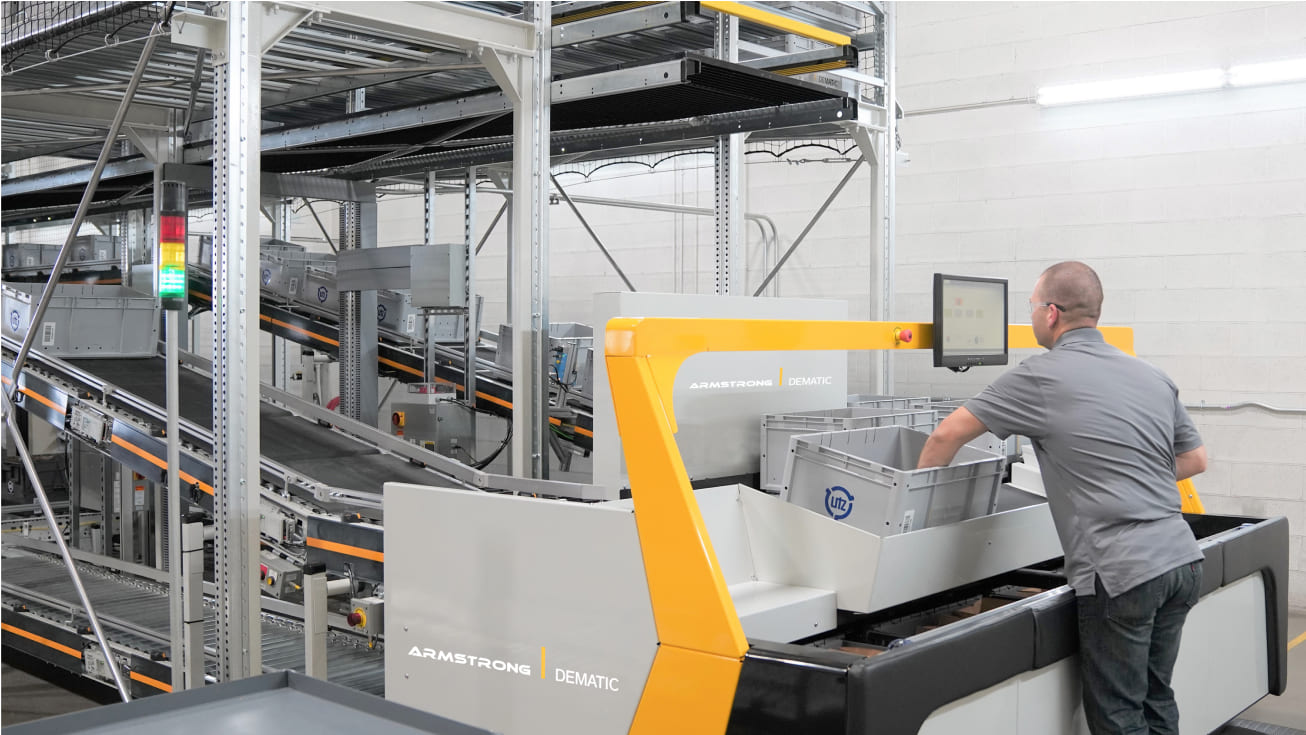
Have you ever wondered how online retailers manage to deliver your orders so quickly? The answer lies in micro fulfillment...
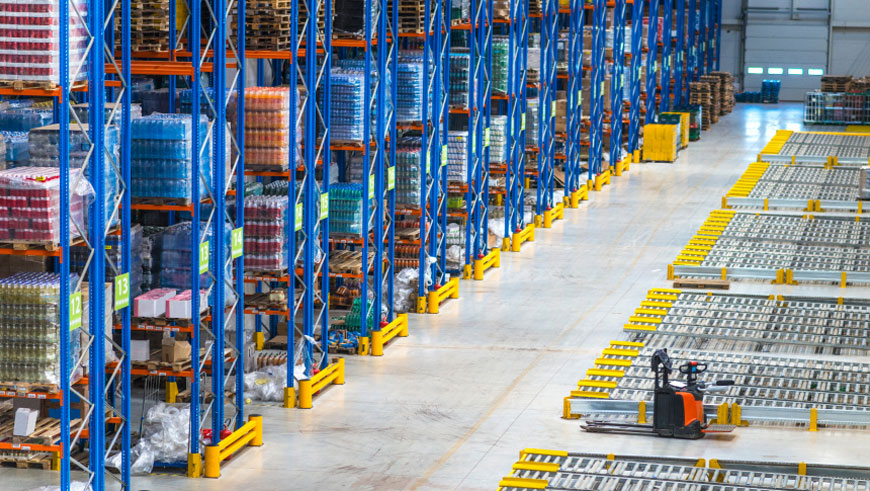
When it comes to storing products in warehouses, we often need help with the dilemma of compromising floor space. But...
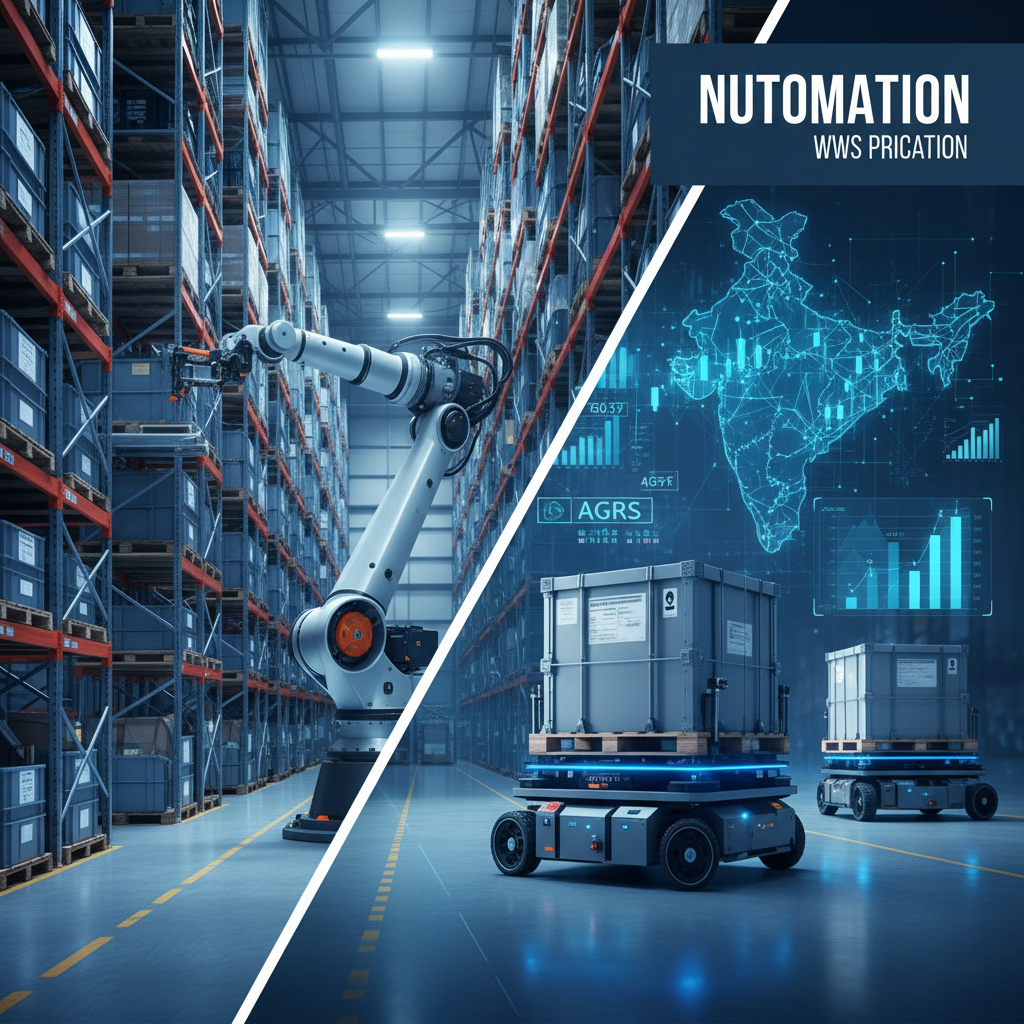
AMR Price Comparison Guide The coalescing of robotics and logistics is nothing short of a revolution for India's supply chain...

To provide operational excellence, Armstrong Dematic leads the way towards innovative intralogistics and warehouse automation solutions. Our transformations are based on Industry 4.0 solutions.
Follow us on:


