Intralogistics Automation Solutions for Warehouses
Intralogistics Automation Solutions for Warehouses The concept of automation in a warehouse was initially thought about as a way to...


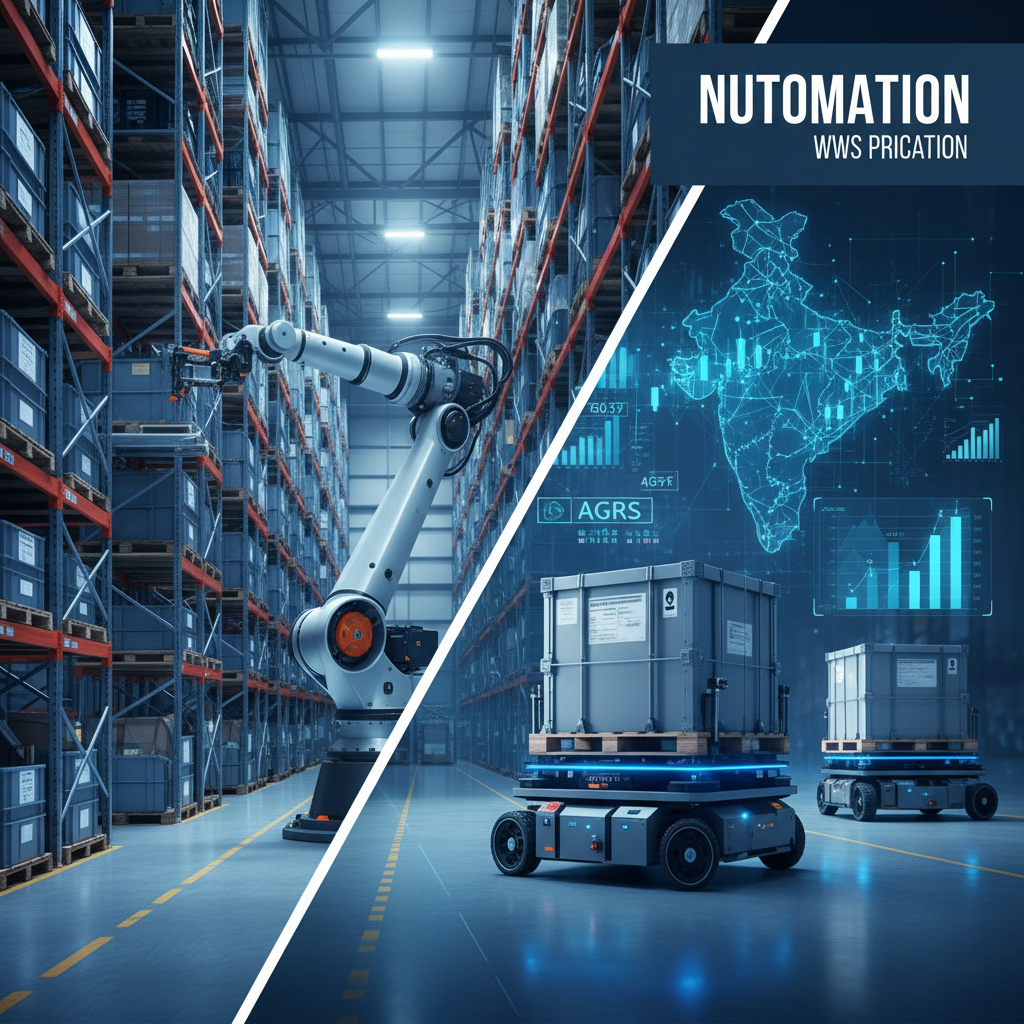
The coalescing of robotics and logistics is nothing short of a revolution for India’s supply chain , with the added advantage that the country can leapfrog many legacy investments into state-of-the-art technology. “Peak competition” among major players is driving razor-thin logistics margins and making the cheapest and most flexible technologies a major strategic advantage. This put AMRs solidly in the spotlight, as their ability to perform multiple tasks offers significantly increased utility and return on investment potential. By comparison, the alternative , fixed-infrastructured, often laser-guided AGVs , is found to be capable of only a single routine operation.
AGVs work well if you have a stable environment and a large volume of similar materials flowing through the warehouse. The initial investment pays off within two or three years in terms of man-hour savings, because the constant drive time for goods transport is virtually eliminated. At best, you’ll get a 20 percent improvement in average productivity if you fully automate job planning and control your AGV fleet. Still, you might not want to do this on a massive scale, because the lack of flexibility will limit your overall productivity gain as business requirements keep changing.
Innovative software for traditional AGVs can simplify route integration and order management but is still incomplete without the underlying hardware connectivity. AGV systems generally are easier to segregate from IT networks to protect intellectual property because few entry points are available. However, visiting technicians still must attend to their upkeep, which poses a risk. AMRs communicate over IT networks and generally are monitored and serviced remotely by suppliers, who also push software updates. That level of access makes some users wary and has left AMR makers scrambling to reassure customers that systems are secure from possible remote hacking. The full connection also facilitates real-time tracking of system performance and wear and tear, which the vendor then can use to schedule maintenance before a failure occurs. This “servitization of the solution creates an annuity stream for the supplier and is like a reservation for the user that the machine will always be available,” says Shireesh Sahai, CEO and managing director of AMR maker TAL Manufacturing Solutions.
LiDAR sensors and SLAM algorithms are the magic potion that gives AMRs their smarts. But, with a few notable exceptions, most are blind as a bat when the lights go out. On top of that, it’s also a very costly solution. A single industrial-grade LiDAR sensor costs between ₹1.5 lakh and ₹4 lakh, and AMRs are typically equipped with two or more. That’s because extra headroom of 20%-40% is necessary to prevent overheating and “sensor fatigue.”
Would you pay more to avoid forklifts colliding, deadheading, or bottlenecking? AMRs can detect obstacles and steer around them, communicate with one another to avoid traffic jams, and split and recombine in fleets as the workload demands. This runway for technology evolution might make automation-as-a-service more appealing and perhaps inevitable for robots at least. One advantage mobile robots already have over forklifts is that they are easier to scale up without disrupting your site because the demo model, once unlocked, is the same as the production model. The model often includes less tangible but hardly less valuable ad-ons such as support, parts, and future-proofing.
The pros of investing in a fleet purchase are reasonably straightforward. Bigger orders mean higher discounts. More robots can also drive down per-robot shipping costs. Plus, a fleet purchase means the robots’ lease or depreciation costs can be spread over a larger unit count, cutting the cost per robot per month or year. The upgrade or spare parts inventory you need to keep on hand would be more considerable with a fleet purchase, but those scaled-up inventory costs are almost always more than offset by the lower per-unit purchase price and lease/depreciation costs. Last, if you’re planning a phased implementation, a fleet purchase typically locks in a set cost per unit regardless of schedule, which can be psychologically easier than watching costs climb on a stair-step schedule if units are bought one by one.
Fleet scale also drives the cost of the WMS. Some Warehouse Management System providers charge per user seat or per transaction; others provide unlimited robot integrations once you exceed a specified subscription tier. For any scale beyond a pilot deployment, target bundled pricing that includes the WMS, fleet orchestration software, and hardware. On average, this lowers the effective price of warehouse automation by 15 to 30 percent over five years.
AMR’s do not work on their own. They fetch pick lists from your WMS, send task completion updates to your ERP, and interface with inventory systems. This isn’t a turnkey process. They generally charge you ₹2 lakhs to ₹8 lakhs as API integration costs based on the number of your current systems and your ERP’s integration capabilities. If your ERP system is a legacy product with a few integration possibilities, you might need to build middleware solutions, pushing your costs even higher.
What are the benefits of using a pre-integrated connector in a WMS system? Well, on the one hand, the labor costs associated with integrating these two systems are dramatically reduced. For example, users have reported a solution that could have taken three to four months to integrate only took three weeks. Leading manufacturers also provide support, which makes the transition and adjustments much easier. 3rdly, a pre-integrated connector can incorporate both fixed and mobile automation technology giving a higher level of system optimization that might be lost with separate systems.
The Payback Period: Analyzing ROI in High-SKU, Fast-Paced Indian Fulfillment Centers
Is the concept of “dark stores” and “micro-fulfillment centers” something totally new to you? Despite the sci-fi ring, we’re basically talking about converted no-customer stores close to urban centers where the entire facility, from storeroom to storefront, is a small fulfillment center. In comparison, micro-fulfillment centers are considerably smaller than typical distribution facilities. Sounds like the Holy Grail of Efficiency, right?
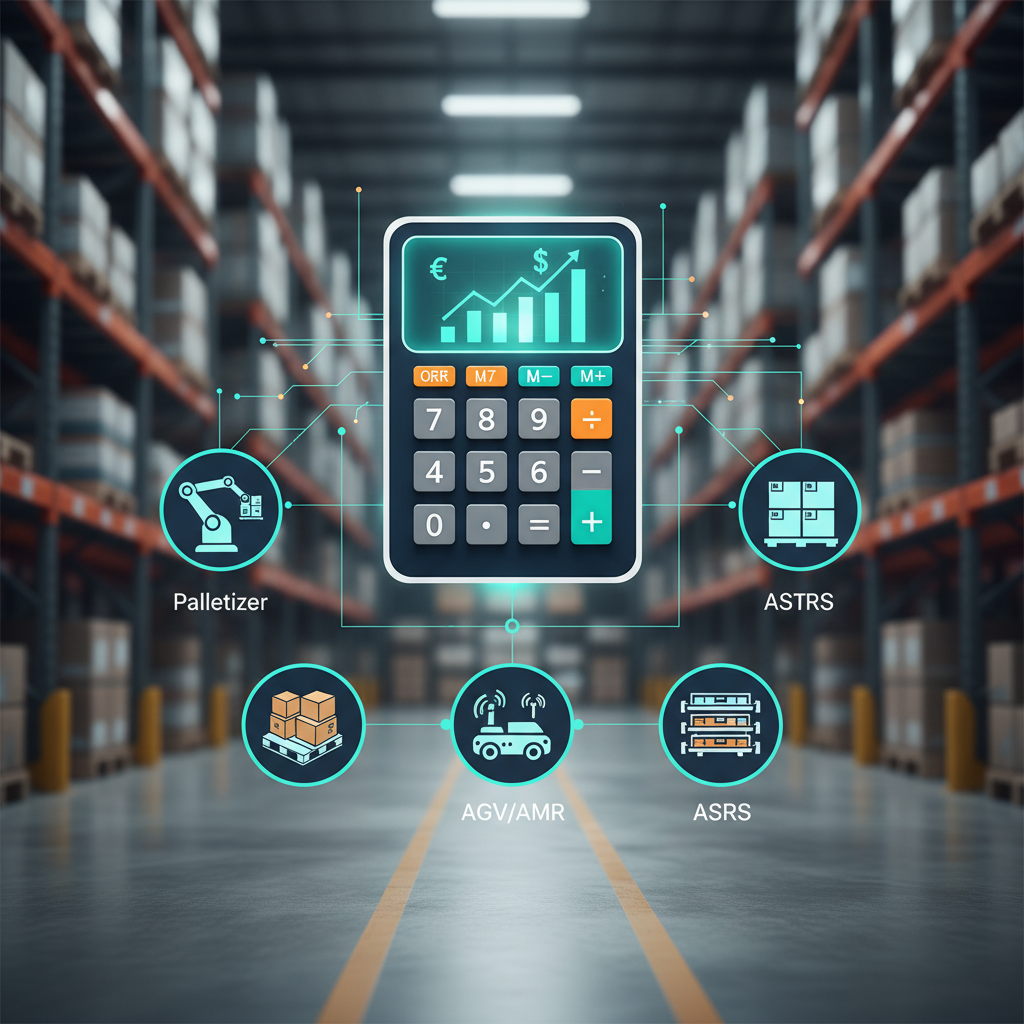
AGVs, with their lower upfront AGV cost., might seem to offer faster payback. Their limited flexibility, however, means they perform well only in repetitive, predictable workflows. Operational inefficiencies in the wrong application can easily extend return timelines to 36 months or more, effectively eliminating any cost benefit over longer payback systems. ASRS represents the next step up the automation ladder. Costs range from INR 1.5 to 10 crore for a full installation, depending on the vendors and the level of technology required to store and retrieve goods in ultra-high-density situations. With estimated payback periods of four to six years, ASRS installations are generally only feasible for high-volume fulfillment operations with stable, long-term demand.
Top Vendors in India: Comparing domestic pricing with imported robotic options
Is the Indian market for autonomous mobile robots (AMR) following the same playbook as other sectors, with a mix of domestic startups, established Indian engineering firms, and international players? Domestic vendors such as GreyOrange, Addverb Technologies, and Rapyuta Robotics are producing AMRs specifically designed for Indian conditions. An AMR manufactured in India typically costs between ₹25 lakh and ₹45 lakh, making these units attractive for early adopters who want a local partner with lower transportation costs. In addition, these vendors frequently offer locally based customer support, and since the AMR is being assembled down the road, spare parts often are easier to find and arrive more quickly.

Intralogistics Automation Solutions for Warehouses The concept of automation in a warehouse was initially thought about as a way to...

The rapid growth of e-commerce has revolutionized consumer shopping habits, placing an increased emphasis on efficient and expedited order fulfillment....
AGV ROI Calculator Guide Warehouse automation no longer remains a boardroom dream. It's a shop-floor reality for material handling in...

To provide operational excellence, Armstrong Dematic leads the way towards innovative intralogistics and warehouse automation solutions. Our transformations are based on Industry 4.0 solutions.
Follow us on:


