Armstrong Dematic’s Automated Guided Vehicle, a trending sensation in the Market
“The first rule of any technology used in a business is that automation applied in an efficient operation will magnify


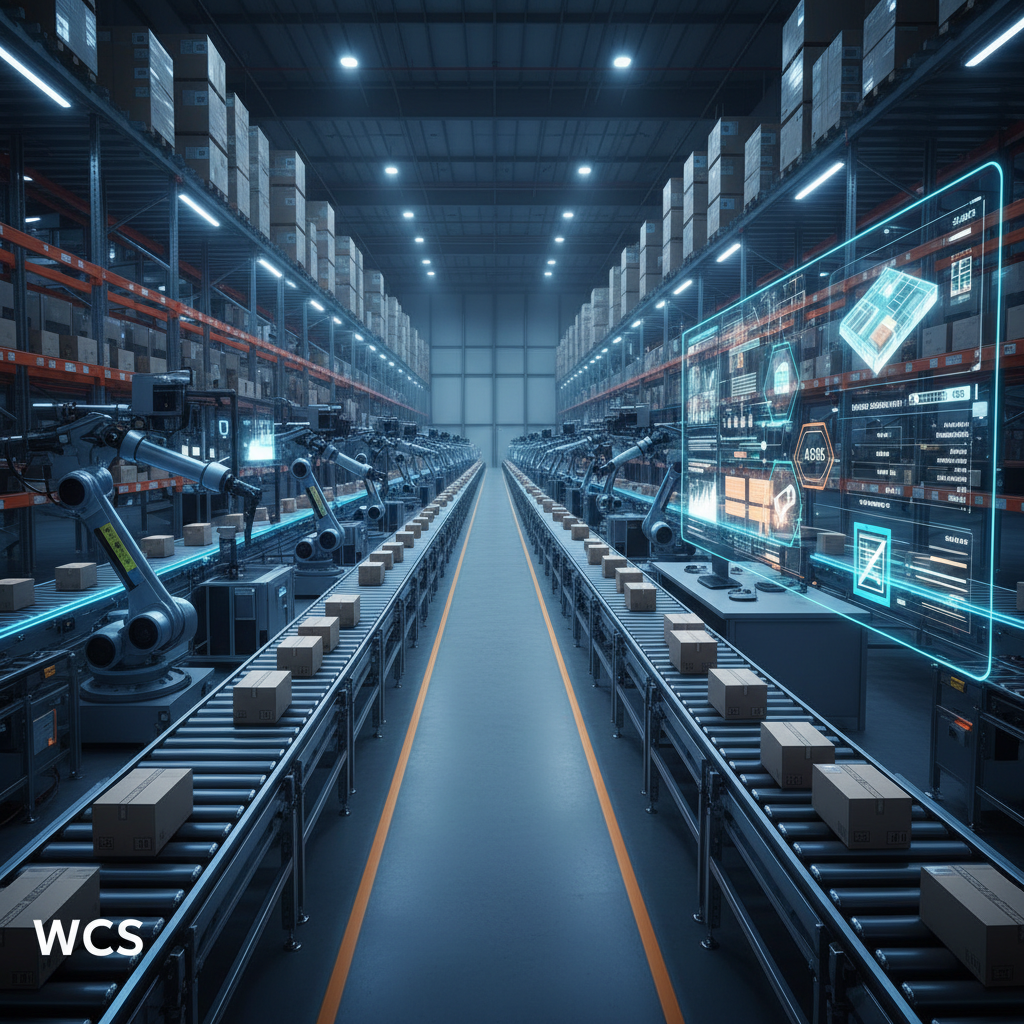
Warehouse tech is an endless stream of acronyms. From WMS to WCS to ERP, the jumble can be overwhelming. However, knowing the reality that is a “Warehouse Management System” from the reality that is a “Warehouse Control System” is more than just good info to impress people at parties. It’s the core understanding you need to design a fulfillment operation that can actually handle your best growth projections… or even exceed them.
A tier below, you reach the WCS vs WMS frontier. The Warehouse Control System has a mandate that’s hyper-focused , and just as critical. While the WMS prioritizes operational efficiency and helps you gain visibility into your inventory, the WCS is all about making sure that the equipment (the conveyor, the sortation system, AS/RS, etc.) is used in the most cost-effective way possible. Keeping efficiencies high and bottlenecks low, the Warehouse Control System ensures that everything designed to move and store product is doing its job as efficiently as it can.
Beyond the decision to buy a given technology is the expert installation, configuration, and integration your vendor may or may not be equipped to provide. Today’s systems are very complex on the inside even if they look slick and intuitive in the demo room. Marketable differentiators like IoT connectivity or AI/ML predictions can be snarly, time-consuming additions that multiply the cost of ownership. The best vendors will guide you away from the bleeding edge and be honest about what’s practical to squeeze in. Then there’s the question of whether this vendor will be motivated to get their hands dirty with its integration to other parts of your tech stack. Some wash their hands once they’ve installed and switched on the gear. A good partner, however, will take responsibility for their solution playing well in the sandbox with the rest of your systems.
Your WCS is the general. It’s the traffic cop for your conveyor sortation equipment and automated material handling systems. The WCS controls the conveyors, tells the sorters which way to divert, and makes sure the box pushers and automated storage and retrieval systems don’t run into each other. The WCS works in real-time, monitoring the status of orders and exceptions, and ensuring that everything runs smoothly. The WCS doesn’t see individual units of inventory, it’s focused on moving orders through the system as quickly and efficiently as possible.
Contrast that with another layer of software: the Warehouse Control System, that sits between the WMS and the dozens of PLCs on the conveyor network. This software layer translates messages between the WMS (high-level instruction like “pick tote 12345 and put it on the conveyor”) and the thousands of real-world I/O points in the robot cells and conveyor network (specific low-level commands in the proprietary language of each brand of PLC). The WCS prioritizes and synchronizes tasks to minimize congestion and maximize throughput. When the WMS says “send the box to shipping,” it’s the WCS that breaks this command down into subtasks and orchestrates the movement of a dozen different robotic conveyor cells to make it happen.
Warehouse Control Software is the last line of defense against collisions. Think of a very fast conveyor that carries a cube every couple of seconds. Two cubes can’t occupy the same spot at the same time, so how does the conveyor know when to send the next one? The WCS ensures downstream equipment is ready and routes the cube to an empty space. Or consider a fast-moving tilt-tray sorter: if it isn’t properly coordinated, the tray might tilt before the previous cube has cleared, causing a collision. In a goods-to-person system, a robotic arm might not have enough clearance to safely insert or retract if a neighboring station is still in use. Each of these sub-movements requires precise synchronization and visibility. That’s what the WCS does.
Warehouse Management Systems prioritize order logic, not kit and conveyor routing; Warehouse Control Systems are all about real-time accuracy and speed in moving inventory and managing the automated equipment. A WES supports both and dynamically adjusts the balance based on real-time conditions. However, honestly, true WESs are more common in mini-loads and AS/RSs (Automated Storage/Retrieval Systems) than in manual storage and retrieval warehouses. Don’t be fooled by vendors. Ask on-site prospects how well their software copes with the dependable real world of stuck totes and obscure over-read exceptions on barcodes.
The Cost Distribution Rule: Allocating Your IT Budget Between Software Logic and Physical Automation Controls
We often think of databases and spreadsheets as tools to store information but they can also be programmed to act on this information with a set of instructions, called a business logic. These applications exist on the control-as-software continuum. For example, you inventory products. That’s on one side and those products might be picking themselves to fill orders automatically and your system decides to direct inbound receipt to a reserve area because there isn’t any open pick space. That’s on the other. In the middle is when your order fulfillment system automatically releases work to the DC as orders are imported but the operator needs to manually issue the stock move to get inventory from reserve to active processing areas. Voila! You have three pretty normal warehouse decisions: I need to store this but I can’t fill from it; I need to store this and can fill from it; I need to optimize where I store this and which decisions about where to store this don’t result in a move?
Choosing Your Ecosystem: Does Your Current Fulfillment Model Need a Independent WMS, WCS, or a Unified WES?
The truth is, no one likes change. IT especially doesn’t like the risk of change. So let’s start with your automation footprint. If you’re using pallet racks, drive-in racking, or old-style “pick by memory” case flow racks… if you’ve got a manual push- or automated storage-and-retrieval system… if your picking tools are forklifts, man-aboards, or A-frames… if your packing stations are manual and your sortation system is a shipping clerk’s memory… in all these cases, all you have, automation-wise, is a WMS. And on the WMS vs. Excel spectrum of choice, the WMS wins hands down because Excel can’t control a pick-to-light system, regulate a put wall, identify low-velocity SKUs, or interface to your shipping clerk’s courier’s API. If you don’t have a WMS, you can’t even compare Excel to it, so you go Excel. WMS plus installation comes first. Followed, if you still want more after a few years, by careful evaluation of the operational benefits of integrating your WCS with whatever WMS you’ve installed.
When it comes down to it, though, the most important decision isn’t a feature-function comparison between different types of software. The intelligence in your WMS and the execution in your WCS need to stay in their lanes. Your team may be high complexity and high growth, but as long as your operational complexity doesn’t exceed your team’s current capabilities, you don’t need more WMS than you do WCS. Logistics is complex enough without making it more complicated. The right decision will free you up to focus on serving your customers, not on managing your software.


“The first rule of any technology used in a business is that automation applied in an efficient operation will magnify
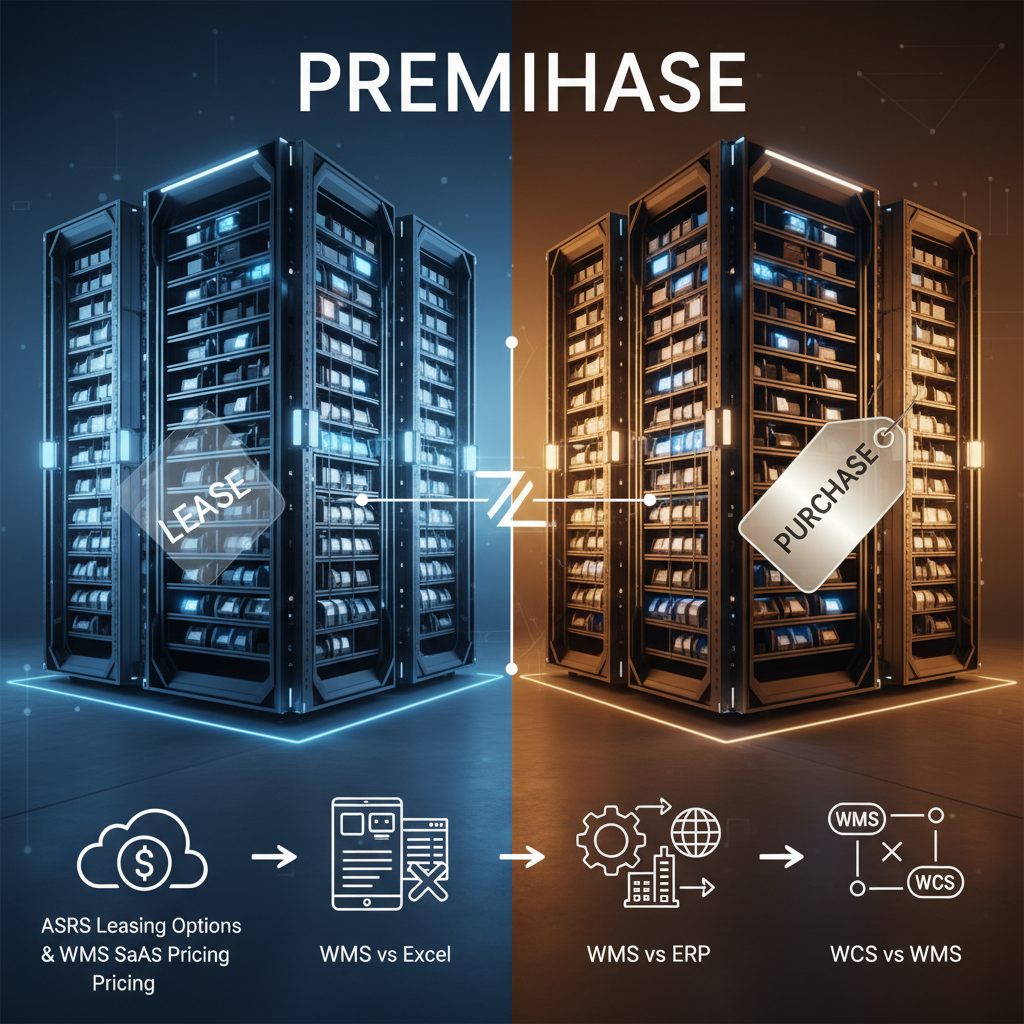
ASRS Leasing vs Purchasing Warehouse automation is no longer a luxury reserved for e-commerce giants. As fulfillment velocity accelerates and...

WMS vs ERP: Which Do You Need? Many companies are tempted to stick with their already-owned ERP when it comes...

To provide operational excellence, Armstrong Dematic leads the way towards innovative intralogistics and warehouse automation solutions. Our transformations are based on Industry 4.0 solutions.
Follow us on:


