WMS for Ecommerce Fulfillment
WMS for Ecommerce Fulfillment Imagine a world where you walk into a warehouse and it almost feels like a store....


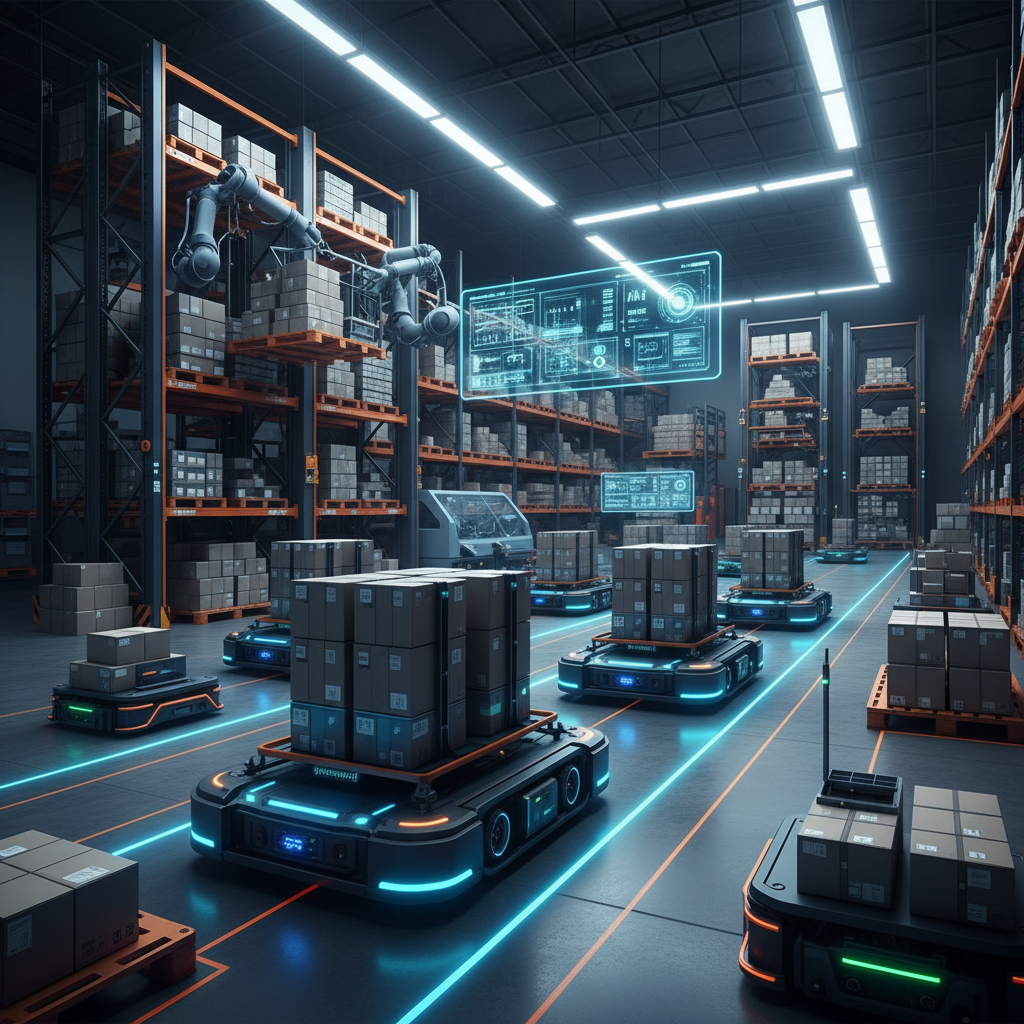
Automated Guided Vehicle (AGV) Systems Guide
An automated guided vehicle is one of the helpful technologies in modern warehouses and factories.
Businesses use them to move materials inside facilities efficiently.
These vehicles transport goods automatically along paths, which reduces manual movement and improves workflow.
For companies that focus on productivity and consistency automated guided vehicles are a part of automation.
Moving materials is a task in any warehouse.
If products are moved slowly or inefficiently it affects the operation.
Manual transport takes time. Requires a lot of labor.An automated guided vehicle solves this issue by handling transport tasks in a controlled and dependable way.
What an AGV Does
An AGV is a driverless vehicle that moves materials from one point to another within a facility.
It follows a route using guidance methods like sensors, magnetic paths or navigation software.
These vehicles can carry pallets, containers, raw materials or finished goods.
The main purpose of an automated guided vehicle is to reduce transportation work.
Of relying on workers to push carts or forklifts the vehicle carries out movement automatically.
This creates an organized and efficient warehouse environment.
Why Businesses Use AGVs
One big reason businesses choose automated guided vehicles is to improve productivity.
When materials move automatically workers can focus on important tasks.
This helps operations run smoothly and reduces time wasted on repetitive movement.
Automated guided vehicles also improve safety.
Warehouses and factories often have traffic and moving goods manually can be risky.
Automated transport reduces the chance of collisions and human error.
It supports a controlled working environment where movement is planned and predictable.
Benefits in Daily Operations
Automated guided vehicles help create consistency in material transport.
Since they follow programmed routes they move goods in the way every time.
This makes warehouse operations more reliable and easier to manage.
They also support space usage.
Automated guided vehicles can move through defined pathways without requiring as manual coordination.
This can help reduce congestion and improve the flow of the facility.
When traffic is better managed productivity usually improves too.
Integration with Warehouse Systems
An automated guided vehicle works best when connected to warehouse systems.
It may receive instructions from warehouse software or control platforms.
This allows the automated guided vehicle to move materials at the time and to the correct location.
Integration is important because it helps the vehicle fit into the automation setup.
Of working alone it becomes part of a larger material handling process.
This improves coordination. Makes operations more efficient.
Where AGVs Are Used
Automated guided vehicles are used in warehouses, factories, distribution centers and assembly facilities.
They are helpful wherever materials must move repeatedly between zones.
Some facilities use them for pallet movement while others use them for raw material delivery or finished goods transfer.
Their flexibility makes them useful in industries.
As operations grow automated guided vehicles can help businesses maintain efficiency without increasing labor.
An automated guided vehicle is a solution for businesses that want better internal transport and smoother warehouse operations.
It improves safety reduces labor and supports a more efficient flow of materials.
For companies planning automation, automated guided vehicles are a reliable step, toward smarter logistics.
Armstrong Dematic helps businesses build systems that support performance, control and long-term growth.


WMS for Ecommerce Fulfillment Imagine a world where you walk into a warehouse and it almost feels like a store....

The Automatic Identification System (AIS) is a revolutionary tool that has vastly enhanced maritime communication and safety. It's a standard...
ASRS for Ecommerce Fulfillment Centers We often take little notice of just how much work, time, and energy goes into...

To provide operational excellence, Armstrong Dematic leads the way towards innovative intralogistics and warehouse automation solutions. Our transformations are based on Industry 4.0 solutions.
Follow us on:


