Narrow Belt Sorter Cost Guide
Narrow Belt Sorter Cost Guide The advantages of automation in warehouses are clear, from cutting costs to improving efficiency. But...


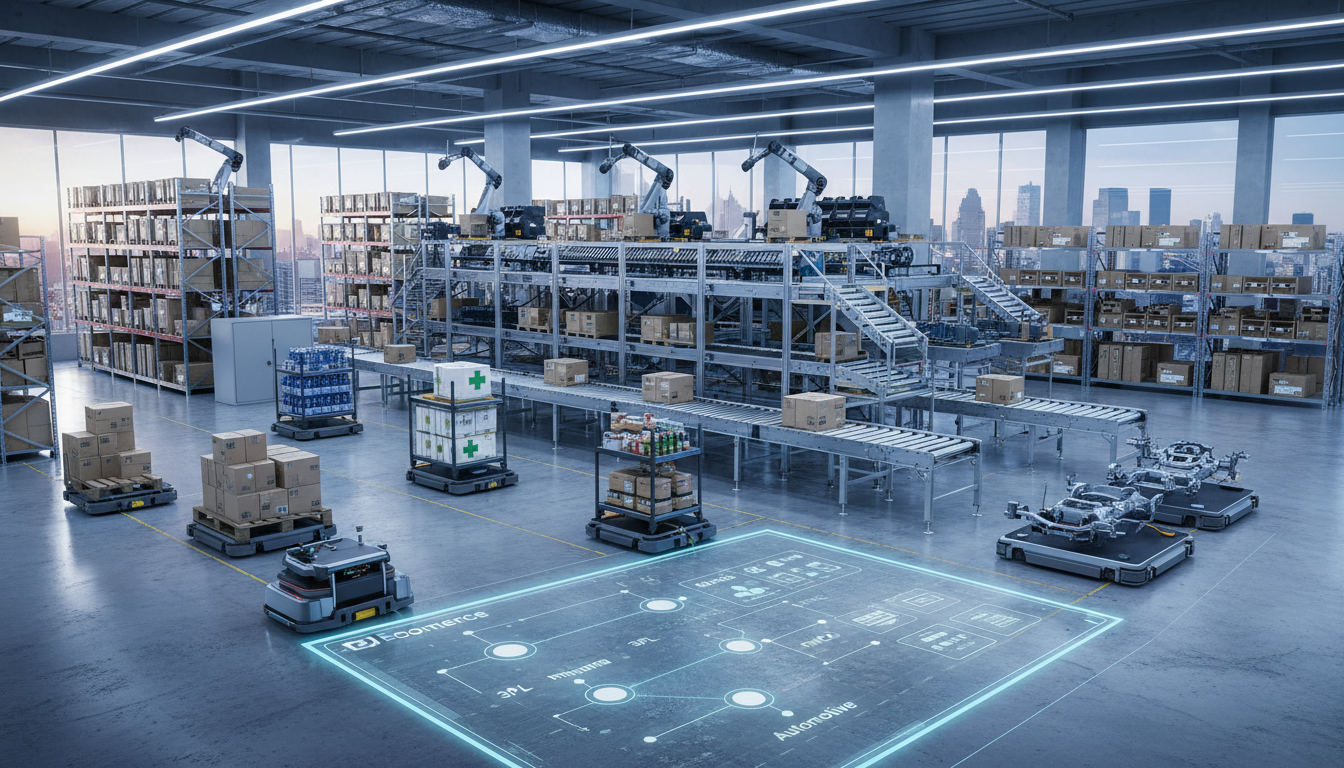
What’s more critical than how goods arrive, is to whom they’re sent?! A Warehouse Management System (WMS) can help boost efficiency, drive down costs, and ensure your most important customers get first priority. A WMS is the quiet achievement behind the scenes of all successful distribution operations. It needs to be able to recognize and gently handle each product, like a new parent being handed their baby for the first time. That kind of gentle magic turnaround, times however many times you need it, every single day. Good WMS.
What is more, 3PL WMS simplifies communication among you, your clients, and the carriers. Web-based solutions also ensure worry-free updates and maintenance and minimum downtime. Do you need to expand your warehouse and the services you offer? A system that is built to support customizable workflows and integration with other essential business systems can accommodate that growth too.
What kind of bandwagon do you think we jumped on? The answer is the Third Party Logistics (3PL) one. Yes, 3PL has been our bae since we started using that term and, it’s important to note, not just since it became trendy. A good Warehouse Management System (WMS) is another one we hopped on! Yep, another popular trend-type term we’ve been throwing around since we launched in 2019. Probably ’cause we’d be sunk without one.
More importantly, the WMS should help manage space, resources, and labor to streamline warehouse operations and improve inventory management. Look for features that optimize storage and slotting, automate inventory tracking, and facilitate picking and packing. Advanced analytics and reporting capabilities will allow you to measure performance and make data-driven decisions.
Why not look for a WMS that includes automated billing, cycle counting, and mobile compatibility?By automating your most time-consuming manual processes and ensuring there are no gaps for human errors to cause inaccuracies in your inventory, you are saving time whileserving your customers better. Your team won’t have to wait for information , or inventory , anymore. And amodern WMS should be flexible enough to help you grow your business and improve your services with newwholesale distribution workflows and features.
Managing inventory for multiple clients under one roof takes much more than simply delivering great service. You need a system to keep everything separate and organized, helping you work just as efficiently as if each client had its 4 walls. A WMS with multiple warehouses, or 3PL Warehouses, is built to solve this exact problem.
How do we know which products are where in the warehouse? Most likely, we don’t really care, as long as your toothpaste, coffee, or dog food arrives on time. But what if you wanted to pick the past season’s shoes, the least popular book of the year, or a ten-year-old medicine that doesn’t sell very often? Do you pick those from the front or the back? How do you even know where they are?
A growing business isn’t just more of the same. It’s more orders, more stock, more costs, and more customers to keep happy. Not to mention more pressure on your margins. It’s not that a WMS is just a “nice-to-have” at this point. It’s a “need-to-have.” To cope without it nowadays probably means losing business to people who will, or at least spending too much and making too little on the business you have. Coherent, efficient processes are key to keeping customers happy and controlling costs as you grow. A proper WMS is made for this.
You can’t persuade your clients of your value without evidence. Providing the right data and insights on operations and performance can transform discussions with your clients. Are you strictly a cost to be managed, or are you a trusted partner who enhances their business? In my experience it’s the latter far too often. Yet, finding the evidence to make your case is difficult and time-consuming for many FM companies. Clients can be exacting and often believe (as indeed they should) that they can get obtain better reporting elsewhere. Most aren’t, by the way, but if they look misère!
Maximizing Storage Space and Floor Utilization
Warehousing space is expensive, how can you optimize storage and make the best use of your existing areas? To avoid unnecessary replenishment from reserve, a good WMS should dynamically identify the best warehouse locations for every SKU with normalized storage grades/cube utilization data.
Advanced WMS solutions also provide tools to help with warehouse layout planning. By analyzing your order patterns and movement, you can identify zones that can be grouped together to reduce the time and travel distance between picks, while improving overall picking efficiency. Additionally, you can also identify underused zones that can be repurposed for others. These optimization strategies eliminate congestion, improve space utilization, and reduces travel time. This level of fine-tuning in your operations can save hours each week.
How to Choose the Right 3PL WMS for Your Operations
Deciding on a new WMS can’t be based solely on features because if it doesn’t fit your business, does it truly have what you’re looking for? So presumably, you need client integration, are required to meet specific industry standards, but is an effective system also on the list of things you need for future growth?
Security, user experience, and vendor support should also guide your choice. A good WMS partner offers regular updates, training, and responsive support. This ensures your team stays productive and your warehouse adapts as the market evolves. In 2026, agility is just as important as automation in the logistics world.
Cloud vs. On-Premise Deployment Models
Which you contrast depends largely on whether your IT strategy focuses more on maintaining agility and continual responses to market trends, or prioritizes stability and control. Cloud or no cloud, your WMS should match both your current requirements as well as provide the flexibility to adjust and bring new streams of business into the system. So if your strategy isn’t already 2025 approved, it’s time to get back to the whiteboard.
Understand what you’re protecting and the risks you’re facing first. Determine the direct and indirect cost of a breach or unavailability. What events do you need to protect against, and what level of downtime is acceptable? How scalable do you need to be for predicted growth? What guidelines are you following from regulatory bodies or insurance providers?
In conclusion, a WMS for 3PL Warehouses is more important than ever. But how are we going to manage the increased pace if we don’t start investing in truly advanced, future-proof warehouse technology today? 5? 10? 15 years from now, manual and paper-based processes probably won’t cut it , especially manual and paper-based processes that are drowning in new business and customer demands.


Narrow Belt Sorter Cost Guide The advantages of automation in warehouses are clear, from cutting costs to improving efficiency. But...
How Much Does a Robotic Palletizer Cost? Automation has become a high-priority part of business for almost all material handling...

WMS for FMCG Distribution Centers Fast-moving consumer goods are like a river; they just keep flowing despite whatever obstacles are...

To provide operational excellence, Armstrong Dematic leads the way towards innovative intralogistics and warehouse automation solutions. Our transformations are based on Industry 4.0 solutions.
Follow us on:


