WMS for Automotive Warehouses
WMS for Automotive Warehouses Times are tough for automotive buyers. With global procurement environments more competitive than the F1, customer...


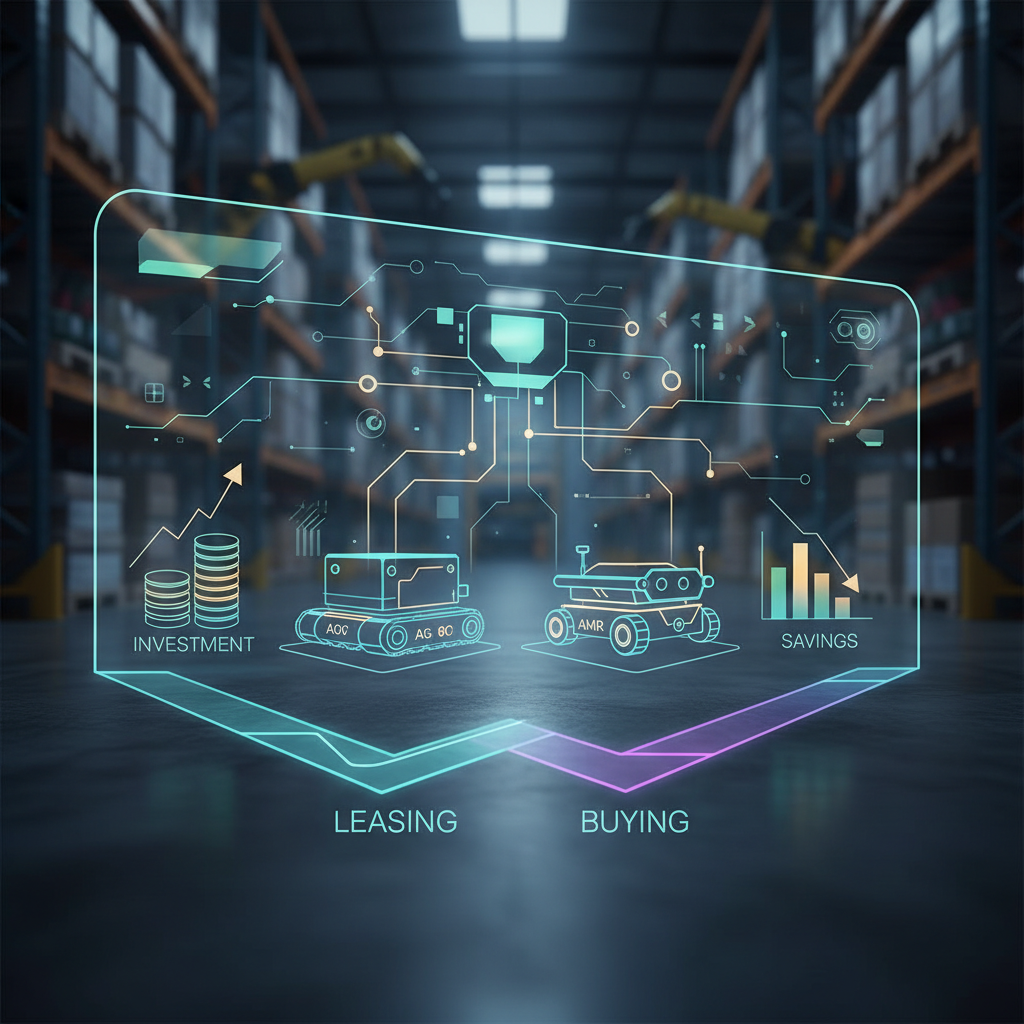
How much does a warehouse dimensioning, weighing, or scanning system cost? The answer is “it depends.” That’s because the underlying technology , laser scanners, cameras, scales, and software , can vary so widely. A static cubing table using a couple of low-cost ultrasonic sensors might set you back $15,000. On the other hand, a system designed to measure multiple package dimensions, read barcodes, weigh each item, match it to an order, and automatically print and apply a label all in a fraction of a second when mounted on a high-speed in-motion gate could cost $150,000 or more. What’s driving that thundering herd of buffalo across your budget line? This article reveals five of the biggest factors.
The technologies we knew a decade ago are no longer sufficient to meet the challenges of today, and even less so those of tomorrow. DWS solutions have come a long way over the last years in terms of both performance and reliability. Yet, their complexity has also increased. At the same time, the pace of business has intensified , including the volume of shipments , while costs have increasingly come under pressure due to growing competition. These are only a few of the factors driving your business, dictating that you optimize your workspace to the nth degree if you want to thrive.
Vendor reputation and support packages also shift the needle. Do you have a longstanding relationship with a provider whose gear has never let you down? Are you willing to give a hungry start up a shot to save a few bucks? The former likely won’t risk its sterling reputation wining and dining you then leaving you high and dry the instant it gets tough, while the latter might throw everything, including the kitchen sink, at you to earn your business. Warranty length, spare-part availability, and training hours also come into play. New players in the market will often bundle a year of their highest-level warranty for free to get you hooked, but you’ll pay for it like mad after that year is up. Spare parts can routinely cost 20 to 40 percent of the initial sensor purchase if you’re not careful. Training costs a pretty penny in travel time, meals, and lodging, but remember, nobody’s forcing you to send your folks.
Operator-intensive systems lose efficiency in dynamic warehouse environments, but 3D scanning adds flexibility , especially with the large items you handle. Instead of stationary cameras losing sight of the load, scans asynchronously snapshot its features and capture dimensions as that change rotates or moves. Calibrate your cameras as they detect multiple points around boxes, polybags, padded mailers, or big-ticket packages. Transfers between items are seamless as the image and L x W x H data remain in the cloud with initials and dimensions awaiting the next article to arrive.
In-motion systems are installed right over your existing conveyor so packages are measured automatically during transit. This eliminates extra steps in your process and allows you to keep your lines running full-tilt, which is why these systems are increasingly common in e-commerce warehouses where downtime is not an option. Plus, get the right integrator, and in-motion systems can be up and running in hours. With installation often requiring nothing more than a few bolts and a power connection, some go-live on the same day they land on your site.
Legal-for-trade certification ensures that your scale and dimensioning sensors comply with national metrology regulations. In the United States, if your measurements are not made with certified devices, then carriers and customers’ customs agents must accept your numbers as true for billing. Since enforcement cases are rare, certification is mostly a way for suppliers to prove their fairness and protect against claims. All load cells and distance measurement devices are certified upon installation. Recertification happens annually during a visit from in-house lawyers and a calibration technician. They make sure seals are not broken and that no one has tampered with the adjustments since they were last calibrated. That’s easy when both the scale sensor and sensor head are certified as complete systems. Then the seals are not on the sensor but around the entire conveyor roller. Renewal requires pulling the sensor from the production line for a few hours and paying the technician’s travel costs, because of course, you will shut down the line while she is there. But recertification is cheap. It typically costs less than installing a substitute sensor to cover your feedstock during the inspection visit. If it is time to replace your sensor anyway, why not upgrade your entire conveyor or scale head while you are at it.
Imagine buying a piano and being asked, “What songs do you want to play?” That would seem an odd question since you didn’t know how to play it yet. But it’s a good analogy for dimensioning hardware. You buy for your biggest and smallest, your heaviest and lightest, your regular shapes and your odd. And you buy to create the data you’ll need, which pretty much means you buy to fit business requirements. Because if your data is a mess, your decisions will be a mess.
API rate limits are a pain. Data-format mismatches are a pain. Many carrier APIs rate limit the number of requests you can send in a given period. If you’re over the limit, they often return an HTTP error (4xx or 5xx) rather than a nice, clean, error object in the agreed-upon data format. So your app has to queue the transaction and retry it after a delay. That’s just the way of the world. The more carriers you work with, the more likely you are to run into this annoyance. And guess what? The less well-capitalized your developers are (i.e. the lower the budget they have to work with), the crappier their queuing/retry implementation will be as they LARP-y learn the dispiriting day-to-day reality of production software quality. It’s costly in programmer time to build one of these queuing/retrying systems properly, because you’re probably going to get it wrong the first three to five times. You want to write library functions so drop-dead simple that even the author can’t bugger them up. And you want tests on those functions. Good tests. And even that probably won’t be enough, but it’s a start. And it’s way more than most developers supply in this sort of situation. Re-inventing the wheel on your own dime as a consumer can get expensive. Expect to pour between a barrel of LARD and a drum of SPAM into the gas tank at 4 your local shell station, bucko. It’s called the middleware layer. Nobody asks about it during the demo. Most sales drones don’t even know to mention it, and the rest are explicitly paid on commission for it not even to enter their minds. Some vendors actually lose money when you use their middleware layer, but they’re using it as a loss-leader to upsell dev hours, and that’s fine with them. If you’re smart, you will ask to see the documentation for the middleware layer and assess the capability of the team maintaining it at the same time you are evaluating the core API. Did they even hire a competent contractor to write this thing, you’ll mutter to yourself as you see the telltale use of 1TBS without braces on the else clause even after commenters heads told them it’s a bad idea, and then you’ll do exactly that little diddy we all do whenever we approve a pull request. Except you’ll also be pricing yourself some insurance at the same time you’re doling out passes and rejections. “Oh, you have a bug that’s prohibiting our transactions and it’s in your software and you’d like us to pay you to make it go away? Have you considered paying us to work around your bug that untalented contractors made, mister degenerate-brace style proprietor?”. You will be gently sipping on your venti pumpkin-spice whatever while you answer, unable to hide the smugness in your pumpkin-spiced mouth. Because business is war. And talks are cheap. Spice is life.
Hidden Hardware Add-Ons: Accounting for Barcode Scanners, Label Printers, and Custom Reject Lines
A DWS system is typically not a one-size-fits-all solution. You are about to make a significant investment in weighing equipment: rotary platform scales range from $10,000 to $40,000 each; in-line scales range from $20,000 to $50,000 per conveyor. Most vendors offer multiple scale models with different capacities and resolutions, so you can buy the exact level of performance you need without over-specifying and overpaying. Review the scale capacities, resolutions, and throughputs to ensure the selected scales can keep pace with your lines. If your DWS vendor is not the scale OEM, it’s wise to have them line up your local scale representative for a site visit before the order is placed. They are usually happy to do this and it helps to avoid finger pointing later if a problem arises.
The Revenue Recovery ROI: How Accurate DWS Data Eliminates Costly Carrier Chargebacks
NO! WHY WON’T ANYONE LISTEN? Just kidding. As our name suggests, we’re big proponents of Dimensional Weight Surcharges, or DWS. Dimensionalizers in carriers’ distribution centers automatically take measurements of every package and compare what they see to your manifest. If your dimensions don’t match your carriers assess billable weight using their dimensions, not yours. Carriers audit roughly 5 percent of all small package shipments, totaling about $2.2 billion in chargebacks. A single chargeback averages $15 to $50, a small fraction of what it costs to manually measure that same package. High-volume shippers get thousands of chargebacks a month. Those that invest in an in-motion cubing and weighing system typically recover 80 to 95 percent of their chargebacks. Mid-sized operations see annual chargeback recoveries from $50k to $200k. For them, the investment usually pays for itself in 12 to 18 months.

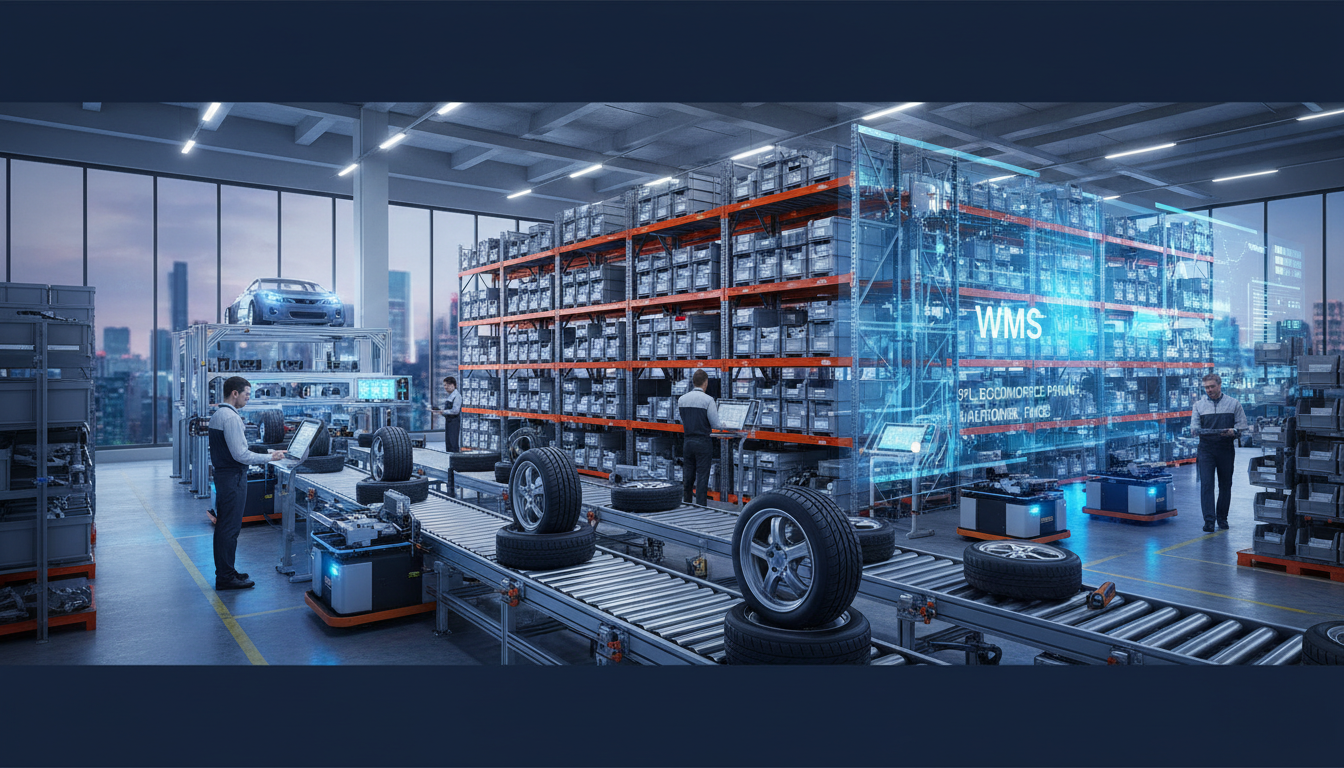
WMS for Automotive Warehouses Times are tough for automotive buyers. With global procurement environments more competitive than the F1, customer...

Technology has grown rapidly in a few decades and we are its witness. The IT Sector could be the best
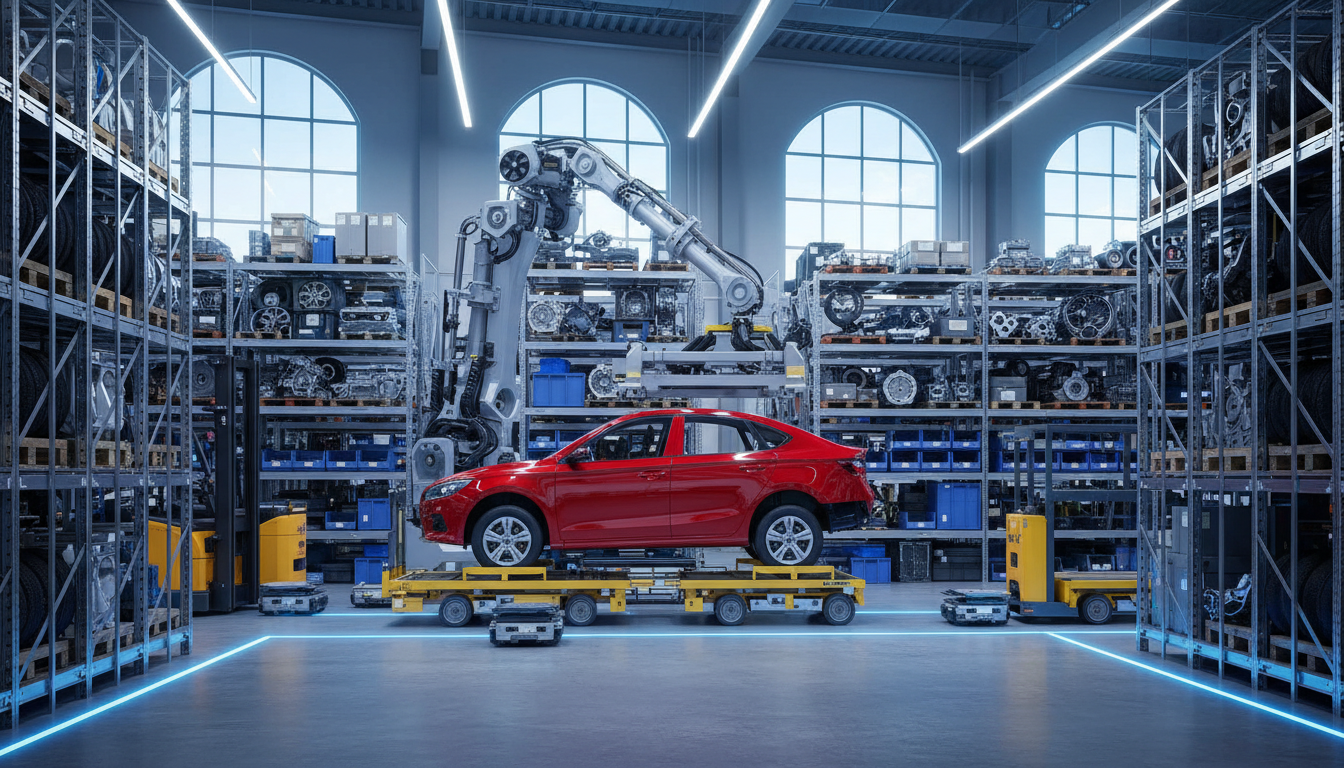
WMS for Automotive Warehouses Ever-Shorter Delivery Windows for Just-in-Time Manufacturing Factories are under endless pressure to cut costs and reduce...

To provide operational excellence, Armstrong Dematic leads the way towards innovative intralogistics and warehouse automation solutions. Our transformations are based on Industry 4.0 solutions.
Follow us on:


